Eucharistic
Catholics already believe that bread and wine become the Body and Blood of Christ at every valid Mass. Eucharistic miracles are the rare hours when that claim, which is normally invisible, is said to have become something a priest could see — and, later, something a pathologist could weigh.
The file
How this section is read
The Mass does not wait for a bleeding Host. At every valid Catholic Mass a priest speaks the words Christ spoke at a table the night before he died, and the Church teaches that the bread is no longer bread and the wine is no longer wine. That teaching is called transubstantiation. It is not a miracle in the sense this archive usually means. It is the ordinary life of the Church, every morning, in every language.
What this section collects are the exceptions: hours when a Host, dropped, stolen, doubted, or simply looked at in a monstrance, is said to have shown what the doctrine already claims. Flesh. Blood. A face. A heart muscle under a microscope. Lanciano in the eighth century. Bolsena in 1263, which gave the West the feast of Corpus Christi. Santarém. Buenos Aires in 1996. Sokółka. Legnica. Vilakkannur. Each case has a date, a priest, a vessel, and — in the modern ones — a laboratory. The laboratories do not all agree, and they do not all publish to the same standard. The archive names the paper where it exists and the silence where it does not.
Two mistakes wait here. One is to think that a Catholic needs a bleeding Host in order to believe the Mass. A Catholic does not. The other is to think that a pathologist’s report, even a careful one, is the same thing as the Last Supper. It is not. A sign of this kind, if it is a sign, is a finger pointing at an altar that was already there.
59 signs
Argentina
1 sign, in the order of their years
Austria
2 signs, in the order of their years
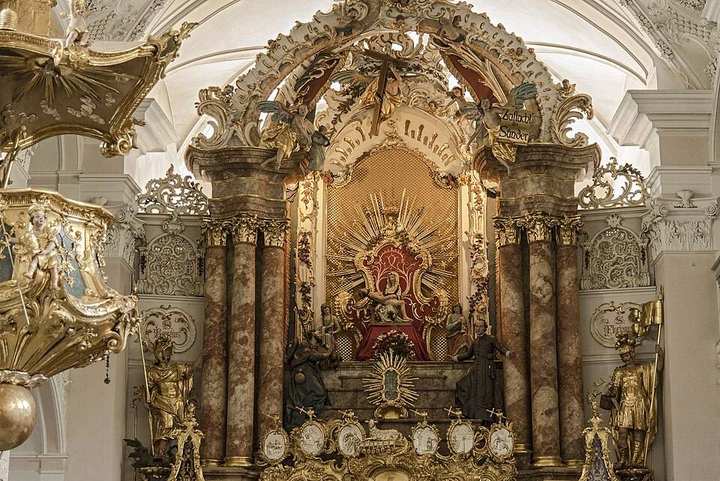
Fiecht
St. Georgenberg-Fiecht, Tyrol1310
A priest doubted during Mass at the mountain monastery. The wine became blood and overflowed the chalice onto the corporal. The cloth is still the treasure of the abbey.
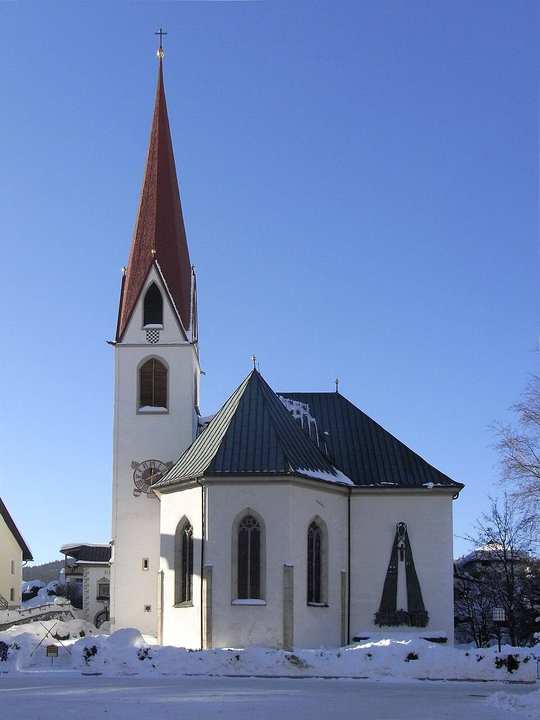
Seefeld
Seefeld, Tyrol1384
A knight demanded a large Host, as if rank changed the Sacrament. The ground gave under him. He sank to the knees and repented. The stone is still shown in the church.
Belgium
3 signs, in the order of their years
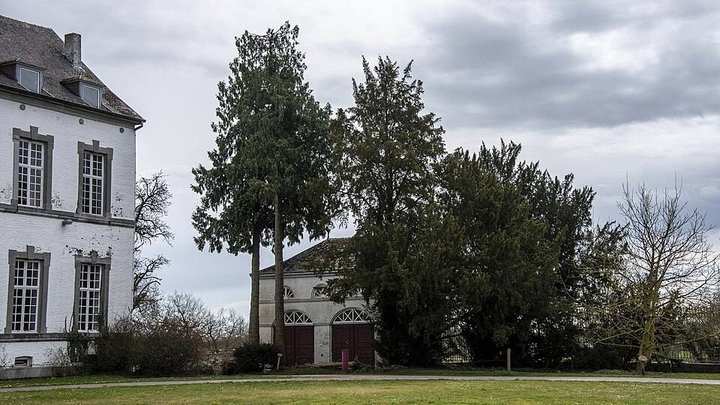
Herkenrode
Herkenrode, near Hasselt1317
A priest carrying Hosts to a sick woman saw blood in the pyx. The Hosts were taken to the Cistercian abbey of Herkenrode. The cloth and the memory stayed with the nuns.
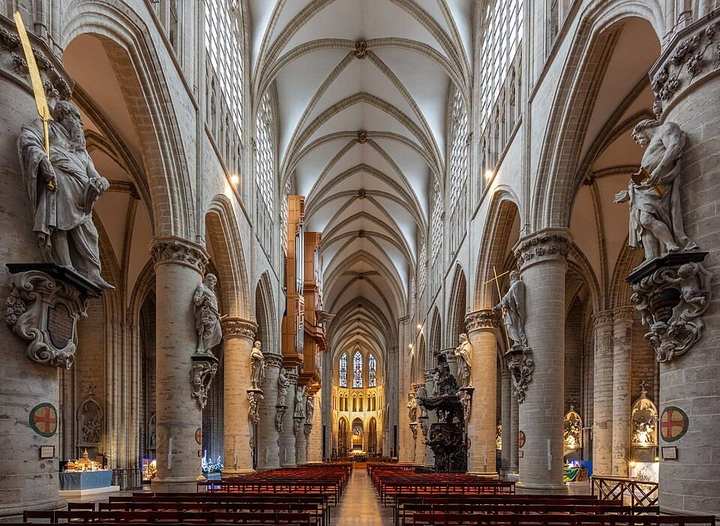
Brussels
Brussels1370
Hosts stabbed and bloodied were carried to the cathedral and venerated for centuries. The medieval telling accused the Jewish community of Brussels. That accusation was used to kill. The Church does not ask anyone to believe it. The Hosts and the injustice are two different facts, and both are told here.
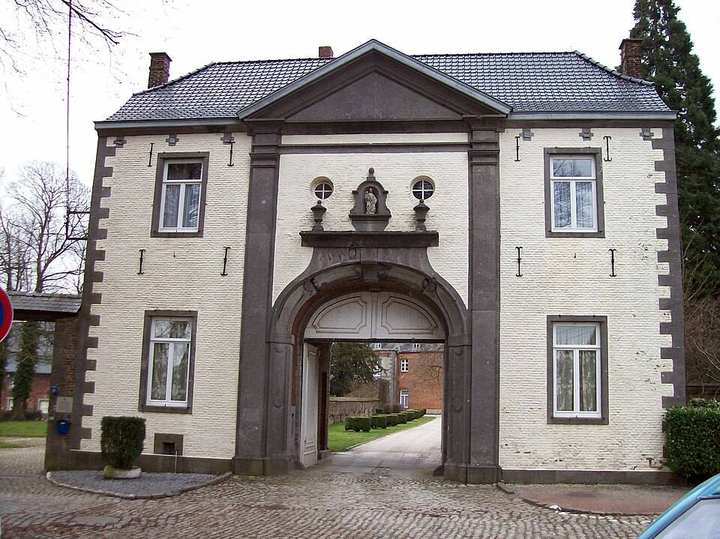
Bois-Seigneur-Isaac
Bois-Seigneur-Isaac, Brabant1405; cult noted 1413
A corporal associated with a Eucharistic event in 1405 is still shown in a reliquary. An act of 1413 is said to have authorised the devotion. The cloth, the reliquary, and the event are three different things.
Colombia
1 sign, in the order of their years
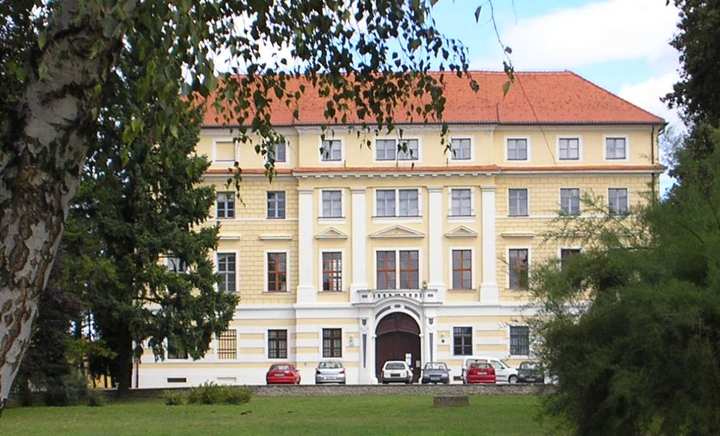
Croatia
1 sign, in the order of their years
Dominican Republic
1 sign, in the order of their years
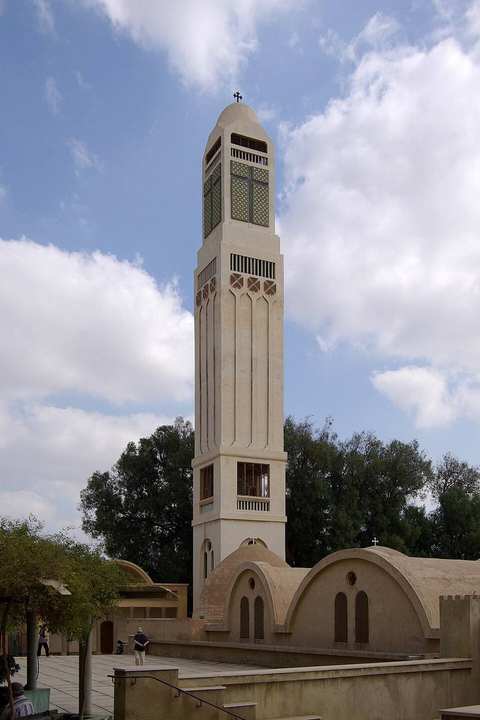
Egypt
1 sign, in the order of their years
France
6 signs, in the order of their years
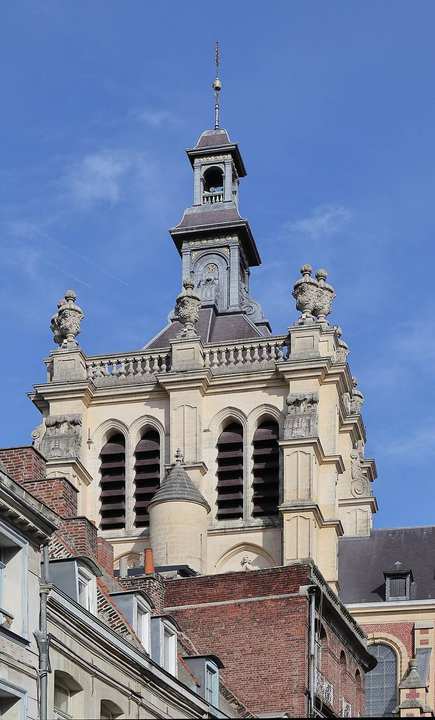
Douai
Douai1254
A priest dropped a Host. When he lifted it, blood had marked the altar cloth. Douai kept the cloth and built the cult of the Precious Blood around it.
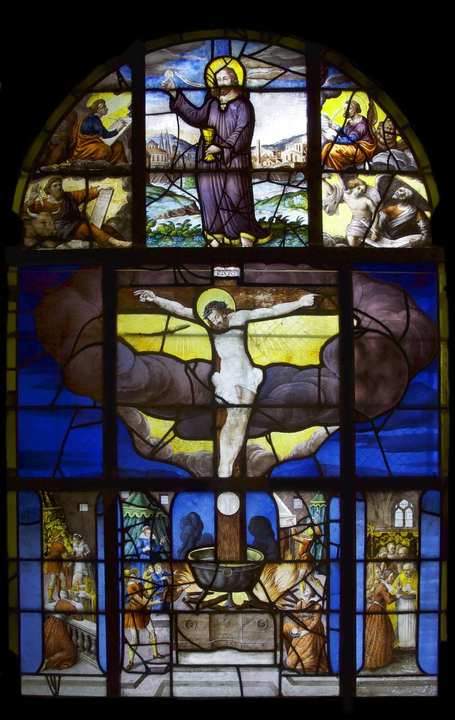
Paris, the Billettes
Paris1290
A Host was said to have bled in a house in the Rue des Jardins in 1290, and a chapel rose on the spot. The medieval story accused a Jewish householder. That accusation is a libel. The chapel’s later life is a different history from the crime it was used to justify.
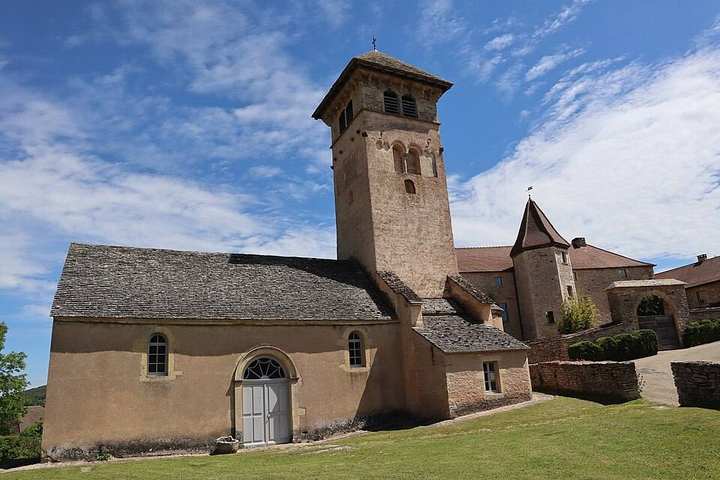
Blanot
Blanot, BurgundyEaster 1331
On Easter morning a fragment of the Host falls onto the corporal and becomes a drop of blood that the priest cannot lift. The cloth is still kept in the parish of Blanot.
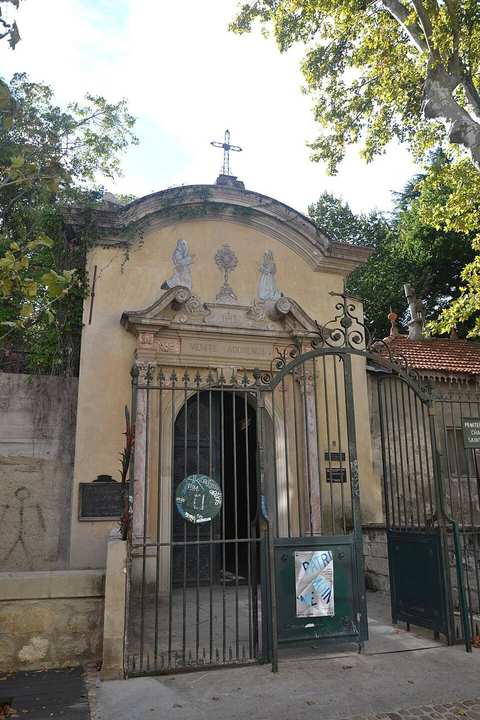
Avignon
Avignon1433
The river flooded the Grey Penitents’ chapel and the Hosts in the tabernacle. After the water went down, the Hosts were found dry. The confraternity kept them.
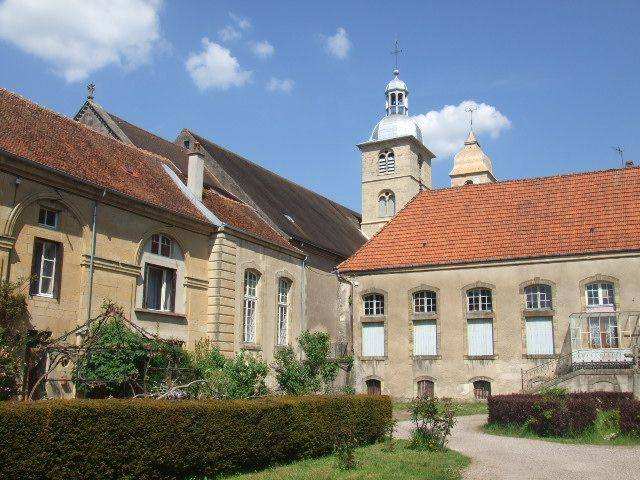
Faverney
Faverney, Franche-Comté1608
A fire destroys the Benedictine church. The monstrance is found suspended in the air, Host intact, above the ashes. For 33 hours it is said not to fall.
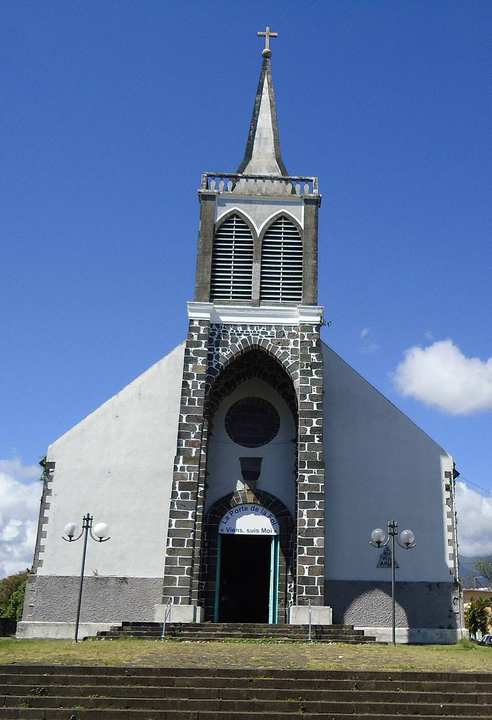
Saint-André, Réunion
Saint-André, Réunion1902
Lava from the Piton de la Fournaise runs at the church of Saint-André. The parish carries the Blessed Sacrament to the flow. The lava stops at the door. The cooled rock is still there.
Germany
4 signs, in the order of their years
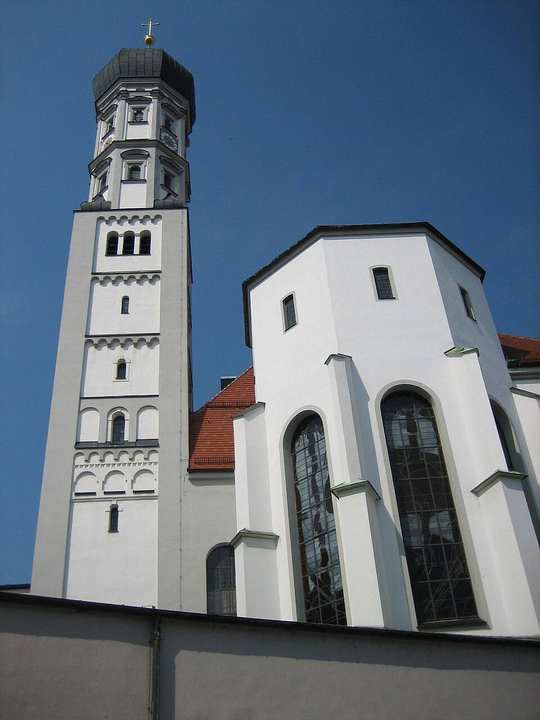
Augsburg
Augsburg1194
A woman takes a consecrated Host home and keeps it in a beeswax box. Five years later it is found changed into flesh, adhering to the wax. The relic is still reserved at Holy Cross in Augsburg.
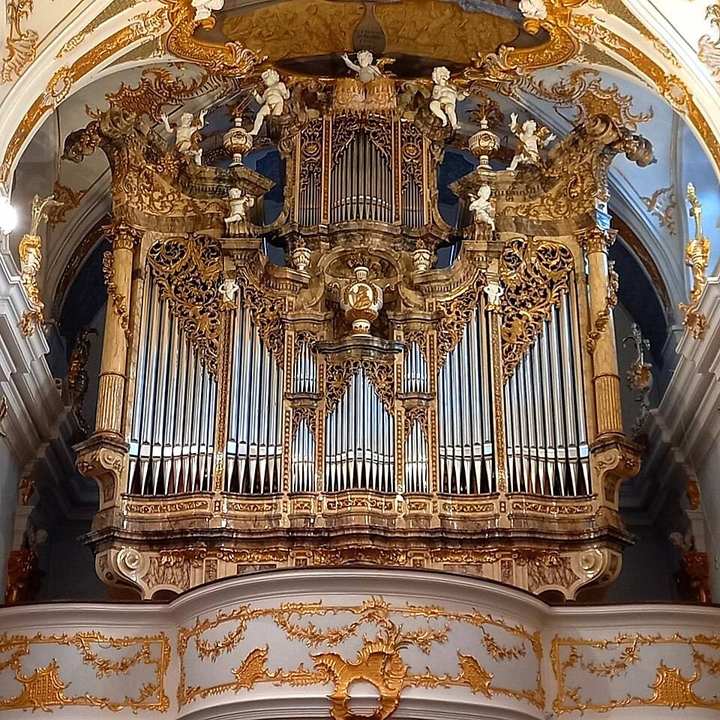
Regensburg
Regensburg1255, and later tellings
Bavarian history places a 1255 pilgrimage among cases of Hosts lost or mishandled. A second, hostile telling turned the loss into an attack on Jewish neighbours. This page keeps the reverence and refuses the libel.
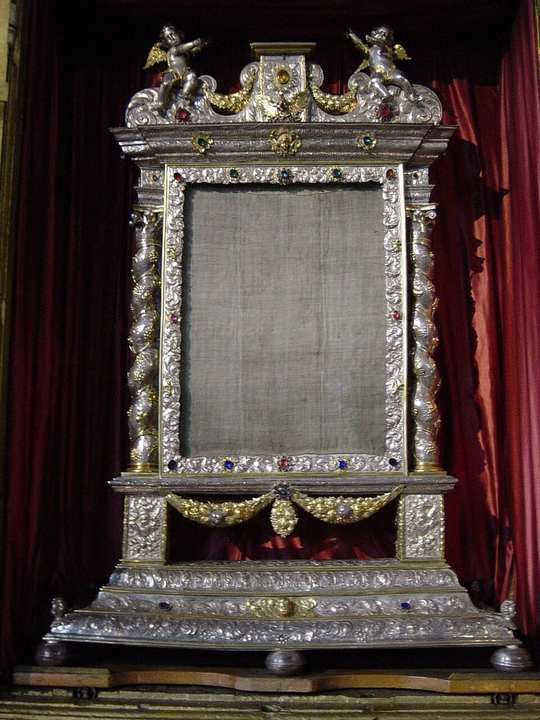
Walldürn
Walldürn1330
A priest spills the chalice onto the corporal. The wine is said to have formed the image of the crucified Christ, ringed by eleven other faces of Christ. He hides the cloth for years, then confesses. Walldürn is still one of the great German pilgrimages of the Precious Blood.
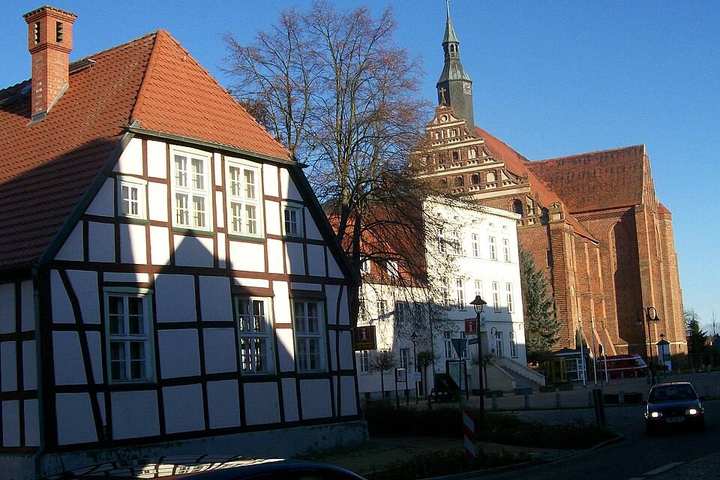
Wilsnack
Bad Wilsnack, Brandenburg1383
Three Hosts were found in the ashes of a burned church, marked with blood. For a century Wilsnack was one of the great pilgrimages of Europe. It was also one of the most contested.
India
2 signs, in the order of their years
Chirattakonam
Chirattakonam, Kerala2001
During adoration in a Syro-Malankara parish, three red stains form on the Host, later seen as a male face. The bishop had the Host photographed and reserved.
Vilakkannur
Christ the King Church, Vilakkannur, Kerala2013; Holy See, 2025
During Mass on 15 November 2013, a face — bearded, wounded, the Holy Face as the Church has always painted him — appears on the consecrated Host. The Host is reserved in a jeweled monstrance. In 2025 the Holy See allowed the diocese to present the event as a Eucharistic miracle.
Italy
17 signs, in the order of their years
Lanciano
Lanciano, Abruzzo8th century (c. 750)
The most famous Eucharistic miracle in the West: a doubting monk sees the Host become Flesh and the wine Blood. The relics are still reserved — and were studied in the twentieth century. They are not the reason the Church believes in the Eucharist.
2 studied signs on this image
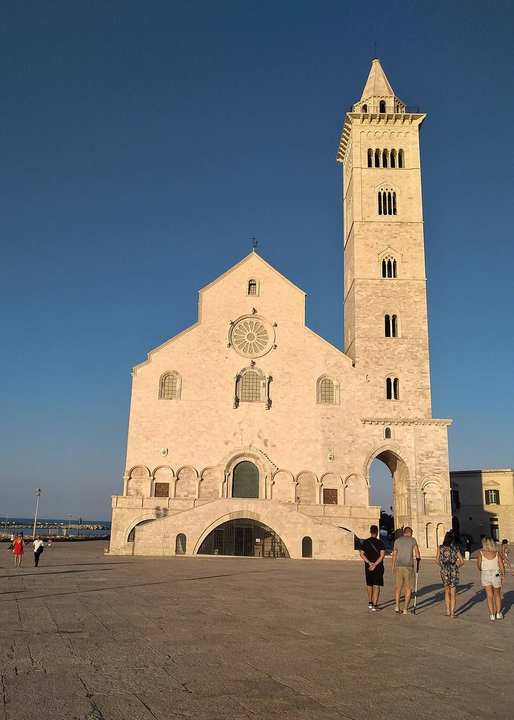
Trani
Trani, Apulia11th century
A woman, a non-Christian in the local telling, took a Host to test it in a pan. It bled. She brought it back. The cathedral of Trani kept the memory.
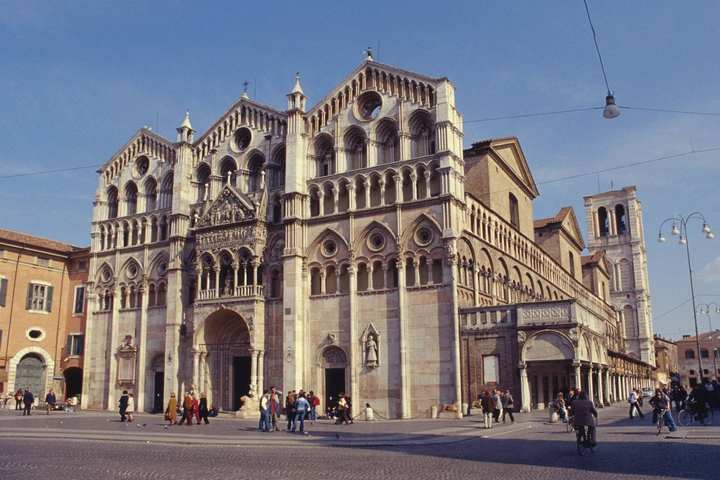
Ferrara
Ferrara1171
On Easter Sunday 1171, at the breaking of the Host, blood spurts onto the vault above the altar of Santa Maria in Vado. The stains were long shown; the church became a shrine.
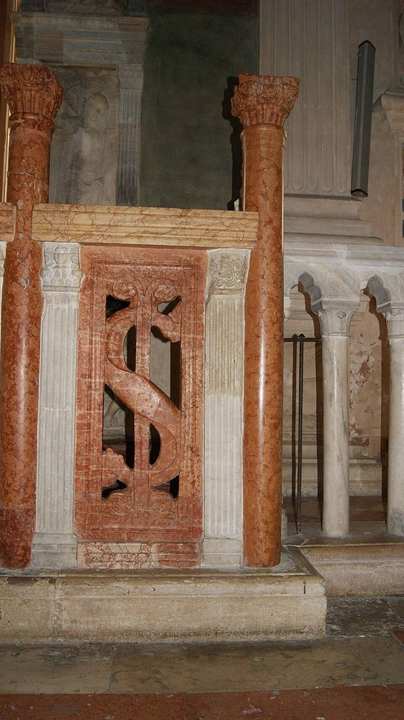
Rimini
Rimini1227
A heretic said he would believe if his mule knelt before the Host rather than eat. The animal left the oats and knelt. St. Anthony of Padua was holding the monstrance.
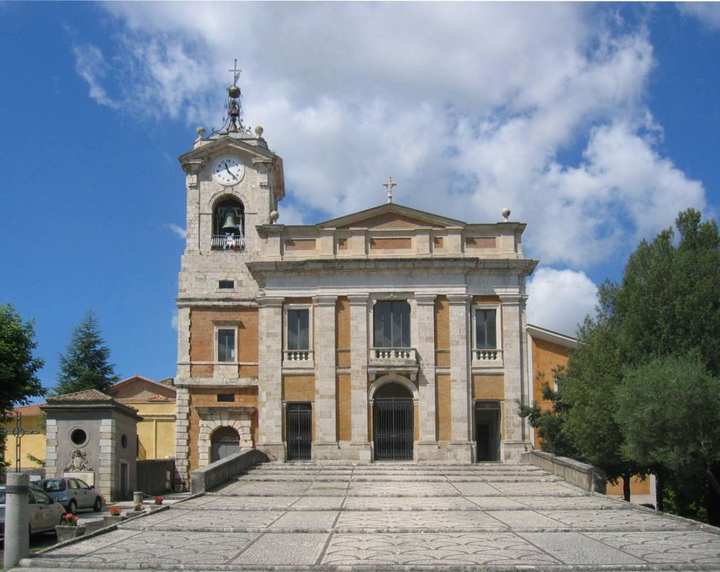
Alatri
Alatri1228
A young woman, advised to steal a Host for a love charm, wraps it in cloth and later finds it turned to flesh. Bishop and pope are notified; the relic is still at Alatri.
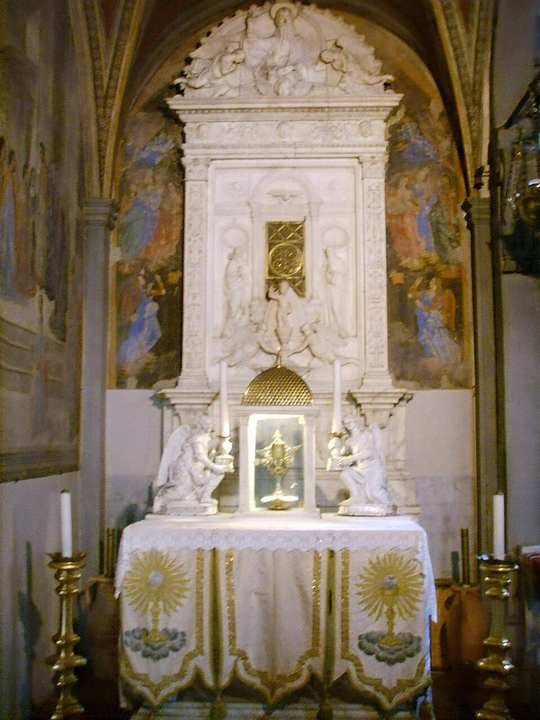
Florence, Sant’Ambrogio
Sant’Ambrogio, Florencec. 1230
An old priest at the Benedictine convent is said to have left the chalice undried. In the morning a residue like blood was there. Florence has kept a chapel of the miracle, and a later Good Friday fire is a second story, not the same hour.
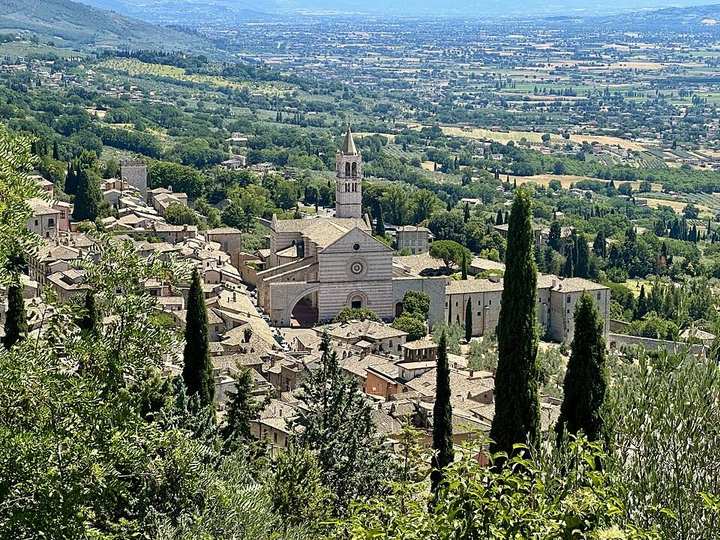
Saint Clare and the soldiers
San Damiano, AssisiSeptember 1240
Saracen troops in the service of Frederick II come up to San Damiano. Clare, ill, has the Eucharist carried to the door in the silver box the monastery used. The attackers do not break in. Later paintings put a monstrance in her hands. The early text says a box.
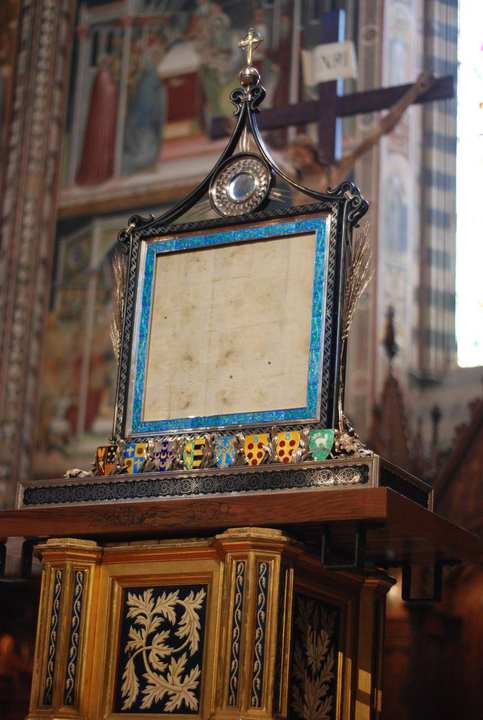
Bolsena–Orvieto
Bolsena, then Orvieto1263
A Bohemian priest, doubting the Real Presence, sees the Host bleed onto the corporal. Urban IV, then at Orvieto, is shown the linen — and Corpus Christi enters the calendar of the whole Church.
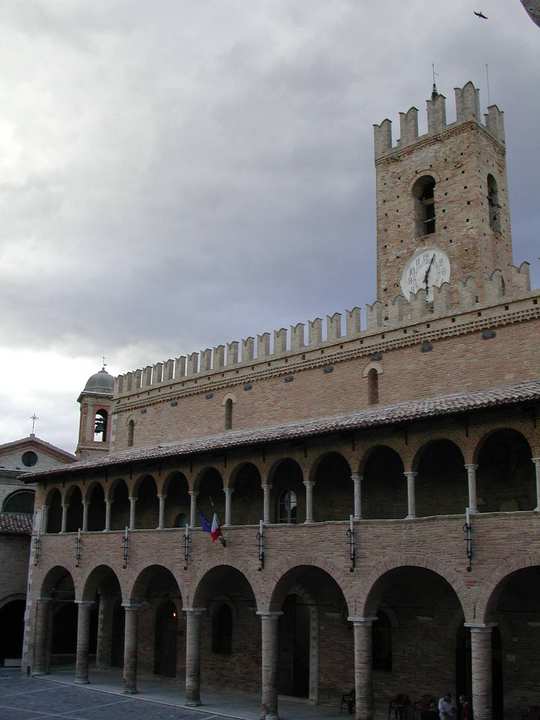
Offida
Lanciano, then Offida1273
Another stolen Host, another bleeding: a woman of Lanciano hides the Sacrament in a stable wall. Blood soaks the tiles. Franciscans later carry the relic to Offida.
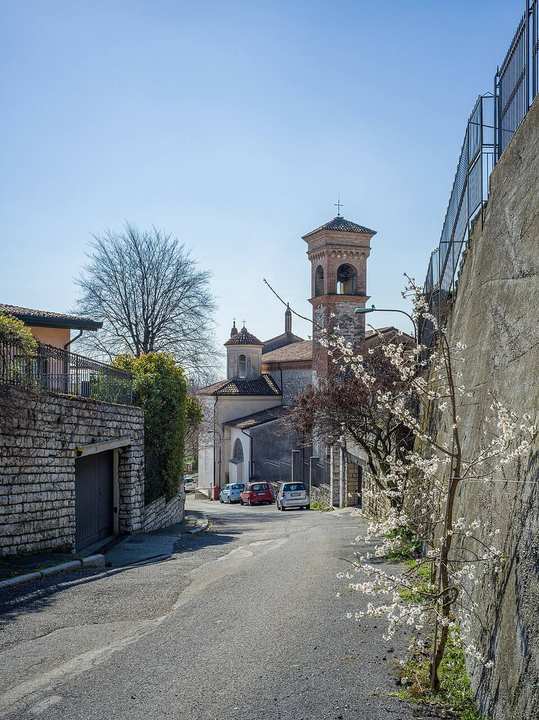
Gruaro
Gruaro, then Valvasone1294
A priest spilled the chalice. The wine on the corporal took the shape of a cross and of a face. The cloth was later kept at Valvasone.
Cascia
Siena, then Cascia1330
A priest takes Communion to a sick man, slips the Host unworthily into his breviary, and later finds it bleeding through the pages. The stained leaf is kept by the Augustinians of Cascia.
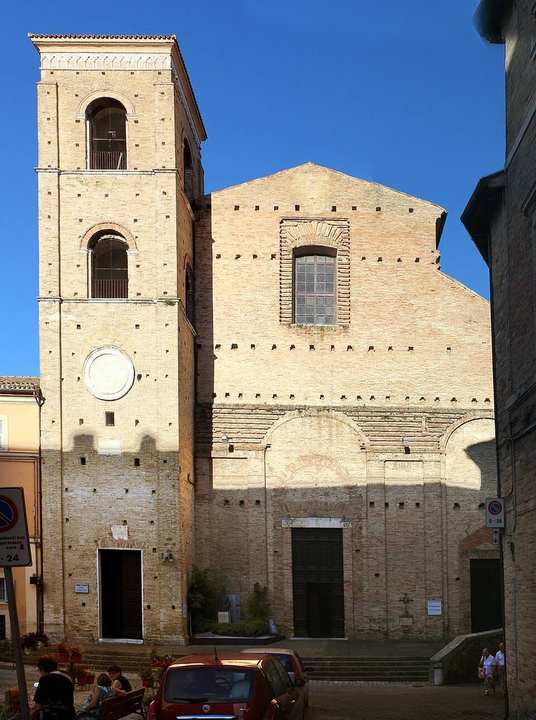
Macerata
Macerata25 April 1356
A priest doubted as he consecrated. Blood issued from the Host onto the corporal. The cloth is kept in the cathedral.
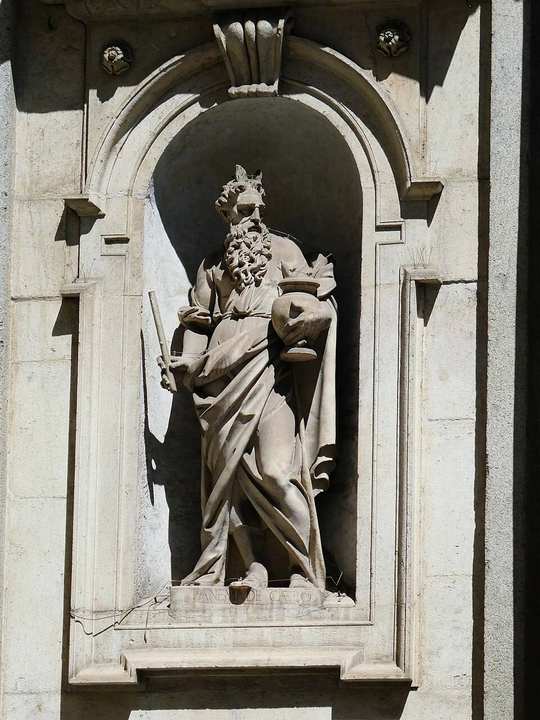
Turin, 1453
Turin6 June 1453
A thief stole a monstrance from the church in Exilles. At Turin the Host rose out of the sack and stayed in the air until the bishop came. The city built the church of Corpus Domini on the spot.
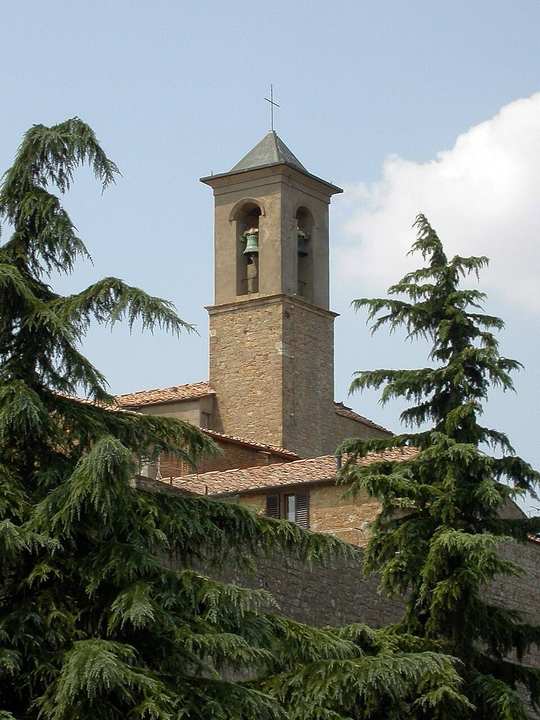
Volterra
Volterra1472
During Volterra’s war with Florence in 1472, a soldier is said to have stolen a ciborium, thrown the Hosts aside, and then repented when they did not behave as bread. The diocese keeps the memory. The vessel and the Sacrament are not the same object.
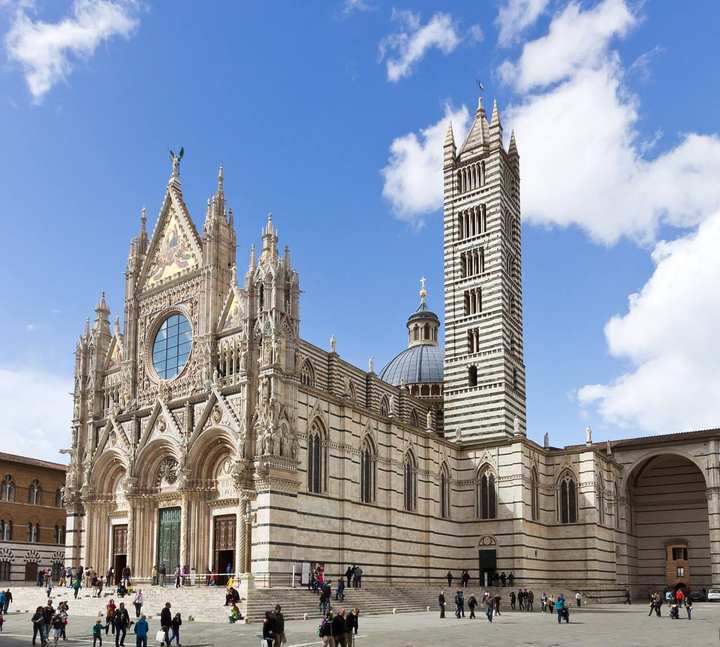
The Hosts of Siena
Siena1730 – present
Consecrated Hosts stolen from St. Francis in Siena are recovered from a poor-box, dusty and filthy — and remain intact, without corruption, for centuries. They are still reserved and occasionally tasted for decay.
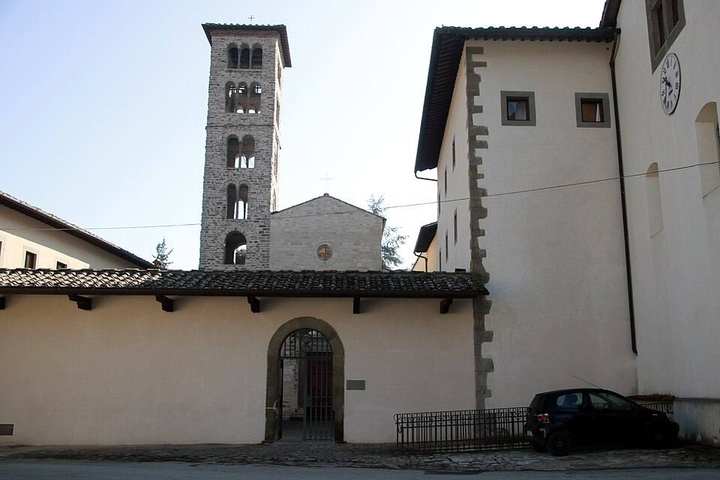
Rosano
Rosano, Tuscany1948
In the Benedictine monastery of Rosano a Host was seen to change during adoration. The nuns and the diocese kept a file. It is a modern case, and it is not Lanciano.
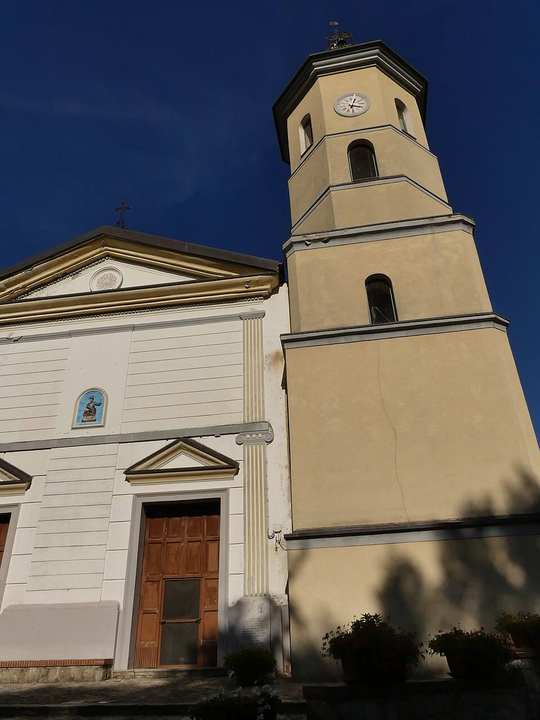
San Mauro La Bruca
San Mauro La Bruca1969; adoration decreed 1970
After a theft, a child is said to have found discarded Hosts. The diocese records their recovery and, in 1970, a decree of perpetual adoration. That decree is about worship. It is not a laboratory result.
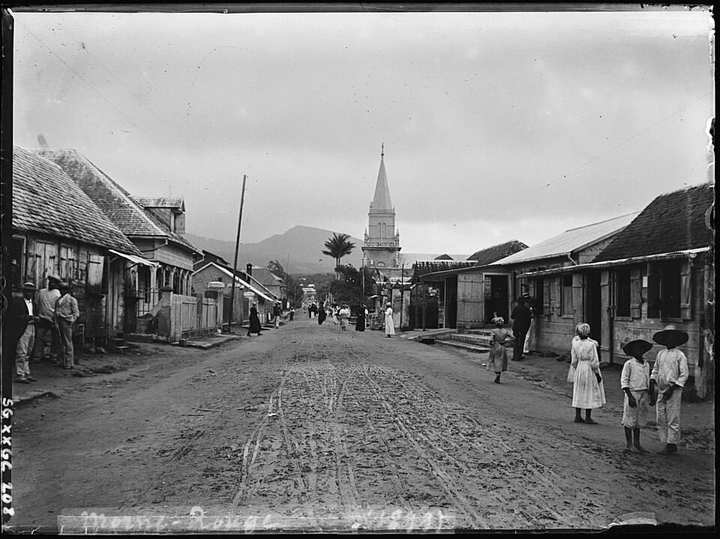
Martinique
1 sign, in the order of their years
Mexico
1 sign, in the order of their years
Netherlands
3 signs, in the order of their years
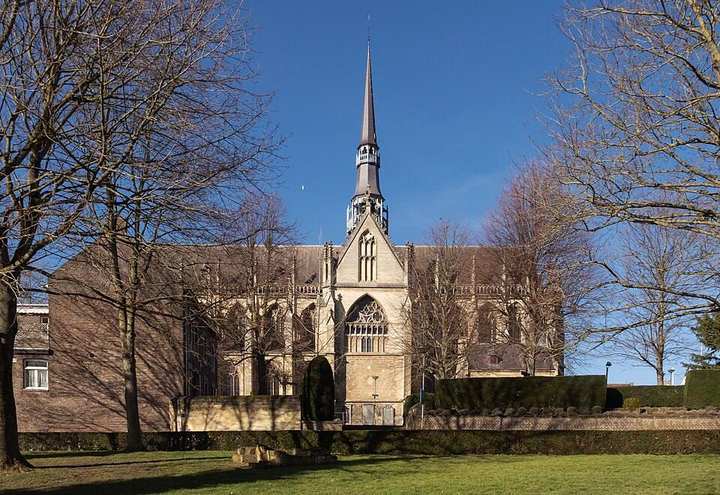
Meerssen
Meerssen, LimburgThirteenth-century telling; the Host later lost
A thirteenth-century account says the chalice at Mass lacked the water, and that a sign followed. A later tale adds a farmer and a fire. The medieval object is gone. The basilica of the Blessed Sacrament is not.
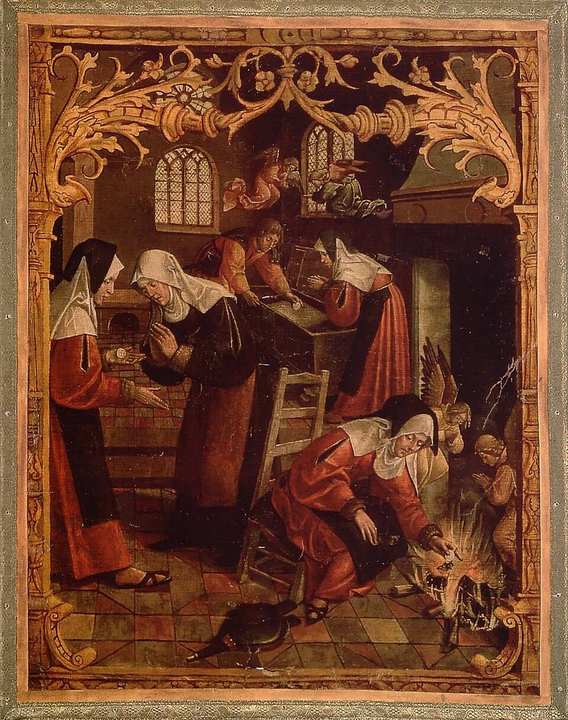
Amsterdam
Amsterdam15 March 1345
A dying man received Viaticum and vomited. The Host was thrown on the fire and did not burn. Amsterdam has walked the Silent Walk in memory of it ever since the devotion was allowed back.
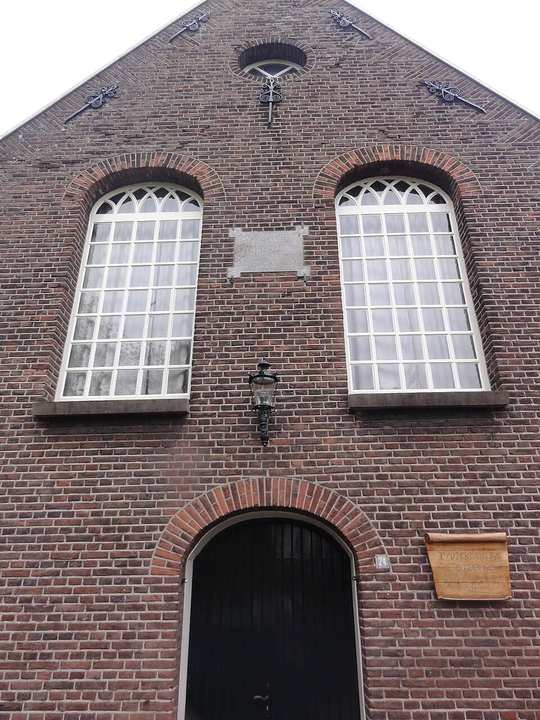
Boxmeer
Boxmeer, North Brabantabout 1400
A priest who doubted is said to have seen the wine rise in the chalice until he took back the doubt, leaving a red mark on the corporal. Boxmeer still walks in memory of that cloth. The mark is not a modern blood study.
Peru
1 sign, in the order of their years
Poland
5 signs, in the order of their years
Głotowo
Głotowo, WarmiaMedieval; sanctuary later
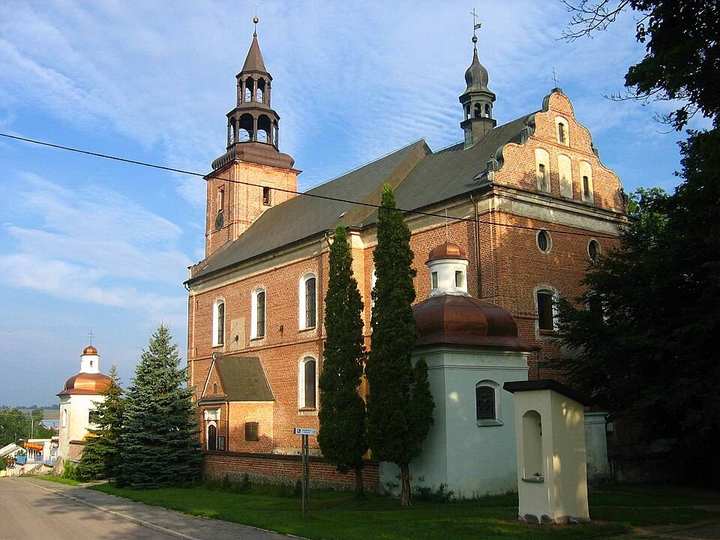
A Host hidden for safety is said to have been found when oxen knelt at the plough. The archdiocese keeps a real sanctuary of the Blessed Sacrament and of the Passion. The kneeling oxen are a medieval motif, and the page says so.
Kraków, Corpus Christi
Kazimierz, KrakówParish older than the legend of 1345
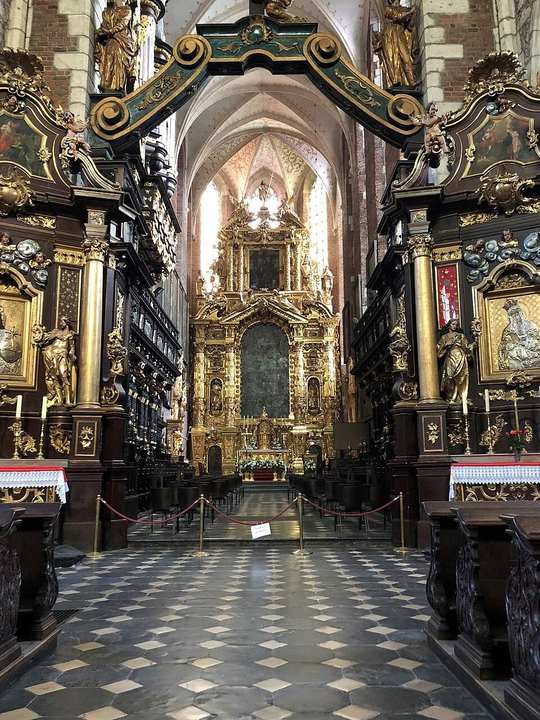
A popular tale says a Host found in 1345 caused Casimir the Great to found the Corpus Christi church. The building’s own dates begin before 1341. The parish is real. The founding miracle, told that way, cannot be.
Poznań
PoznańMedieval shrine; the accusation withdrawn
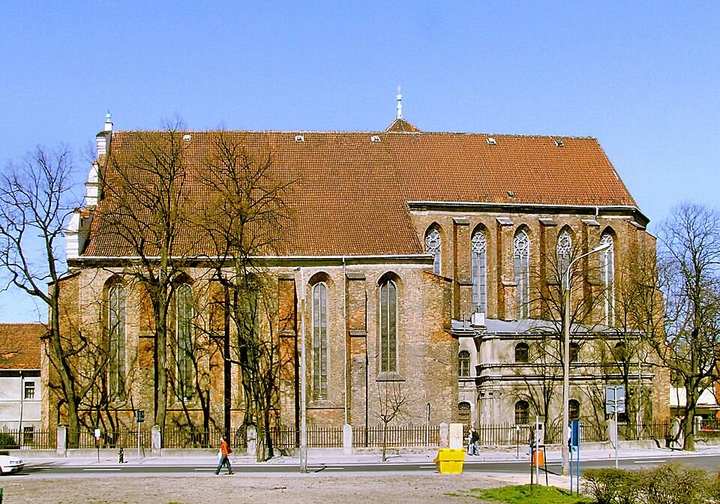
Poznań has a church of Corpus Christi and an old story of Hosts found. The archdiocese says the tale that blamed Jews was never confirmed, and that the medieval sources support a found Host and a shrine — not a charge against a people.
Sokółka
Sokółka2008
A dropped Host, placed in water, develops a red stain. Independent pathologists report that the stain is heart muscle fused with the bread in a way they cannot explain. The Archbishop of Białystok authorized veneration.
Legnica
Legnica2013
Another dropped Host, another red stain, another finding of heart muscle. In 2016 the Bishop of Legnica announced the Holy See’s recommendation that the relic be venerated.
Portugal
1 sign, in the order of their years
Spain
5 signs, in the order of their years
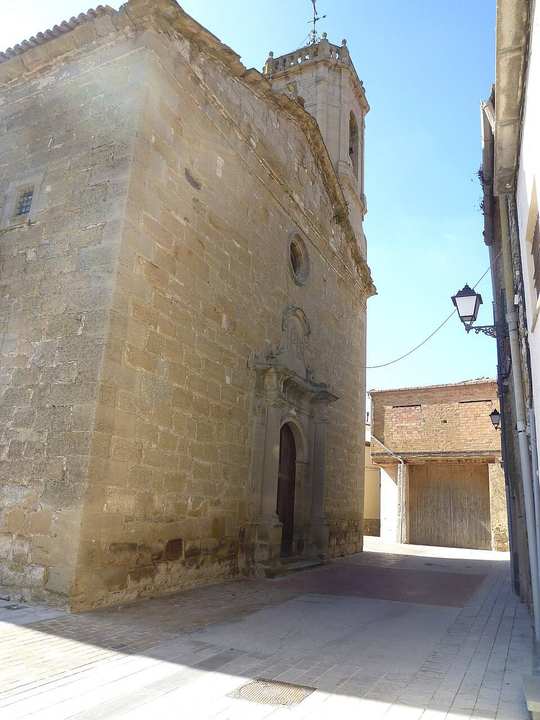
Ivorra
Ivorra, CataloniaAbout 1010
A priest doubted the consecration. The wine became blood and stained the corporal and the stone. The cloths are still the shrine of the parish.
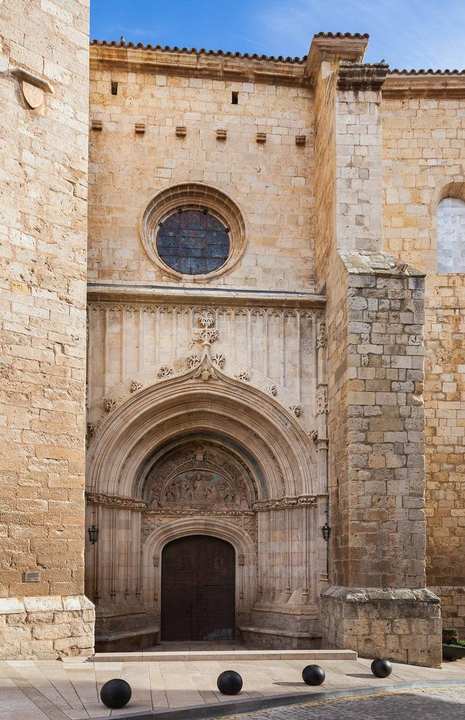
Daroca
Daroca, Aragon1239
In a battle near the walls, priests had consecrated. The Hosts bled onto the corporals. Daroca has carried those cloths in procession ever since.
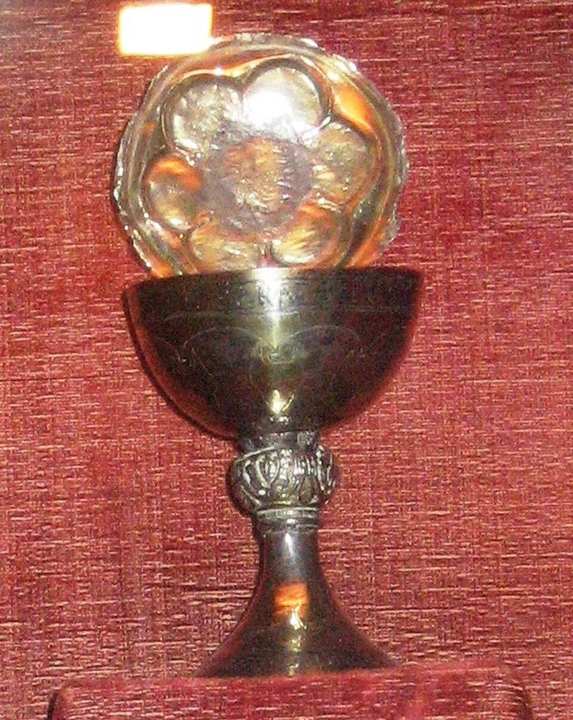
O Cebreiro
O Cebreiro, GaliciaAbout 1300
In a snowstorm a peasant came to Mass. The priest doubted it was worth consecrating for one man. The Host became flesh and the wine blood. The chalice and paten are still in the church on the pass.
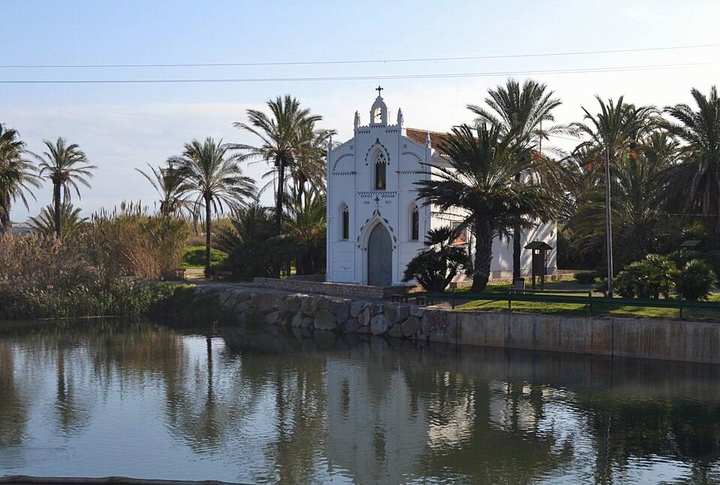
Alboraya
Alboraya, by ValenciaTold as 1348
A priest carrying Viaticum to the dying is said to have lost the Hosts in the water, and fish are said to have held them up. The hermitage of the Peixets is the memory made into a chapel. The number of fish is not the doctrine.

Alcalá
Alcalá de Henares1597
Host stolen from a church in Alcalá were recovered and kept. They did not corrupt. The Jesuits and then the town preserved them as the Santos Corporales.
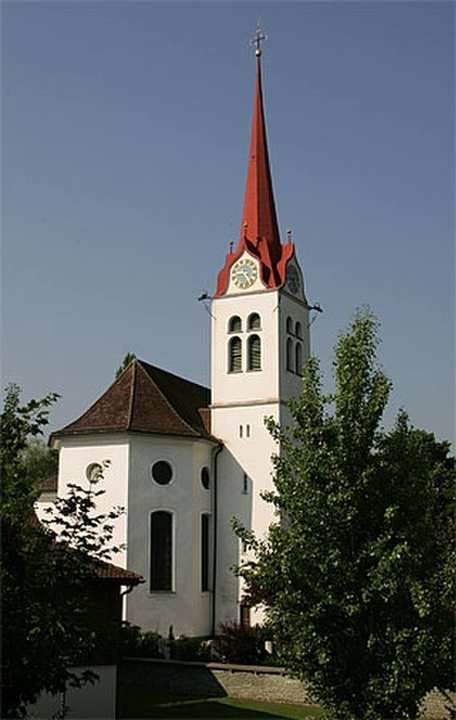
Switzerland
1 sign, in the order of their years
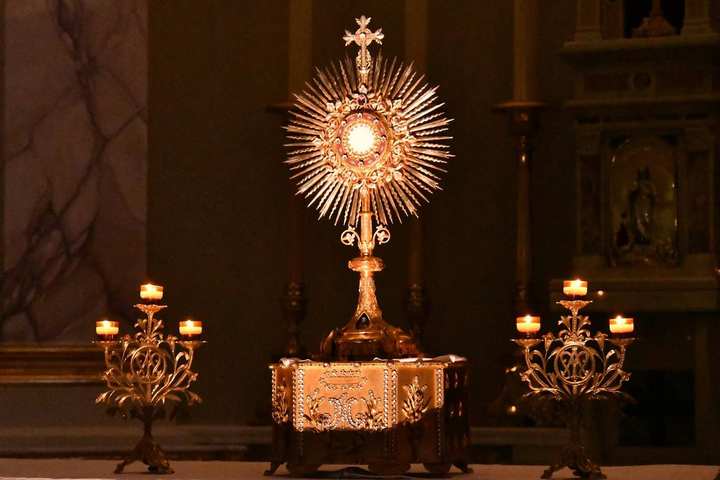
The whole Church
1 sign, in the order of their years
Venezuela
1 sign, in the order of their years
Arranged by country, as in the parish exhibition of Eucharistic miracles. Saint Carlo Acutis helped make that exhibition. He is not the subject of it. His own life is a separate page.
Dates and Church wording on these pages were checked against the shrines and the exhibition sites: miracolieucaristici.org, the Lourdes and Fátima sanctuaries, carloacutis.com, and the case method of Corpus Files — rewritten here, not copied.
Eucharistic miracles
Talks on YouTube
These play here. They are not the Church’s judgement. If a frame will not start, open it on YouTube.
A Host said to beat like a heart
In Defense of the Cross
A short film. A reported sign, not a decree of the Church.