The reading
How it began
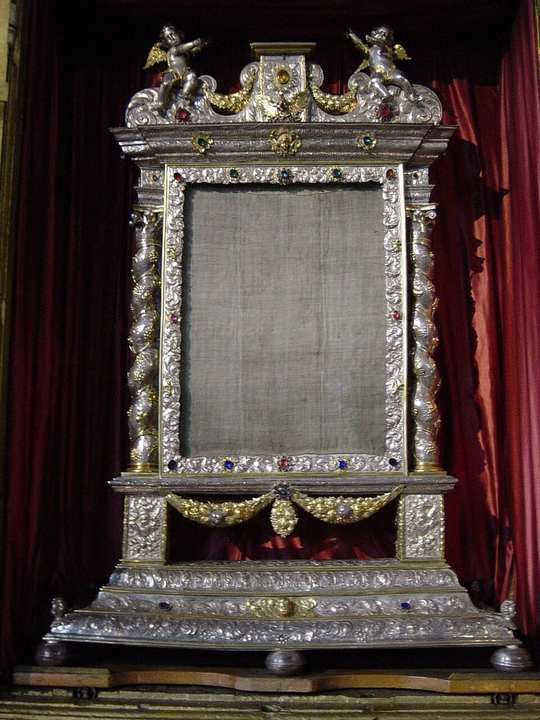
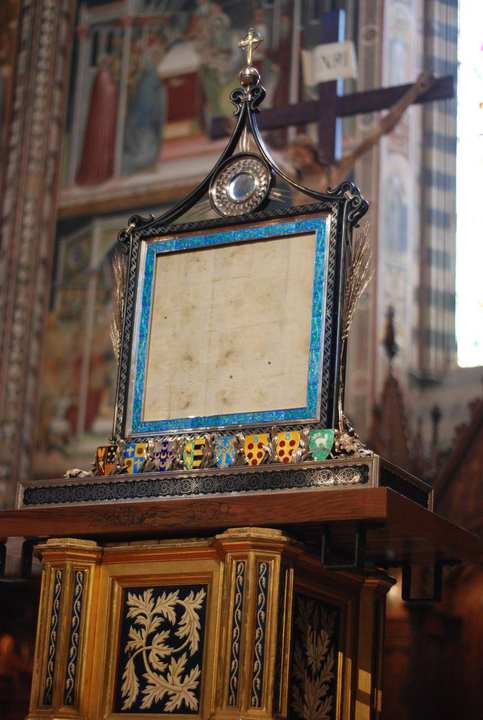
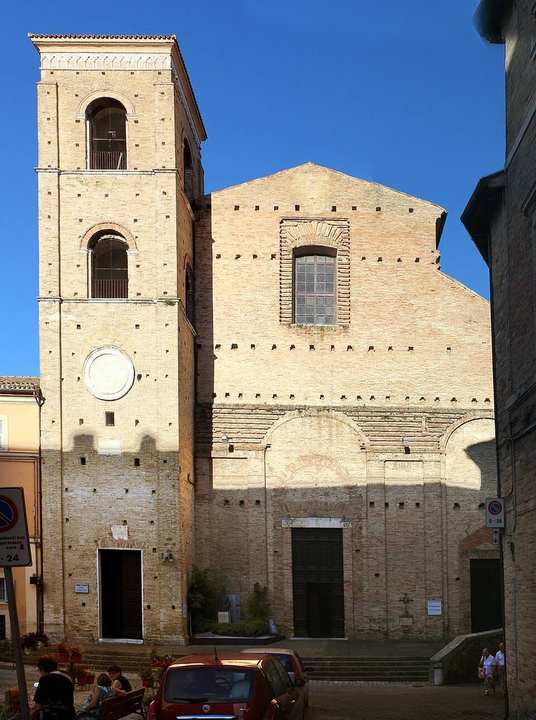
In 1294, at Gruaro in Friuli, a priest knocked the chalice. What spilled onto the corporal was seen as a crucifix and as a face. The relic did not stay in the village church forever. It was taken, in the way of medieval treasures, to Valvasone, where the sanctuary of the Most Holy Body of Christ still shows it.
The day itself
The transfer is part of the history, not a scandal to be smoothed. Relics moved when lords and chapters decided they would. Valvasone’s claim is that this is the cloth of 1294, not a later substitute. A visitor can see a cloth. A visitor cannot see a journal article of the STURP kind.
Reading
How to read Gruaro
A spill, again. The Church’s ordinary answer is reverence and clean linen. Gruaro’s answer was to stop treating the linen as laundry.
Church status
How this sign has been received
Long veneration
Cult from 1294; custody at the sanctuary of Valvasone.
Sources
- Sanctuary of the Corpus Domini, Valvasone
For the classroom
Gruaro (1294, Gruaro, then Valvasone). Grade in this encyclopedia: Long veneration. A priest spilled the chalice. The wine on the corporal took the shape of a cross and of a face. The cloth was later kept at Valvasone.