Skip to content

Bodies opened, and what was found

Incorruptibles

A dated opening of a tomb. What the witnesses wrote. What a pilgrim actually sees now — flesh, bone, a tongue, a heart, a wax mask, a silver face.

39 bodies, hearts, and tongues

Incorruption is a report about a particular corpse at a particular hour. It is not the resurrection, which the Church preaches of Christ and expects for everyone. It is not a proof of canonization. Many Saints are dust. A few bodies that lasted belong to people who were never raised to the altars. When a Catholic hears, in a finding like Cuthbert’s or Bernadette’s, an echo of the psalm — “neither will you allow your holy one to see corruption” (Psalm 16:10) — she is hearing a hint, not a definition. The psalm, in the Church’s reading, is about Christ first (Acts 2:27).

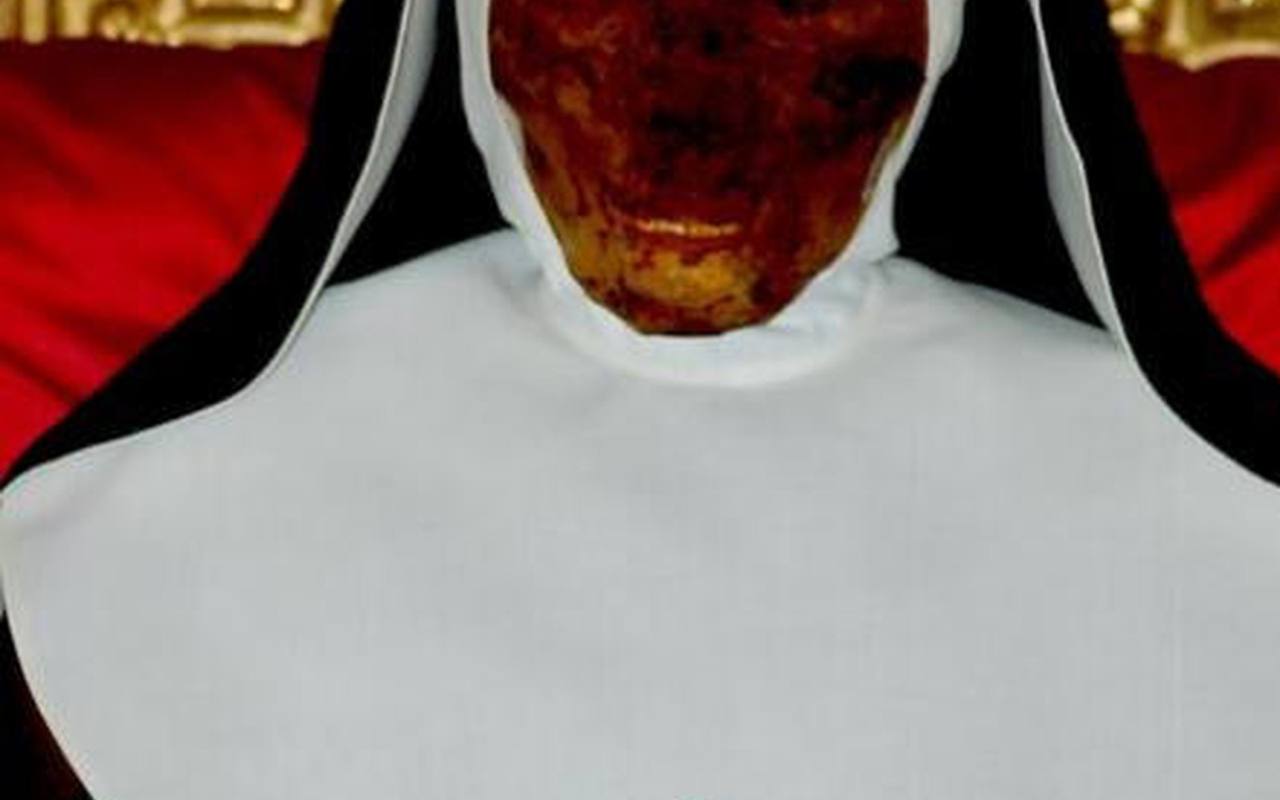
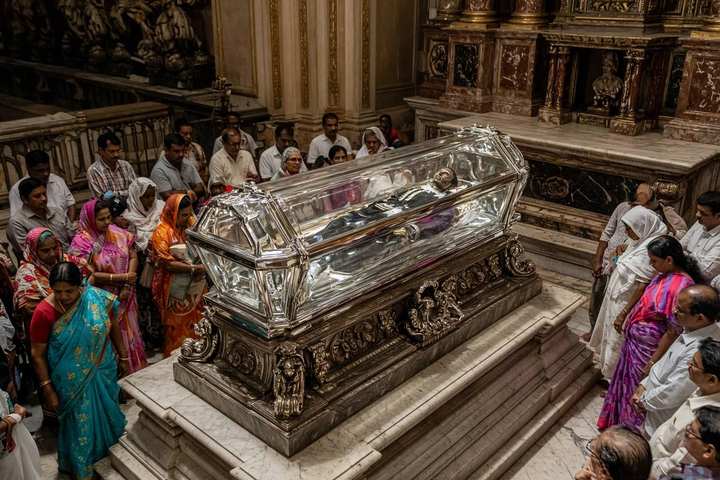
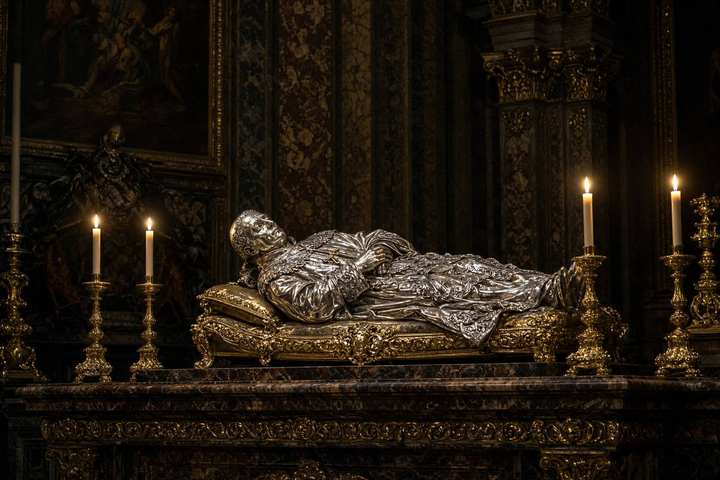
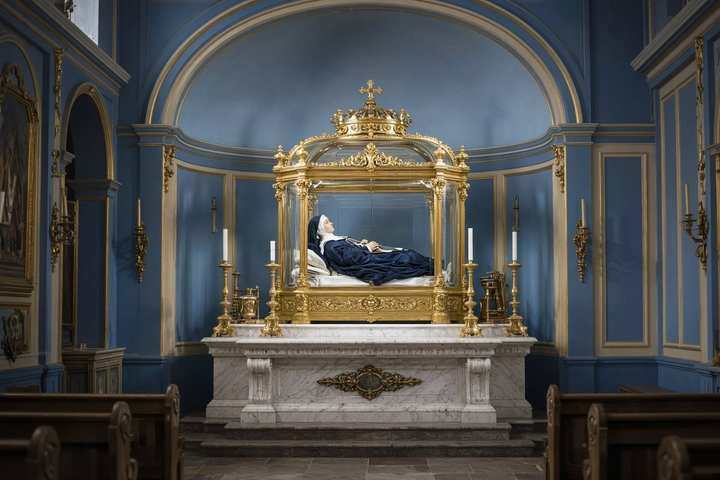
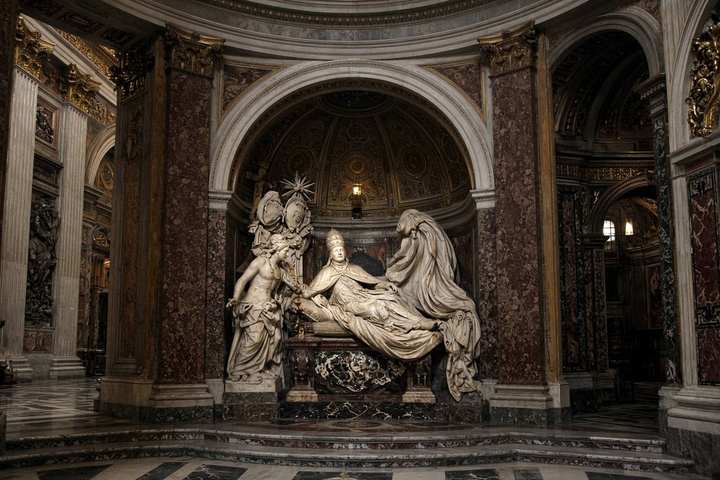
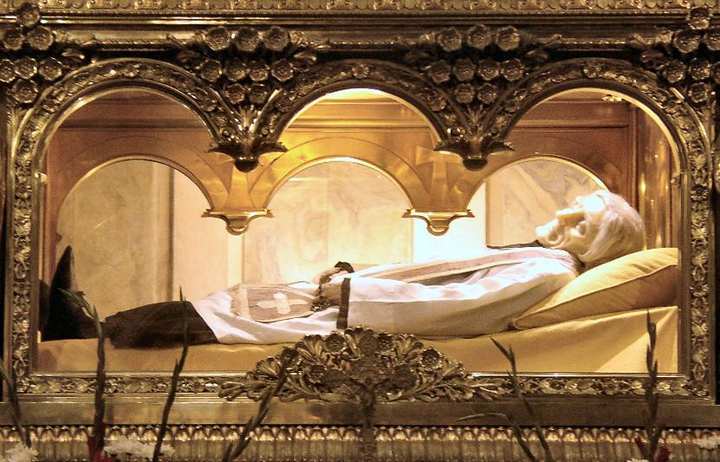
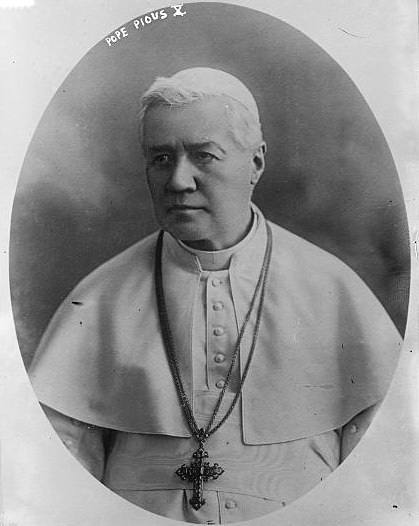
The practical question is what the glass is hiding. After the third exhumation of Bernadette Soubirous at Nevers, a thin wax covering was laid over the face and the hands so that the body could be shown. The reports of 1909, 1919, and 1925 describe what was under that covering. Pope Pius X, opened in 1944, is shown in St. Peter’s under a silver mask; the photographs of the exhumation are not the face in the basilica. Saint Vincent de Paul is bones in a silver effigy, and a heart kept apart. Saint Anthony’s body had gone to dust by 1263; Bonaventure and the friars kept the tongue. Saint Clare of Assisi, found in 1850, is a skeleton in the habit, the face a later mask. Saint Catherine of Bologna sits upright in a chair at Corpus Domini, the face darkened, the posture chosen by the sisters centuries ago. Treating those six as one phenomenon is how the file goes false.

Saint Carlo Acutis is not on this list. His body lies at Santa Maria Maggiore in Assisi, dressed in jeans and a sweatshirt, and the skin you see has been treated for exposition. The Church canonized him for a life and for two healings. The Church did not claim that leukemia left an incorrupt corpse. The general teaching on relics — Trent, the Code of Canon Law, the difference between a bone and a wonder — is kept in one place, the relics section, and is not copied under every name below. Each name has its own exhumation.
St. Etheldreda of Ely — Ely Cathedral
RelicLong veneration

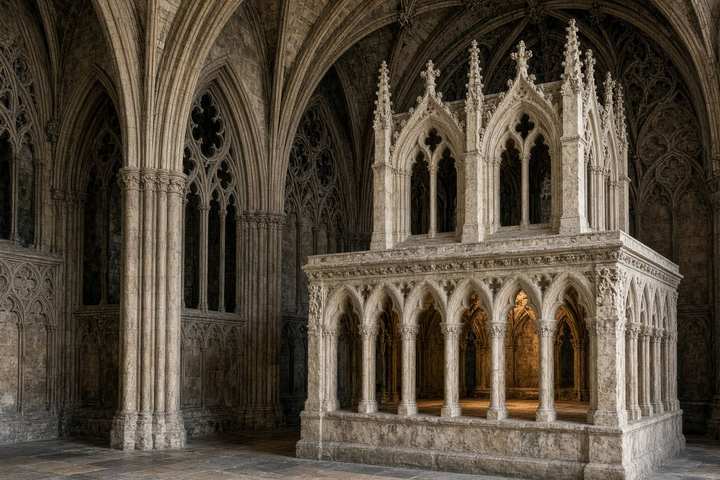
St. Etheldreda of Ely

Ely CathedralDied 679; found intact 695

A queen who walked away from a throne to be a nun. Sixteen years after her death the abbess-sister Sexburga raises the body and finds it uncorrupted, the surgical wound of her last illness closed. Bede records it.

The Body of St. Cuthbert — Durham Cathedral
RelicLong veneration

The Body of St. Cuthbert

Durham CathedralDied 687; found intact 698 and 1104

The bishop of Lindisfarne, buried on his island, found incorrupt eleven years later, carried across Northumbria from the Vikings, opened again at Durham in 1104 still described as entire. The coffin, the stole, the pectoral cross remain.

The Oil of St. Walburga — Eichstätt
RelicLong veneration

The Oil of St. Walburga

EichstättDied 779; oil still collected

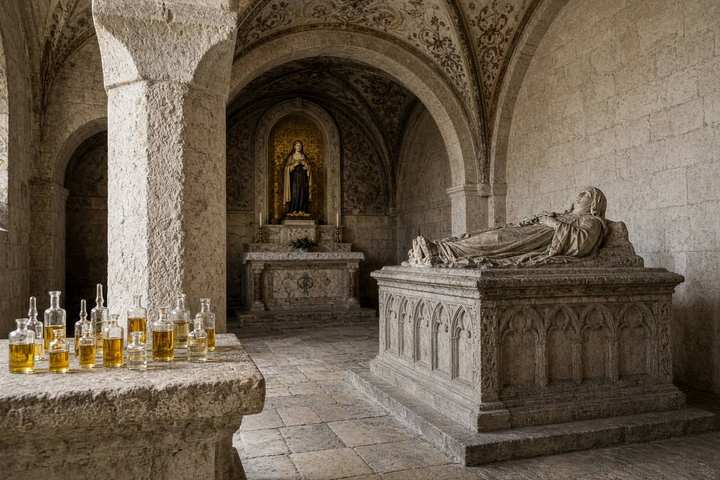
An English abbess in Germany. From the rock around her relics a liquid has been collected for centuries — Walburgisöl — used as a sacramental of healing. The body itself was found intact in the ninth century.

St. Rose of Viterbo — Santa Rosa, Viterbo
RelicChurch-approved

St. Rose of Viterbo

Santa Rosa, ViterboDied 1251; still intact in Viterbo

A girl preacher of the thirteenth century, dead at eighteen, whose body remains in Viterbo and is carried through the city on her feast — the Macchina di Santa Rosa — a tower of lights on the shoulders of a hundred men.

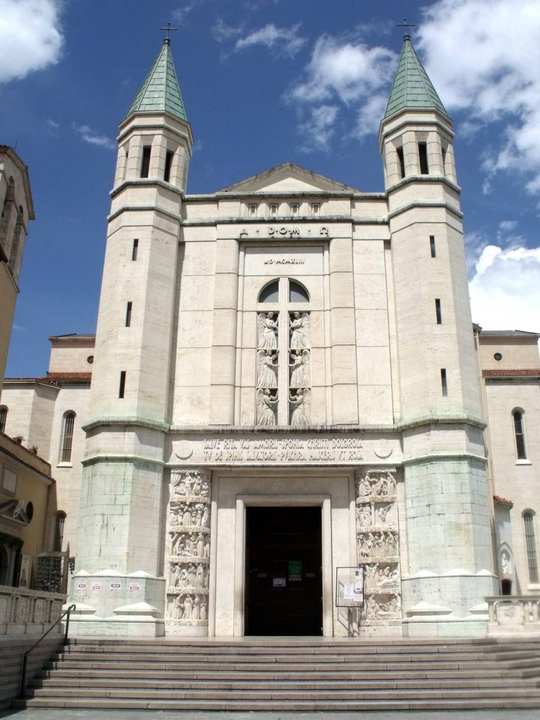
The Body of St. Clare of Assisi — Basilica of St. Clare, Assisi
RelicChurch-approved

The Body of St. Clare of Assisi

Basilica of St. Clare, AssisiDied 1253; found 1850

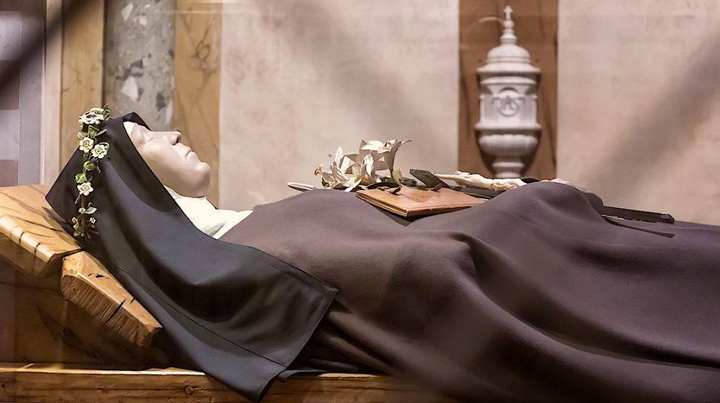
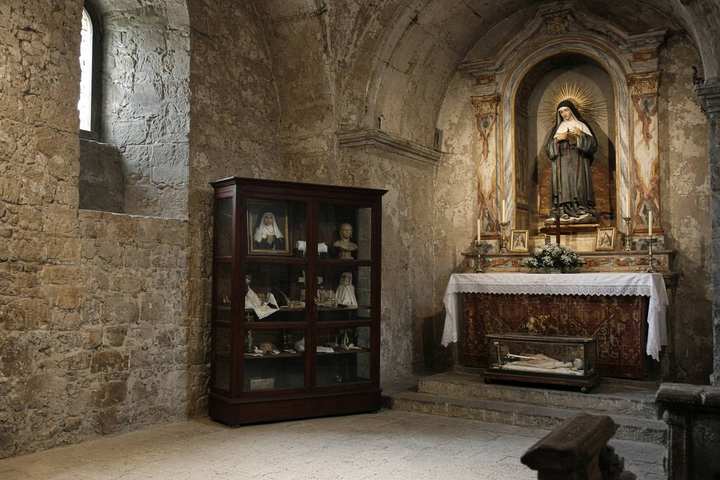
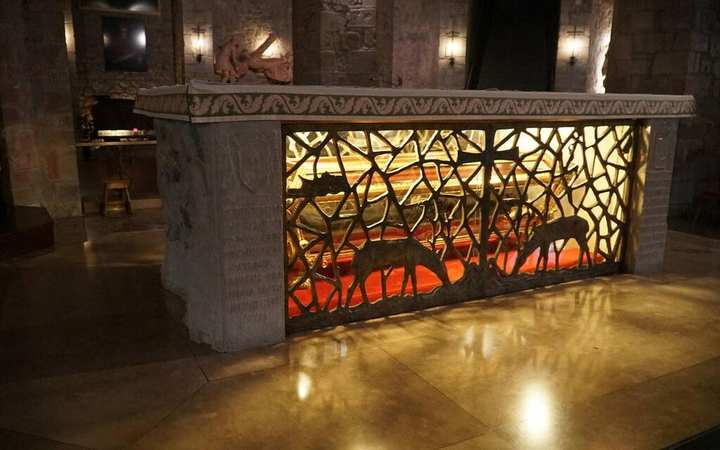
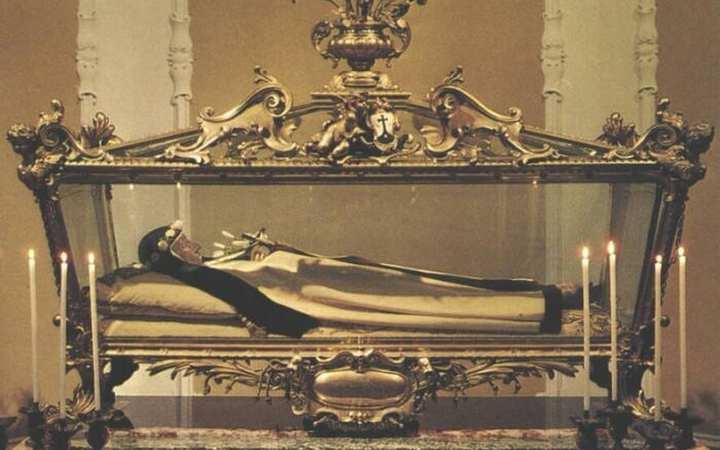
Francis’s first sister. In 1850 her tomb under the high altar was opened and the body found entire. She lies in the crypt at San Giorgio, dressed, the face later given a wax covering for dignity.

The Tongue of St. Anthony of Padua — Basilica of St. Anthony, Padua
RelicLong veneration

The Tongue of St. Anthony of Padua

Basilica of St. Anthony, PaduaDied 1231; tomb opened 1263

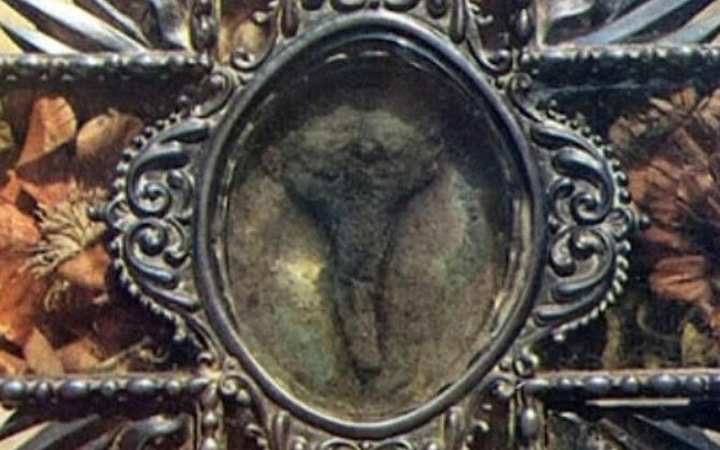
Thirty-two years after Anthony’s death, St. Bonaventure opens the tomb. The body is dust. The tongue is intact, red, as if still speaking. It is kept in a reliquary in the basilica, with the jaw and vocal apparatus.

St. Zita of Lucca — San Frediano, Lucca
RelicChurch-approved

St. Zita of Lucca

San Frediano, LuccaDied 1278; still shown in Lucca

A servant. That is the whole vocation. Bread for the poor from a household that was not hers; a life of kitchens and early Mass. Her body has been shown in Lucca for centuries, naturally mummified, dressed as a maid.
St. Margaret of Cortona — Basilica of St. Margaret, Cortona
RelicChurch-approved

St. Margaret of Cortona

Basilica of St. Margaret, CortonaDied 1297

A penitent: a noble’s mistress who lost him to murder, then took the Franciscan habit of the Third Order. Her body remains in Cortona, above the high altar, a woman who changed her life and was not allowed to disappear.

The Heart of St. Clare of Montefalco — Montefalco, Umbria
RelicChurch-approved

The Heart of St. Clare of Montefalco

Montefalco, UmbriaDied 1308

An Augustinian abbess who said Christ had planted his cross in her heart. At death the sisters, by her permission, open the heart and find — they swear — a crucifix and the instruments of the Passion formed in the cardiac tissue. The heart is still kept.

St. Frances of Rome — Santa Francesca Romana, Roman Forum
RelicChurch-approved

St. Frances of Rome

Santa Francesca Romana, Roman ForumDied 1440

A noblewoman, wife, foundress of the Oblates of Tor de’ Specchi. Her body is under the altar in the church that looks onto the Forum — a Roman matron who would not leave the city to become holy.

St. Rita of Cascia — Cascia
SaintChurch-approved

St. Rita of Cascia

CasciaDied 1457

Wife, mother, widow, Augustinian nun. A thorn-wound in her forehead for fifteen years; roses and figs in January at her death; a body still shown. Patron of impossible cases.

St. Catherine of Bologna — Corpus Domini, Bologna
RelicChurch-approved

St. Catherine of Bologna

Corpus Domini, BolognaDied 1463; enthroned 1500s

Poor Clare, painter, mystic, writer of the Seven Spiritual Weapons. Her body, found flexible and intact, has sat upright in a golden chair for five centuries. You meet her face to face.

St. Eustochia Calafato — Montevergine, Messina
RelicChurch-approved

St. Eustochia Calafato

Montevergine, MessinaDied 1485

A Poor Clare of Messina, of great austerity, whose body remains seated in the choir of her monastery — another of the sitting saints of the Italian south, intact, vested, at her place.

St. Angela Merici — Brescia
RelicChurch-approved

St. Angela Merici

BresciaDied 1540; found intact

Foundress of the Ursulines, the first great teaching sisterhood of the modern West. The body was found preserved and is kept in Brescia, in the church of St. Angela.

The Body of St. Francis Xavier — Basilica of Bom Jesus, Old Goa
RelicChurch-approved

The Body of St. Francis Xavier

Basilica of Bom Jesus, Old GoaDied 1552; body in Goa

The Jesuit missionary dies on Shangchuan Island. Lime is poured in the coffin to speed decay for a later transfer. Months later the body is found fresh. It has lain in Goa for centuries, reduced by relic-taking, still exposed on feast days.

The Body of St. Cecilia — Santa Cecilia in Trastevere, Rome
RelicLong veneration

The Body of St. Cecilia

Santa Cecilia in Trastevere, RomeMartyr c. 230; tomb opened 1599

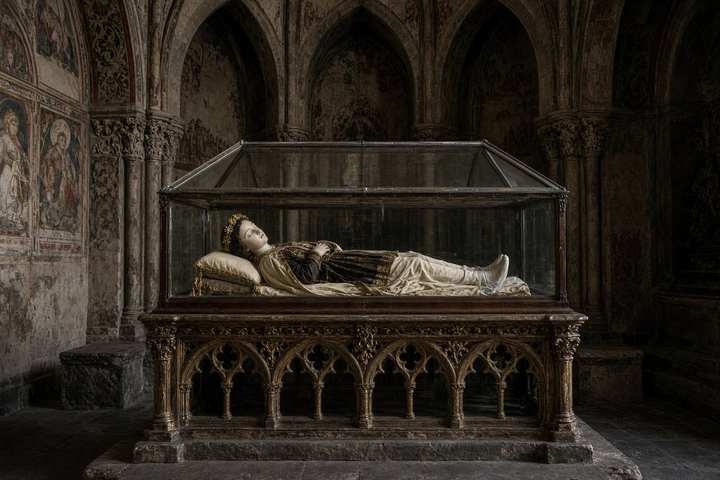
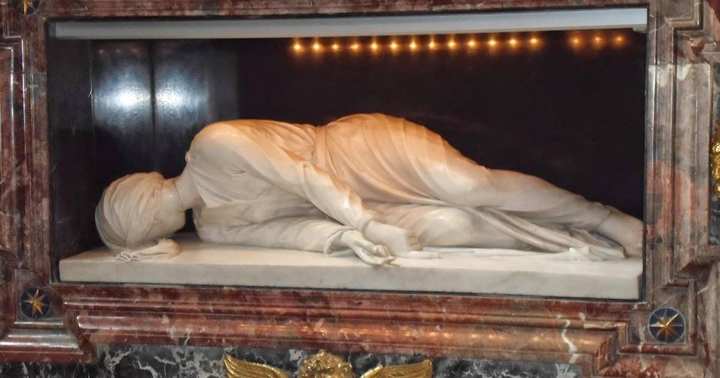
The patroness of music, found in her tomb in 1599 lying as if asleep. Stefano Maderno carved the marble you still see — the cut in the neck, the turned face — swearing it was how the body lay.

St. Germaine Cousin — Pibrac, near Toulouse
RelicChurch-approved

St. Germaine Cousin

Pibrac, near ToulouseDied 1601; found intact 1644

A shepherd girl, scrofulous, neglected, sleeping in the barn. Forty-three years after her death, a workman opens the church floor and finds her intact, a young body in a poor dress. She is the Zita of the fields.

St. John Southworth — Westminster Cathedral, London
RelicChurch-approved

St. John Southworth

Westminster Cathedral, LondonMartyred 1654

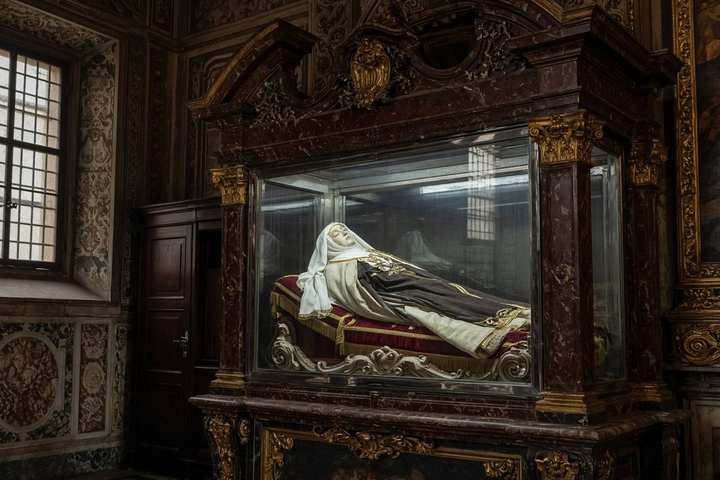
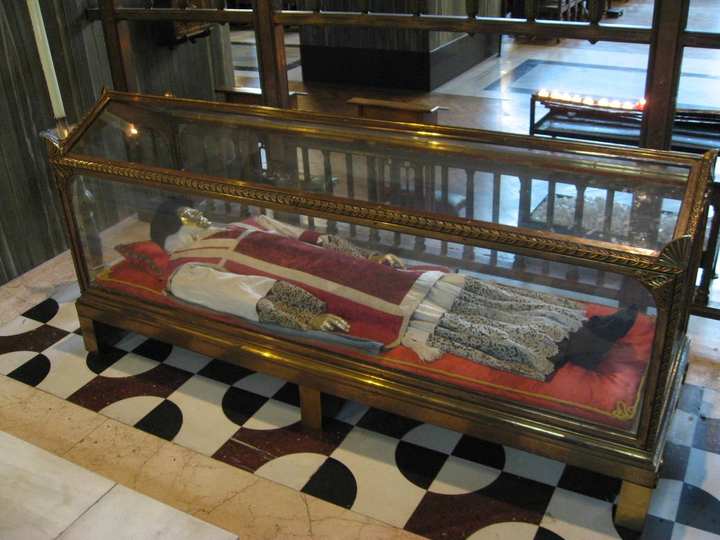
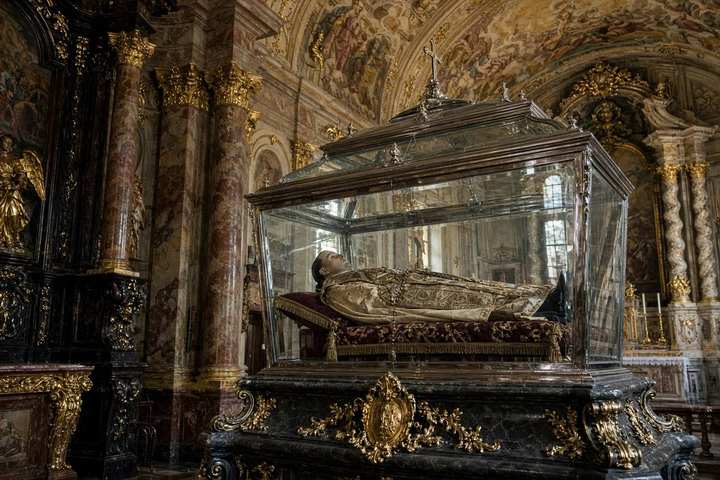
A secular priest, hanged at Tyburn for his office. The body was bought from the executioner, smuggled to Douai, found remarkably preserved, and in 1930 brought to Westminster Cathedral, where he lies in a glass coffin in the north aisle.

The Body of St. Andrew Bobola — Jesuit church, Warsaw
RelicChurch-approved

The Body of St. Andrew Bobola

Jesuit church, WarsawMartyred 1657; found intact 1730

A Jesuit missionary, tortured and killed in Janów. Seventy-three years later the body is found incorrupt, the wounds still visible. The relic has been kidnapped by history — Pinsk, Polotsk, Moscow, Rome, Warsaw — and is home again.

The Heart of St. Vincent de Paul — Chapel of the Vincentians, Rue de Sèvres, Paris
RelicChurch-approved

The Heart of St. Vincent de Paul

Chapel of the Vincentians, Rue de Sèvres, ParisDied 1660; relics in Paris

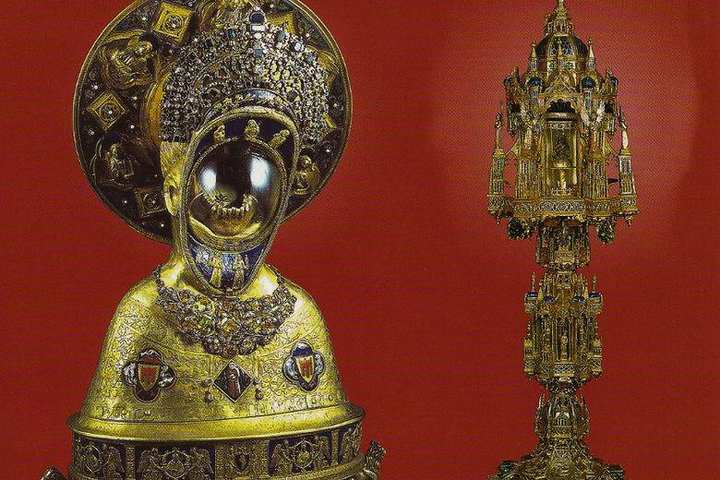
The apostle of charity. His bones rest in a silver effigy above the altar; his heart is kept apart, long described as unusually preserved. Pilgrims come for the man who invented the parish poor as a vocation.
The Body of St. Louise de Marillac — Rue du Bac, Paris
RelicChurch-approved

The Body of St. Louise de Marillac

Rue du Bac, ParisDied 1660

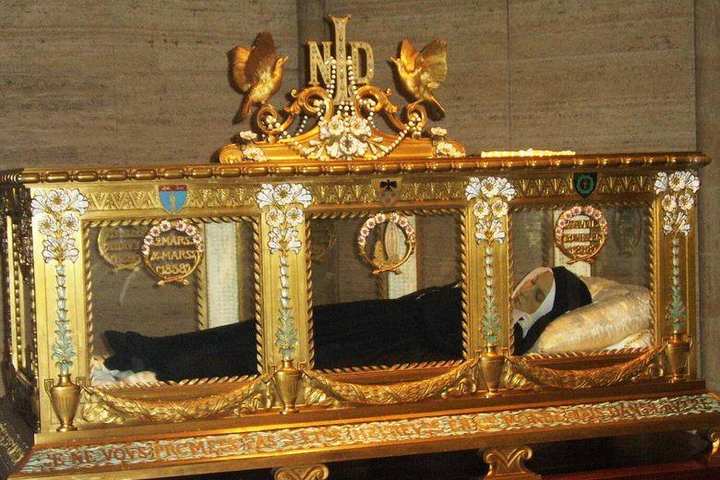
Co-founder of the Daughters of Charity with Vincent. Her body, found well preserved, lies in the chapel of Rue du Bac, across from Catherine Labouré and the chair of the apparitions.

Blessed Innocent XI — St. Peter’s Basilica, Vatican
RelicChurch-approved

Blessed Innocent XI

St. Peter’s Basilica, VaticanDied 1689; body in St. Peter’s

The pope of the relief of Vienna, an ascetic in a baroque court. When the tomb was opened the body was found unusually preserved. He is beatified, and rests in St. Peter’s.

St. Pacifico of San Severino — San Severino Marche
RelicChurch-approved

St. Pacifico of San Severino

San Severino MarcheDied 1721

A Franciscan, deaf, blind, and lame in his last years. After the beatification the relics were covered with a wax figure and laid in a glass coffin in San Severino. Healings at the tomb began at once. What you see is the wax over the relics.

St. Veronica Giuliani — Città di Castello
RelicChurch-approved

St. Veronica Giuliani

Città di CastelloDied 1727; heart examined

Capuchin Poor Clare and stigmatic. After death the bishop had the heart opened and the sisters reported the instruments of the Passion in the tissue, matching notes sealed while she lived. A flood later destroyed the body. The monastery now shows a lifelike figure holding the relics.

St. María de León Bello y Delgado — San Cristóbal de La Laguna, Tenerife
RelicLong veneration

St. María de León Bello y Delgado

San Cristóbal de La Laguna, TenerifeDied 1731; still shown in La Laguna

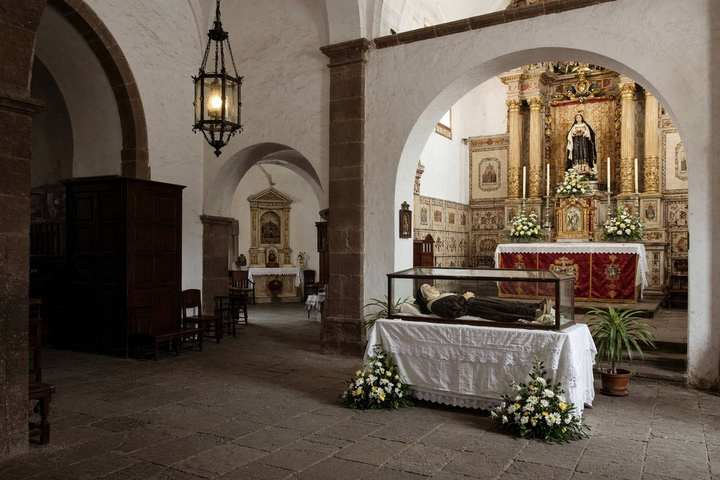
A Dominican sister of the Canary Islands, famous for levitation, bilocation, and prophecy. Her body remains intact in the convent of Santa Catalina, one of the best-preserved in Spain, exposed every 15 February.

St. Lucy Filippini — Montefiascone Cathedral
RelicChurch-approved

St. Lucy Filippini

Montefiascone CathedralDied 1732; body at Montefiascone

Foundress, with Cardinal Barbarigo, of the Religious Teachers Filippini. The body, preserved, is in the cathedral of Montefiascone — a woman of schools for the poor of the Papal States.

St. Teresa Margaret of the Sacred Heart — Florence, Discalced Carmel
RelicChurch-approved

St. Teresa Margaret of the Sacred Heart

Florence, Discalced CarmelDied 1770; found intact

A Florentine Carmelite who died at twenty-two. The body remained flexible and incorrupt, the face beautiful in death, and has been shown in the Carmel of Florence.

The Body of St. Alphonsus Liguori — Pagani, Campania
RelicChurch-approved

The Body of St. Alphonsus Liguori

Pagani, CampaniaDied 1787; shrine at Pagani

Doctor of the Church, founder of the Redemptorists, moral theologian of mercy. His remains are in the basilica at Pagani, a founder’s body in the house of his congregation.
Blessed Anna Maria Taigi — San Crisogono, Trastevere, Rome
RelicChurch-approved

Blessed Anna Maria Taigi

San Crisogono, Trastevere, RomeDied 1837; body in San Crisogono

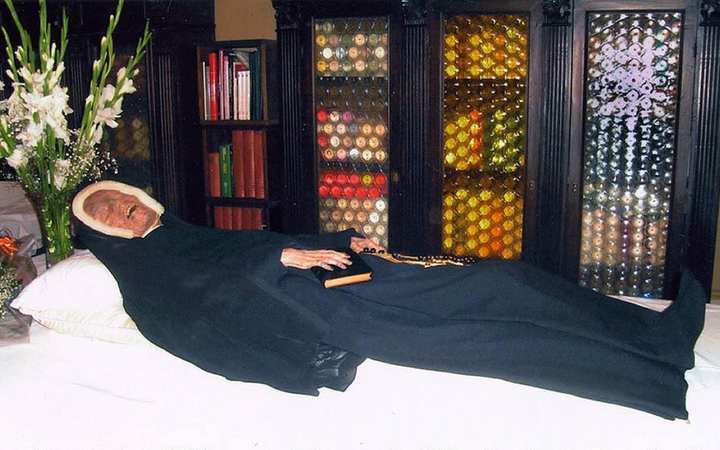
A housewife, mother of seven, tertiary, whose mystical sun — a luminous globe in which she saw the world — was examined by popes. The body, found intact, lies in a glass coffin in Trastevere.

St. Vincent Pallotti — San Salvatore in Onda, Rome
RelicChurch-approved

St. Vincent Pallotti

San Salvatore in Onda, RomeDied 1850; body in San Salvatore in Onda

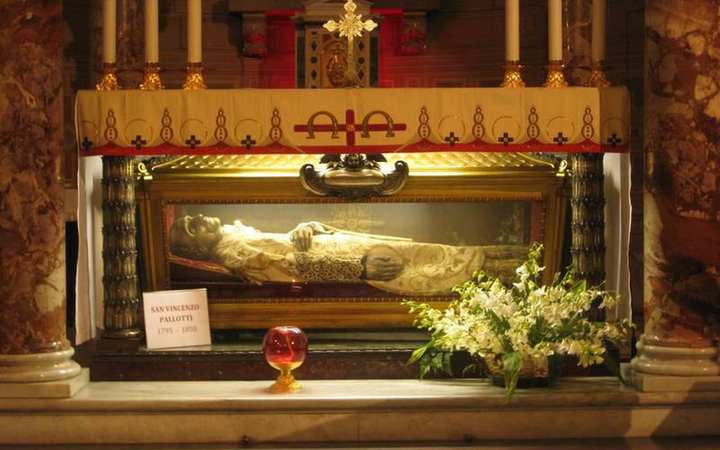
Roman priest, founder of the Pallottines, apostle of the idea that every Catholic is an apostle. The body is under the altar in his church in the Regola, a short walk from the Campo de’ Fiori.

St. John Vianney — Ars-sur-Formans
SaintChurch-approved

St. John Vianney

Ars-sur-FormansDied 1859

A poorly educated parish priest who turned a forgotten village into the confessional of France. Nights of diabolic harassment, a multiplying of food, knowledge of consciences, and a body still shown at Ars.

St. Gabriel of Our Lady of Sorrows — Isola del Gran Sasso
RelicChurch-approved

St. Gabriel of Our Lady of Sorrows

Isola del Gran SassoDied 1862; body at Isola del Gran Sasso

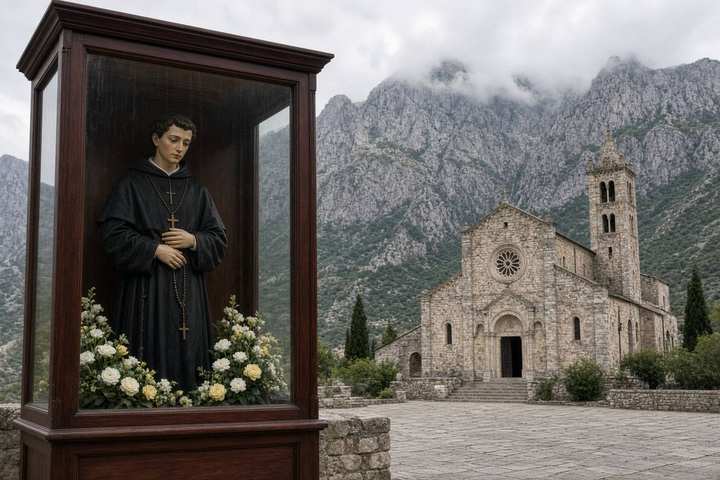
A Passionist student, dead at twenty-four of tuberculosis, whose body was found preserved and is kept in the sanctuary at Isola. Patron of youth, of students, of Abruzzo.

St. Madeleine Sophie Barat — Sacred Heart, Jette (Brussels)
RelicChurch-approved

St. Madeleine Sophie Barat

Sacred Heart, Jette (Brussels)Died 1865; found intact 1893

Foundress of the Society of the Sacred Heart. Exhumed twenty-eight years after death, the body was flexible, the eyes intact. She is still shown in the chapel at Jette.

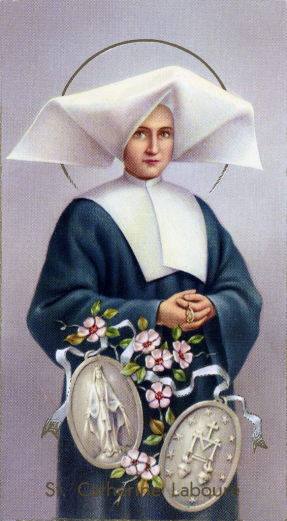
The Body of St. Catherine Labouré — Rue du Bac, Paris
SaintChurch-approved

The Body of St. Catherine Labouré

Rue du Bac, ParisDied 1876; found intact 1933

The seer of the Miraculous Medal dies unknown. At her beatification exhumation the body is intact, the eyes still blue. She lies under the altar in the chapel where Mary came.

The Body of St. Bernadette — Nevers
SaintChurch-approved

The Body of St. Bernadette

NeversDied 1879; exhumed 1909, 1919, 1925

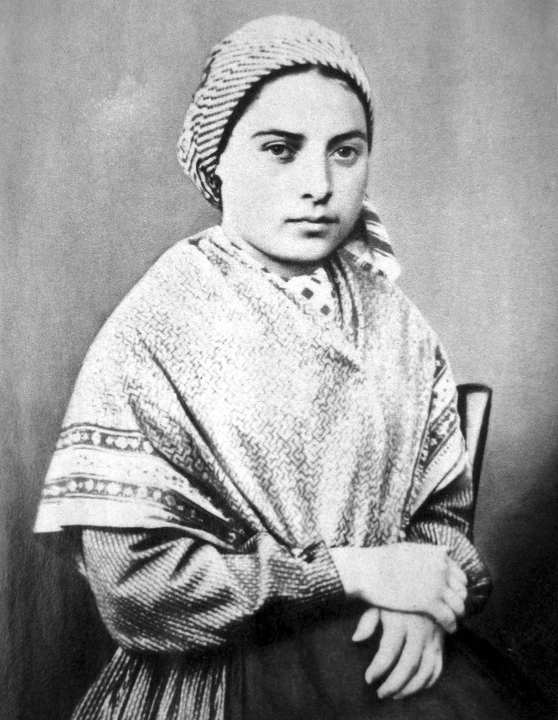
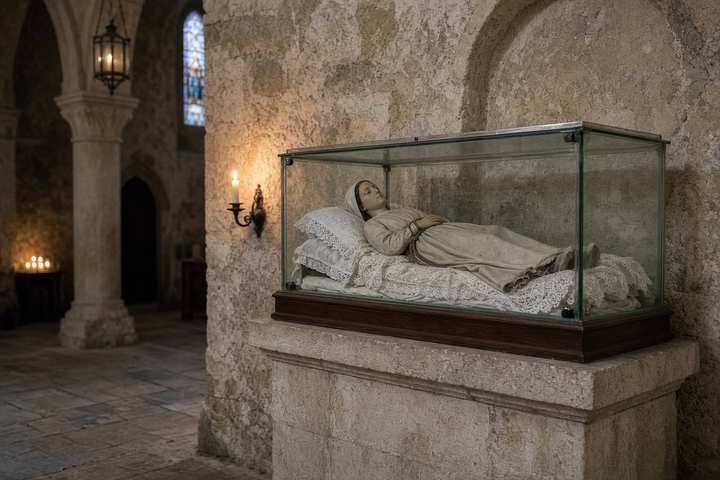
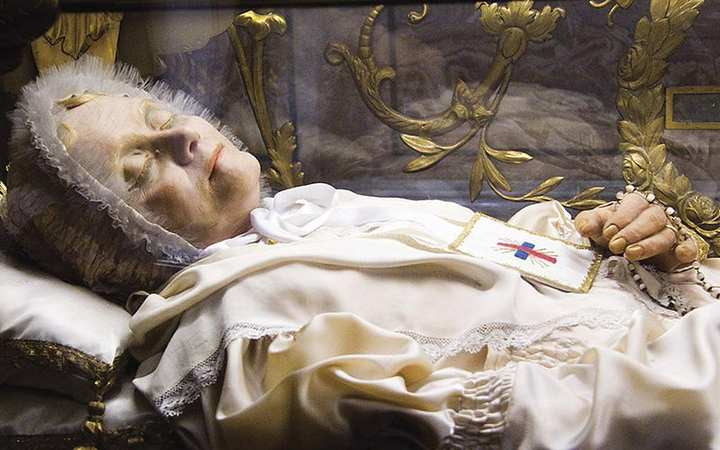
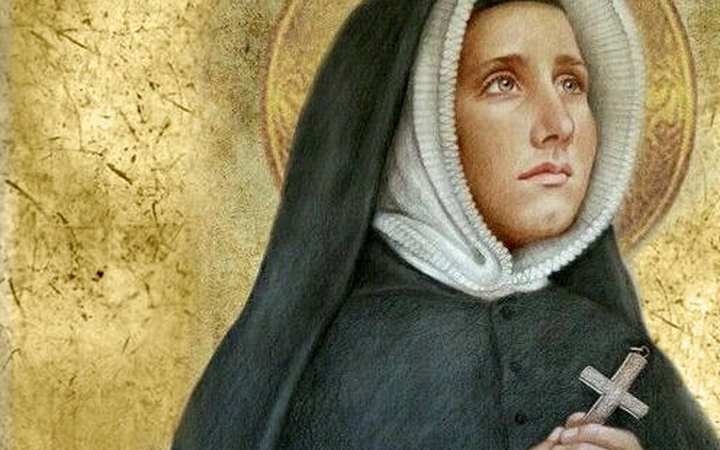
Bernadette Soubirous died at thirty-five in the convent at Nevers, still ill, hidden on purpose. For the cause of her beatification the coffin was opened in 1909, 1919 and 1925. The body was intact. A light wax covers the face and hands now, which the Church does not deny. She lies in the chapel of Saint-Gildard. The girl who asked not to be looked at is looked at by the world.

St. Paula Frassinetti — St. Onofrio, Rome
RelicChurch-approved

St. Paula Frassinetti

St. Onofrio, RomeDied 1882; found intact 1906

Foundress of the Sisters of St. Dorothy. Exhumed in 1906, the body was intact, the habit fresh. She lies in the chapel of St. Onofrio on the Janiculum.

St. Charbel Makhlouf — Annaya, Mount Lebanon
SaintChurch-approved

St. Charbel Makhlouf

Annaya, Mount LebanonDied 1898; phenomena ongoing

A Maronite hermit, silent in life, whose tomb ran with a blood-like moisture for decades, whose body was found intact, and whose intercession is tied to a stream of reported healings that made him a saint of both East and West.

The Body of St. Pius X — St. Peter’s Basilica, Vatican
RelicChurch-approved

The Body of St. Pius X

St. Peter’s Basilica, VaticanDied 1914; exhumed 1944

The pope of frequent Communion and of Pascendi. Exhumed in 1944, the body was found in a remarkable state of preservation. He lies under an altar in the Presentation chapel, the face a silver mask.
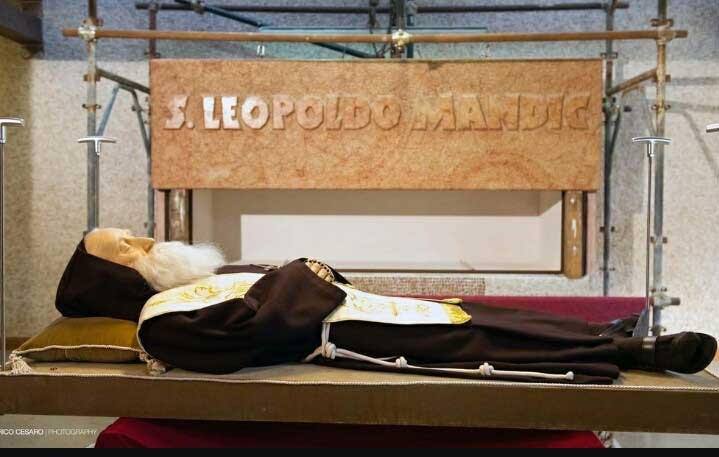
St. Leopold Mandić — Padua
RelicChurch-approved

St. Leopold Mandić

PaduaDied 1942; body shown in Padua

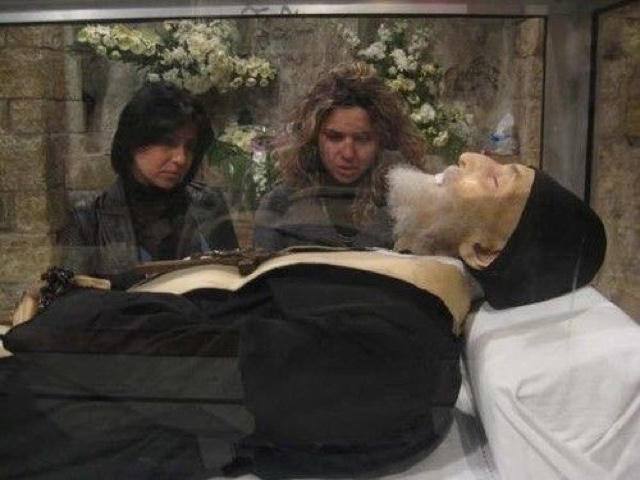
A tiny Croatian Capuchin, hunched, who sat in a confessional in Padua for thirty years. The body, exhumed for beatification, was found intact and is now in a glass shrine in his church — a confessor who did not leave his box.