The reading
How it began
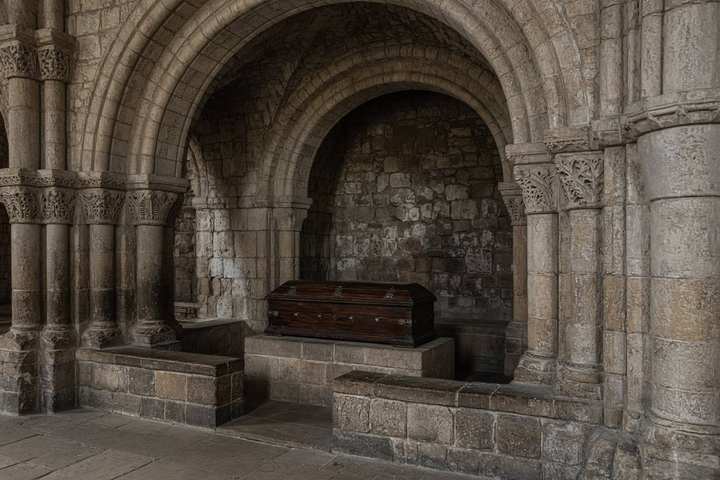
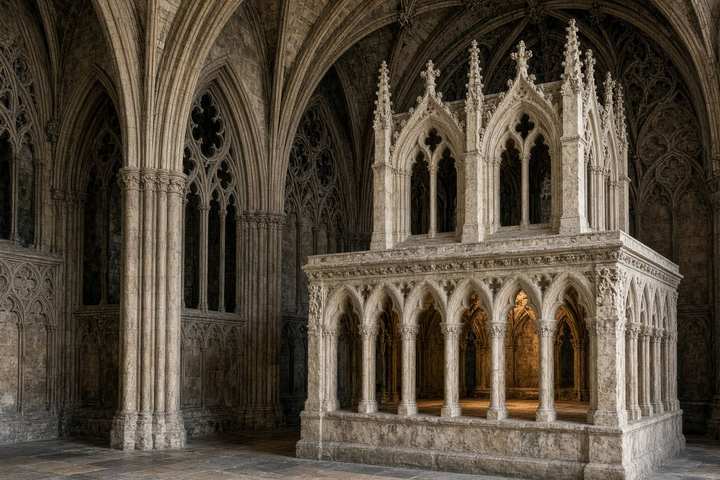
Æthelthryth, twice married, remains a virgin by her own stubborn vow, founds Ely, dies of a tumor on the neck. In 695 the translation: dry linen, a living colour, the incision healed. A Roman sarcophagus, found conveniently on the shore, becomes the shrine.
The day itself
The shrine is smashed in 1541. A hand, claimed as hers, is at St. Etheldreda’s in Ely Place, London — a Catholic chapel in the city’s legal heart. “Tawdry” comes from St. Audrey’s fair, cheap lace at her feast. The language kept her when the shrine did not.
What was kept
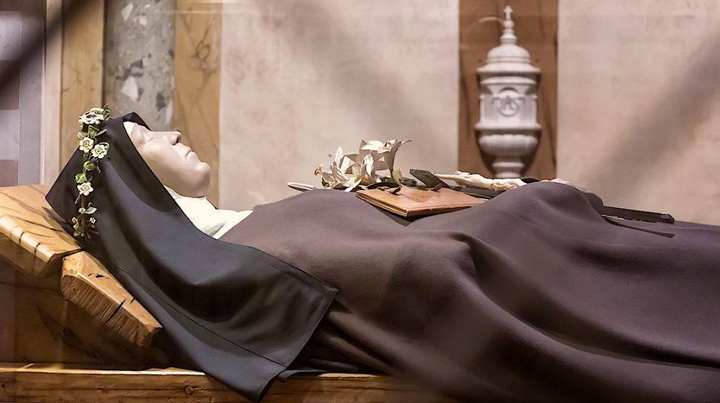
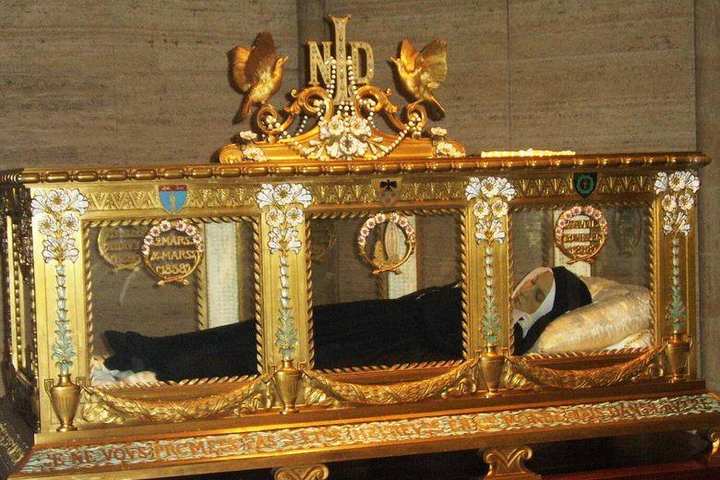
Bede (Ecclesiastical History IV.19) is the witness, and he names his sources: the abbess Sexburg, who was Etheldreda’s sister, and the physician Cynefrid, who had lanced the tumour on her neck in her last illness. At the translation in 695, sixteen years after her death, the linen was clean, the body undecayed, and the incision healed to a scar. A Roman sarcophagus found at Grantchester was used for the new shrine. Ely grew up around her. In 1541 the shrine was destroyed. A hand said to be hers survived in Catholic keeping and is now in the church of St. Etheldreda, Ely Place, in Holborn — a thirteenth-century chapel of the bishops of Ely, restored for Catholic worship in the nineteenth century and still the shrine of that relic. The English word “tawdry” is a worn-down “St. Audrey,” from the cheap lace sold at her fair. The language remembered a queen who had refused a second marriage-bed and founded a monastery of women on an island in the fens.
Reading
How to read St. Etheldreda of Ely
A healed wound on a dead abbess is a small resurrection story: the body as a field God does not always abandon. Ely was a fortress of women. The sign is that their founder had not become dust on schedule.
Church status
How this sign has been received
Long veneration
Bede is the witness. Medieval England kept her feast with splendor. The hand at Ely Place is venerated with the permission of Westminster.
Sources
- Bede, Ecclesiastical History IV.19
- St. Etheldreda’s, Ely Place, London
For the classroom
St. Etheldreda of Ely (Died 679; found intact 695, Ely Cathedral). Grade in this encyclopedia: Long veneration. A queen who walked away from a throne to be a nun. Sixteen years after her death the abbess-sister Sexburga raises the body and finds it uncorrupted, the surgical wound of her last illness closed. Bede records it.