The reading
How it began
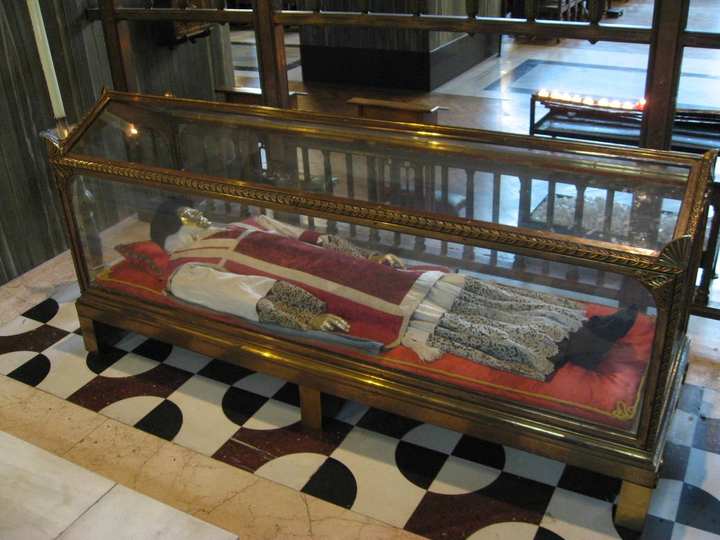
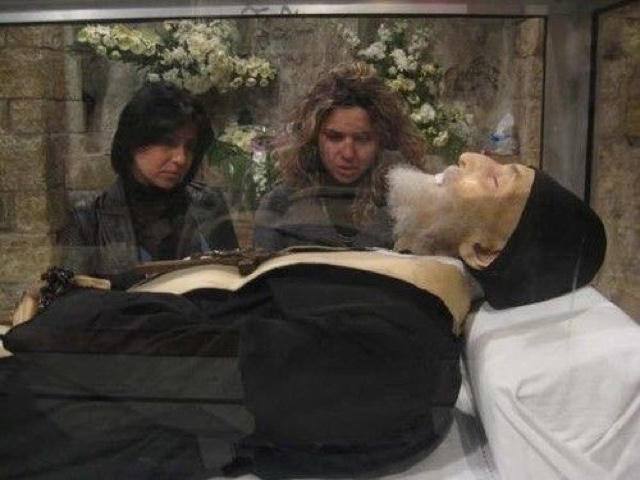
Cuthbert dies on Inner Farne in 687. In 698 the monks raise him for a shrine and find the body as if asleep, the joints flexible, the vestments fresh. Bede tells it with his usual care. When the Danes come, the community walks with the coffin for years — a Church in exile with its saint as luggage.
The day itself
At Durham in 1104 the tomb is opened again. Norman clerics record an intact body. The Reformation wrecks the shrine; the bones, or most of them, are reburied. In 1827 and 1899 the coffin is scientifically examined: a man of Cuthbert’s age, the famous small gold-and-garnet cross, silk, St. Cuthbert’s Gospel (now in the British Library). Incorruption of flesh does not survive four openings and a Protestant century. The memory does.
What was kept
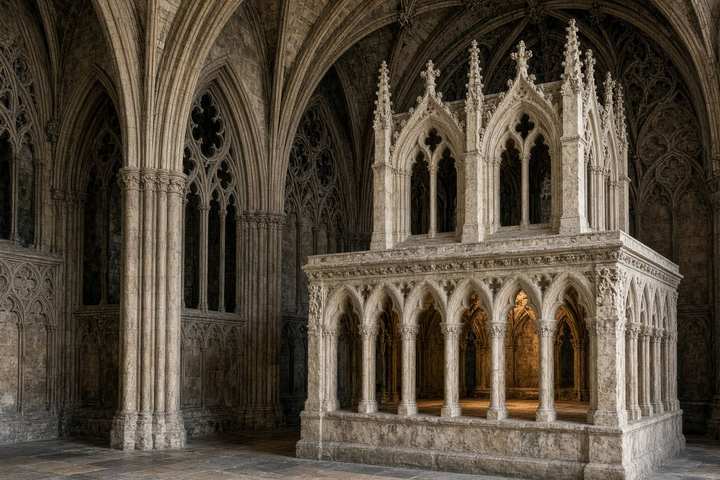
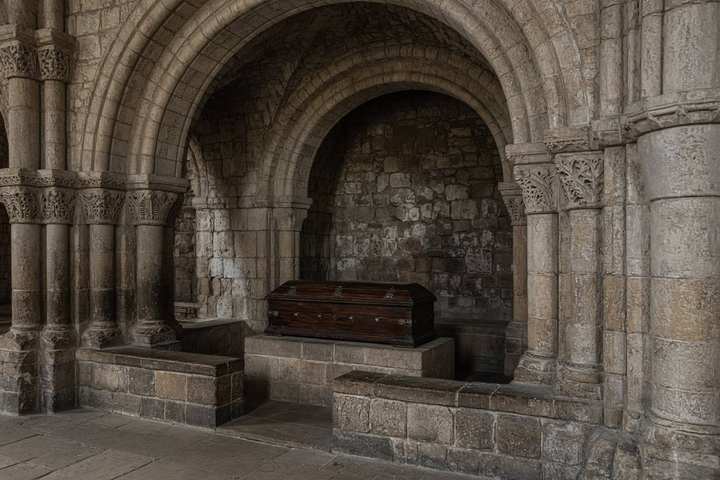
Bede’s Life and the Ecclesiastical History (IV.30) say that eleven years after Cuthbert’s death on Inner Farne, in 698, the monks of Lindisfarne raised him to a shrine and found the joints flexible and the vestments fresh. When the Viking attacks made Lindisfarne uninhabitable, the community carried the coffin inland for years and at last to Durham. In 1104, at the translation into the new Norman cathedral, the tomb was opened again and the body was still described as entire. The Reformation pulled the shrine down. The coffin was opened in 1827 and examined again in 1899. By then the flesh was long gone. What remained, and remains, is a man’s skeleton of the right age, a small gold and garnet pectoral cross, silks, a comb, and the little Gospel of John now in the British Library — the book that had been in the coffin. Durham still keeps the relics behind the high altar. The incorruption Bede saw did not survive four openings and the sixteenth century. The cross did.
Reading
How to read The Body of St. Cuthbert
Cuthbert is England’s Charbel: a hermit who became a bishop who became a wandering relic who became a cathedral. The incorruption in Bede is a sign that the North had a father. The cross in the coffin is the sermon that lasted.
Church status
How this sign has been received
Long veneration
One of the great cults of medieval England. Durham remains his church. Status: saint of the undivided English Church; the 698 and 1104 findings are among the best-attested early incorruptions in Europe.
Sources
- Bede, Life of St. Cuthbert; Ecclesiastical History IV
- Durham Cathedral, Cuthbert relics
For the classroom
The Body of St. Cuthbert (Died 687; found intact 698 and 1104, Durham Cathedral). Grade in this encyclopedia: Long veneration. The bishop of Lindisfarne, buried on his island, found incorrupt eleven years later, carried across Northumbria from the Vikings, opened again at Durham in 1104 still described as entire. The coffin, the stole, the pectoral cross remain.