
The reading
How it began
Rose preaches against the Ghibellines, is expelled, comes home, and dies in 1251. The body is kept. It has survived fires and translations. The town’s identity is the procession: a hundred-foot machine, the saint’s statue on top, through streets that barely hold it. The relic is the girl; the miracle the city still performs is the carrying.
The day itself
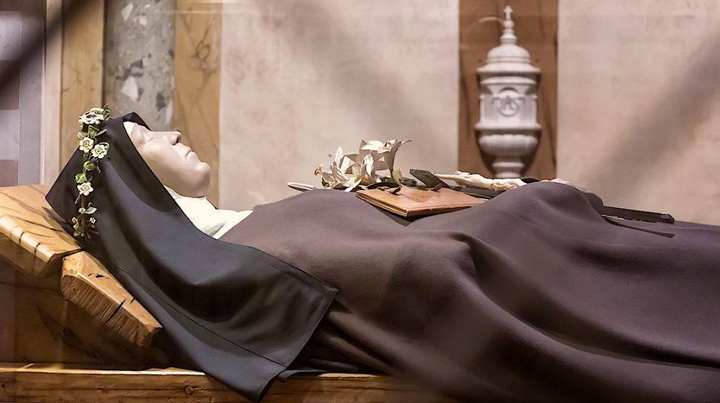
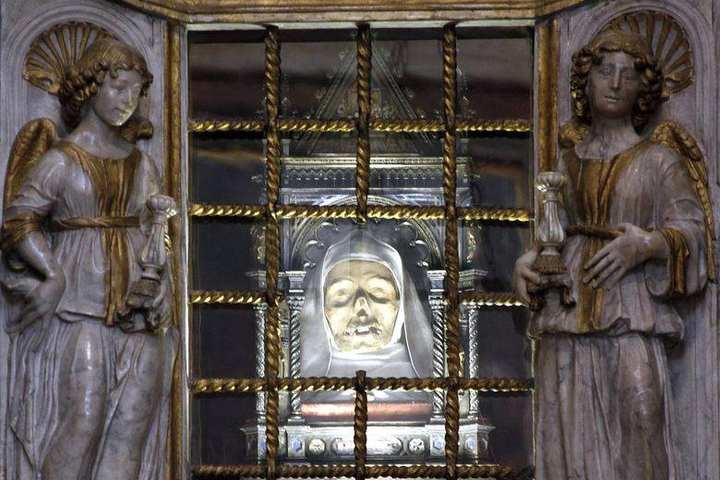
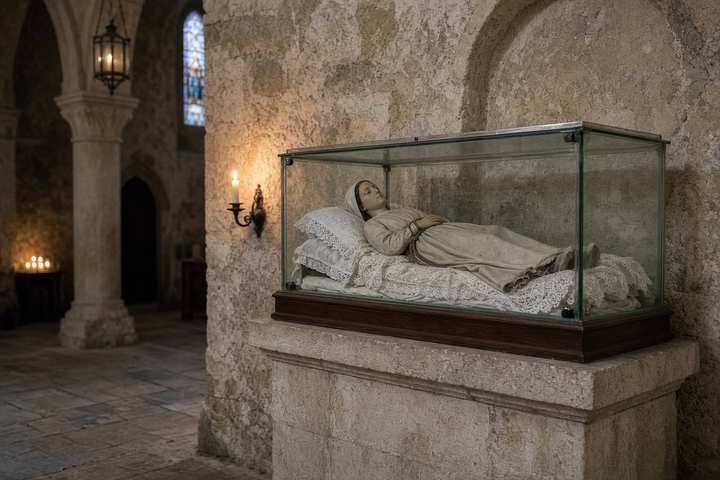
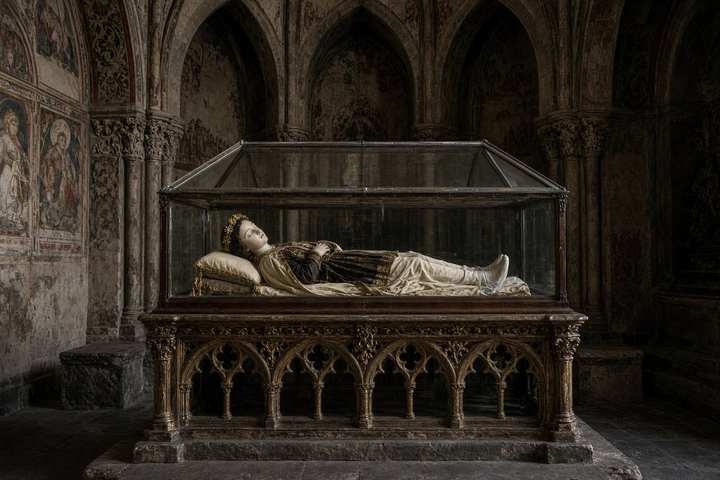
Rose died at Viterbo in 1251, about eighteen, after a short public life of preaching penance in a city split between pope and emperor. She was refused by the Poor Clares while she was alive and buried first in the parish church of Santa Maria in Poggio. In 1258, at a translation, the body was found preserved. It has been kept at the monastery of Santa Rosa through fires that damaged the church. The body lies in a shrine in the church; the face is the darkened face of a long preservation, not a wax portrait. Callixtus III canonized her in 1457. Every 3 September the city carries the Macchina di Santa Rosa, a tower of wood and iron and lights, about thirty metres high, on the shoulders of a hundred porters, the Facchini di Santa Rosa, through streets that turn too tightly for it. The machine is a civic vow. The relic in the church is the girl. They are not the same object, and Viterbo is old enough to know it.
Reading
How to read St. Rose of Viterbo
A teenager who would not be quiet. Viterbo answered by never putting her down.
Church status
How this sign has been received
Church-approved
Canonized 1457. Patron of Viterbo. Body in the monastery-church of Santa Rosa.
Sources
- Monastery of Santa Rosa, Viterbo
- Acta of the Macchina di Santa Rosa
For the classroom
St. Rose of Viterbo (Died 1251; still intact in Viterbo, Santa Rosa, Viterbo). Grade in this encyclopedia: Church-approved. A girl preacher of the thirteenth century, dead at eighteen, whose body remains in Viterbo and is carried through the city on her feast — the Macchina di Santa Rosa — a tower of lights on the shoulders of a hundred men.