
The reading
How it began
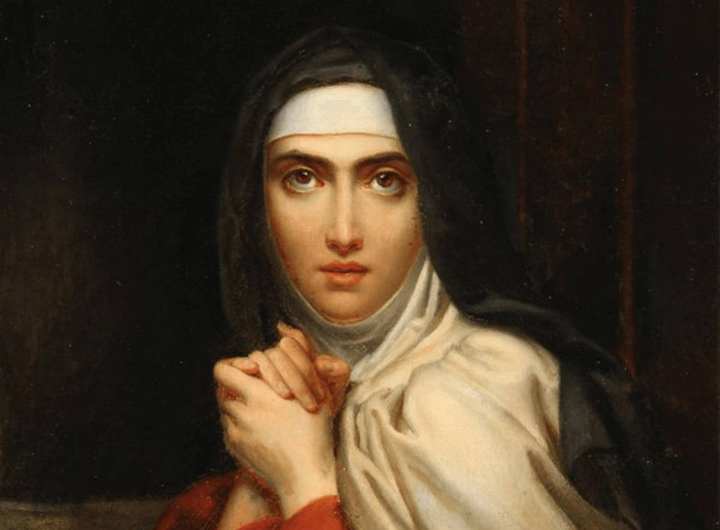
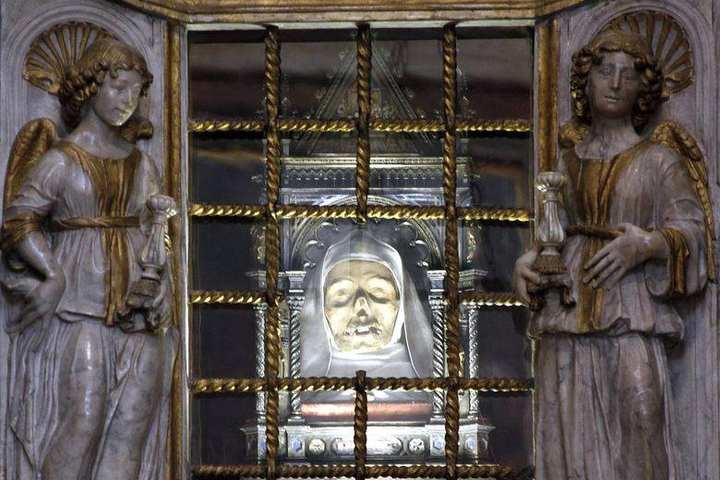
Catherine Benincasa, dyer’s daughter, becomes a consecrated virgin in the world. Her visions are of the crucified Christ, of a mystical marriage, of the Church as a diseased body she is to love anyway. In Pisa in 1375 she receives the stigmata; she asks that they not be seen. They appear at her death.
The day itself
She cannot write at first; she dictates letters that still scorch. She brokers peace, fails at peace, and in 1376 convinces Gregory XI to leave Avignon. She dies in Rome at thirty-three, exhausted by the Church she refused to leave.
Reading
How to read St. Catherine of Siena
Catherine is the answer to a sneer that mystics are apolitical. Her ecstasies issued in reform. The invisible stigmata are of a piece with that hiddenness: a public woman with a secret wound, serving a public Church.
Her long fasts, including claims of living on the Host, sit at the edge of the medically possible and the hagiographically stylized. The Church, making her a Doctor, trusted her teaching more than her diet.
The chair of Peter
Popes who belong with this sign
Pray this
Prayers that sit with the story
Church status
How this sign has been received
Church-approved
Canonized 1461; Doctor of the Church, 1970; co-patron of Italy and of Europe. The mystical phenomena are part of her legend; the doctrine of her Dialogue is the reason for the doctorate.
The shrine today
Why pilgrims still go
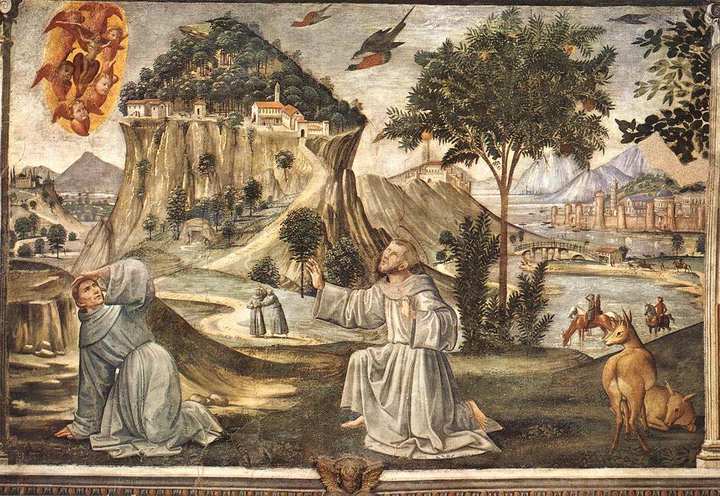
The man who was marked with the wounds, the woman who received the hidden stigmata, the town that still looks like a fresco. Assisi is not a Franciscan souvenir shop, though it contains several. It is the place poverty became a love affair.
Assisi & Siena — the reasonsSources
- Raymond of Capua, Life of St. Catherine
- The Dialogue of St. Catherine of Siena
For the classroom
St. Catherine of Siena (Stigmata 1375; died 1380, Siena and Rome). Grade in this encyclopedia: Church-approved. A Dominican tertiary, mystic, and Doctor of the Church who received invisible stigmata, lived on the Eucharist for long periods, and told a pope to go home to Rome — and was obeyed.