The reading
How it began
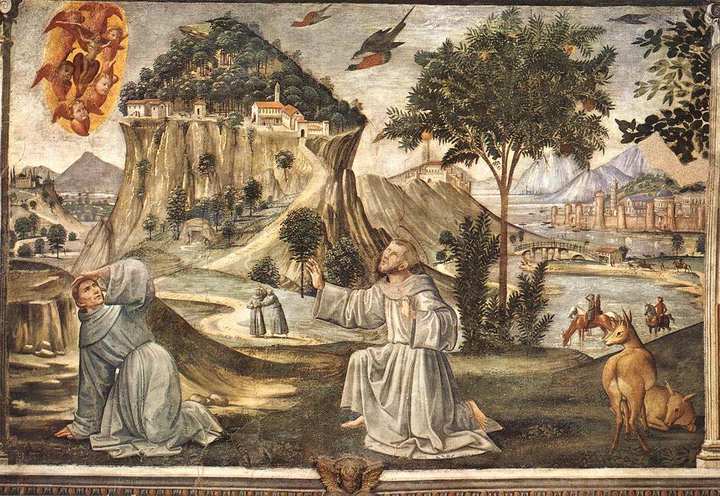
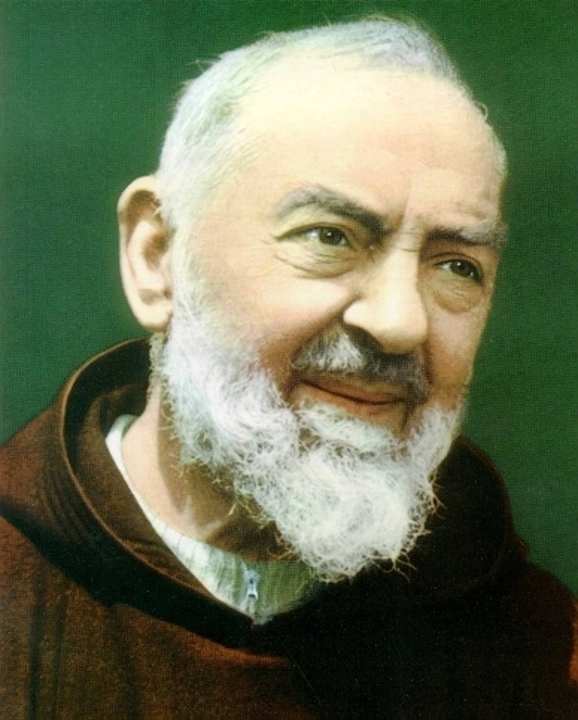
Francesco Forgione, from Pietrelcina, becomes a Capuchin. On 20 September 1918, after Mass, he receives the stigmata — hands, feet, side — which will bleed, be photographed, be wrapped, be denied as fraud, and remain until shortly before his death. He also reports the transverberation of the heart, bilocation, the odor of sanctity, and a running war with the devil that his letters describe without glamour.
The day itself
The Holy Office forbids him, for a time, to say Mass in public. He obeys. People still come. He reads hearts in the confessional, which is, if true, a greater pastoral miracle than a bleeding hand. He founds a hospital, the Home for the Relief of Suffering. He dies on 23 September 1968. A million people go to the funeral.
What was kept
John Paul II, who as a young priest had written to him, canonizes him in 2002.
Reading
How to read St. Pio of Pietrelcina
Padre Pio is a walking crucifix in a century that specialized in anonymous death. That is why the crowds came, and why some intellectuals flinched. Catholic theology says stigmata can be a charism, a psychosomatic mystery, or a fraud. The Church did not canonize the wounds. The Church canonized the priest who obeyed, confessed sinners, and loved the Mass.
Bilocation stories (the famous one: in the air over a burning city, or in a bishop’s study while remaining in the choir) are the folklore around a center. The center is Good Friday made chronic, and a confessional light left on.
Pray this
Prayers that sit with the story
Church status
How this sign has been received
Church-approved
Canonized: therefore the Church proposes his life as holy and, in the process, accepted miracles through his intercession after death. The Church does not, by canonizing, define the origin of every reported phenomenon in his life. The stigmata were inspected by physicians of various opinions. Status of the man: saint. Status of each marvel: mixed evidence, some of it strong, none of it the basis of the Creed.
Investigation
What has been examined
Doctors saw and photographed the wounds. Hypotheses include hysterical necrosis, chemical irritation, and a true unexplained lesion. Fifty years is a long fraud. It is also a long pathology. Science can describe; it cannot name a saint. The hospital he built is, in a way, his own commentary: suffering is to be relieved, not displayed.
The shrine today
Why pilgrims still go
The stigmatic friar, the confessional that lasted hours, the hospital he built for the poor (the Casa Sollievo della Sofferenza). People come for Padre Pio the wonder-worker and stay because he was a priest who suffered, and who told them to pray, hope, and not worry.
San Giovanni Rotondo — the reasonsSources
- Epistolary of Padre Pio
- Canonical process, Congregation for the Causes of Saints
- John Paul II, canonization homily, 16 June 2002
For the classroom
St. Pio of Pietrelcina (Stigmata 1918; died 1968, San Giovanni Rotondo). Grade in this encyclopedia: Church-approved. A Capuchin friar who bore the five wounds of Christ for fifty years, heard confessions for ten hours a day, and was accused, banned, filmed, loved, and finally canonized. The most investigated mystic of modern times.