Saints & Mystics
Stigmata, levitation, bilocation, a body that does not rot: the Church does not canonize a person because of marvels. The Church canonizes because of heroic virtue. Wonders, if they come, are treated as possible confirmations — and as spiritual dangers if they become the point.
The file
How this section is read
A saint, in Catholic speech, is not a magician who died. It is a human being the Church has judged to have lived the Gospel with a completeness the Church is willing to set on the altar. The process is slow, legal, and often unkind to legend. Witnesses are heard. Writings are read. A miracle — usually a healing that medicine cannot account for — is asked for at beatification and another at canonization. The marvels that filled a life, if they filled it, are examined as part of the file, not as a ticket.
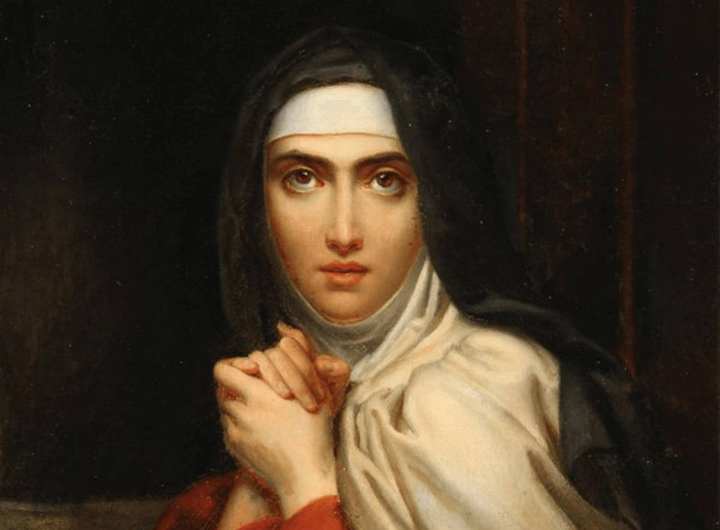
Some lives are nevertheless strange in ways a camera would follow. Francis of Assisi and the wounds of 1224. Padre Pio of Pietrelcina, who heard confessions for fifty years with a set of wounds that doctors looked at and did not close. Joseph of Cupertino, whose levitations were a pastoral problem before they were a baroque painting. Catherine of Siena. Teresa of Ávila. The question the Church asks is not “did something odd happen.” It is “who was this person, and did the oddness serve charity or feed a circus.”
This section stays with named people and official portraits where they exist. If the subject is Padre Pio, you will see Padre Pio. If it is the stigmata as a class, it is still a person, on a date, in a place — not a stock wound from another century.
21 signs
France
5 signs, in the order of their years
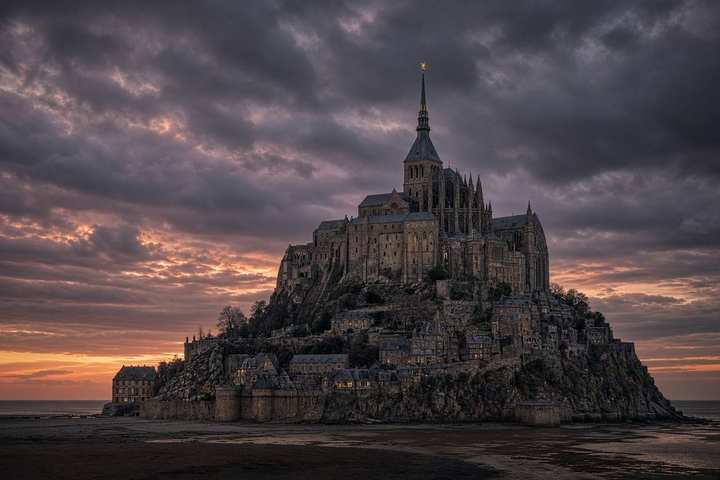
The rock Michael asked for
Mont-Saint-Michel, Normandyc. 708
In the early eighth century Aubert, bishop of Avranches, is said to have been told in sleep, three times, to build a church for Saint Michael on the granite islet in the bay — in imitation of the cave at Monte Sant’Angelo. He delayed. The third time, the legend says, the Archangel’s finger left a hole in his skull. A pierced cranium has long been shown at Avranches. The abbey on the rock is not a legend. It has been a Benedictine house, a prison, a national monument, and, since 2001, a house of the Monastic Fraternities of Jerusalem. The gold Michael on the spire is the work of Emmanuel Frémiet, 1897.
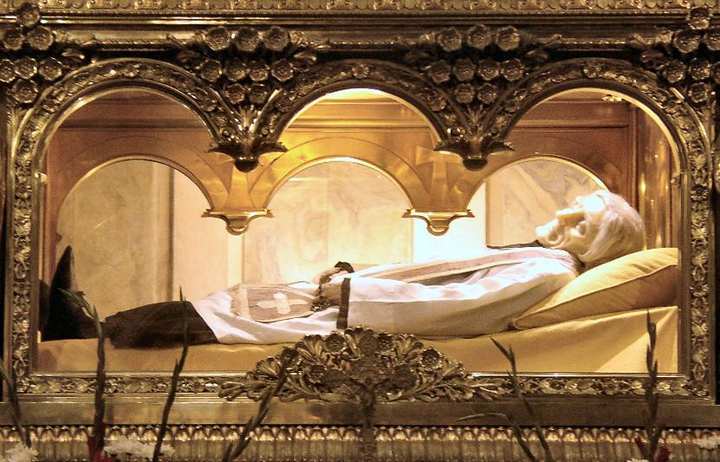
St. John Vianney
Ars-sur-FormansDied 1859
A poorly educated parish priest who turned a forgotten village into the confessional of France. Nights of diabolic harassment, a multiplying of food, knowledge of consciences, and a body still shown at Ars.
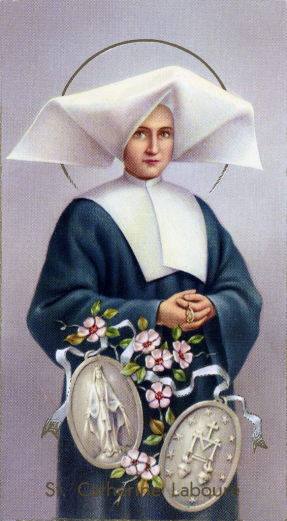
The Body of St. Catherine Labouré
Rue du Bac, ParisDied 1876; found intact 1933
The seer of the Miraculous Medal dies unknown. At her beatification exhumation the body is intact, the eyes still blue. She lies under the altar in the chapel where Mary came.
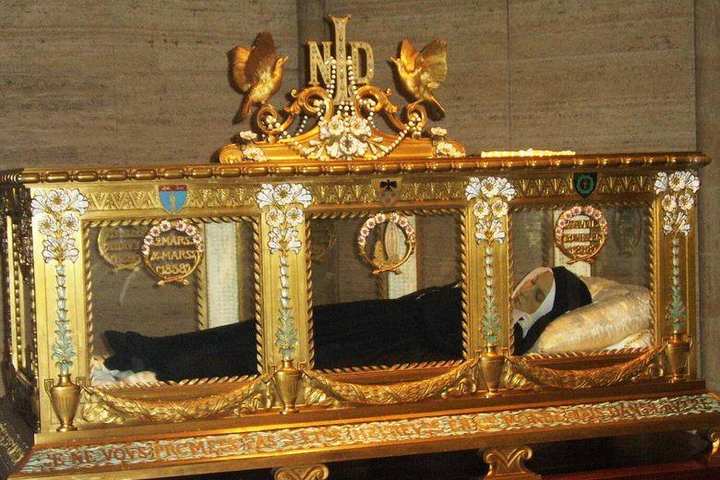
The Body of St. Bernadette
NeversDied 1879; exhumed 1909, 1919, 1925
Bernadette Soubirous died at thirty-five in the convent at Nevers, still ill, hidden on purpose. For the cause of her beatification the coffin was opened in 1909, 1919 and 1925. The body was intact. A light wax covers the face and hands now, which the Church does not deny. She lies in the chapel of Saint-Gildard. The girl who asked not to be looked at is looked at by the world.
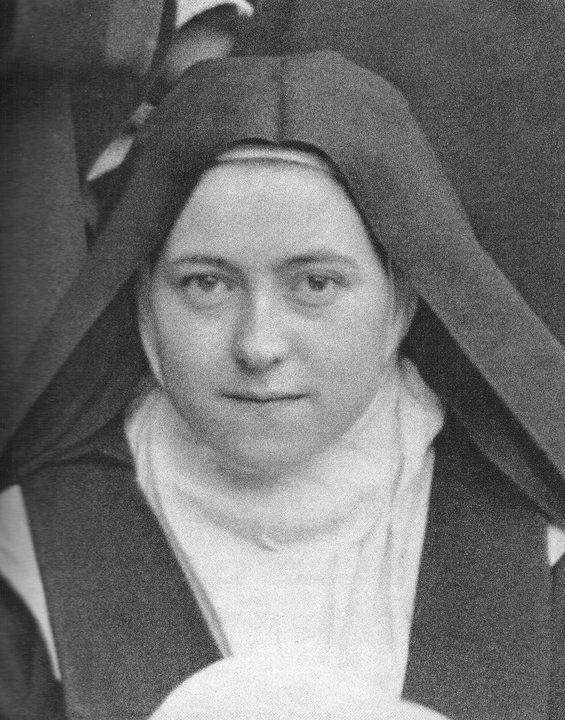
St. Thérèse of Lisieux
Lisieux, Normandydied 1897; canonized 1925
A Carmelite who died at twenty-four, promised a shower of roses, and was named a Doctor of the Church for a little way of trust that has sent more people to holiness — and to Lisieux — than any treatise.
Italy
12 signs, in the order of their years
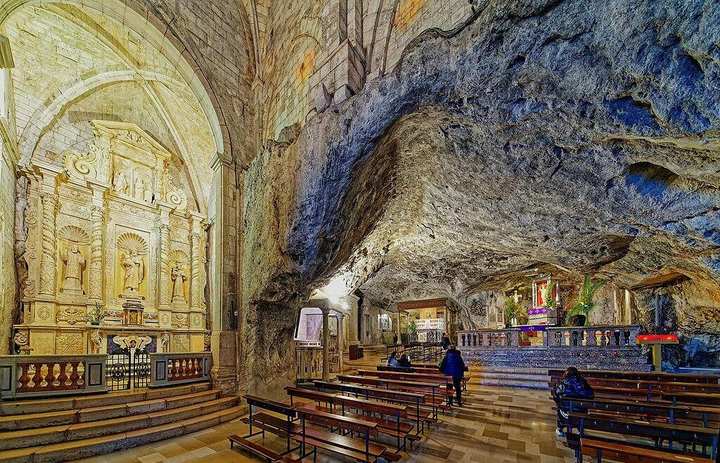
The cave of Saint Michael
Monte Sant’Angelo, Gargano, Apulialate 5th century; the written legend is medieval
On the Gargano promontory, above the Adriatic, the town of Monte Sant’Angelo keeps a cave the Latin West has treated as Saint Michael’s own church since late antiquity. The medieval Liber de apparitione tells of a bull, an arrow that returned, a bishop of Siponto named Laurence, a battle dated to 8 May, and a consecration the Archangel is said to have performed himself. The cave, the stair, the bronze doors, and the pilgrimage are not a legend. They are still there. The bull and the arrow are the shrine’s founding story, written down centuries after the date it claims, and the Church has kept them as venerated tradition rather than as an article of the Creed.
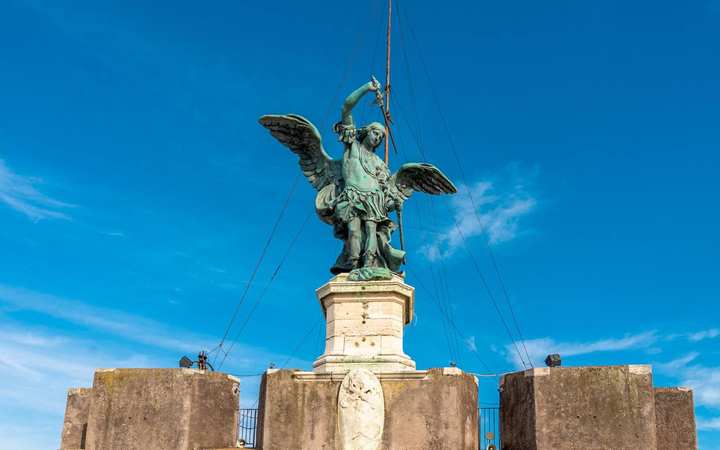
Michael over the plague
Hadrian’s Mausoleum, RomeEaster 590
In 590 Rome was burying its dead from plague after the Tiber flood. Gregory, just elected Pope, ordered a penitential procession through the city. That procession is in a contemporary history. The vision of Saint Michael on Hadrian’s mausoleum, putting a bloody sword back into its sheath, is how Rome later explained why the dying stopped — and why an emperor’s tomb has been called the Castle of the Holy Angel ever since. The bronze on the roof is eighteenth-century. The name is medieval. The plague of 590 is not a fable.
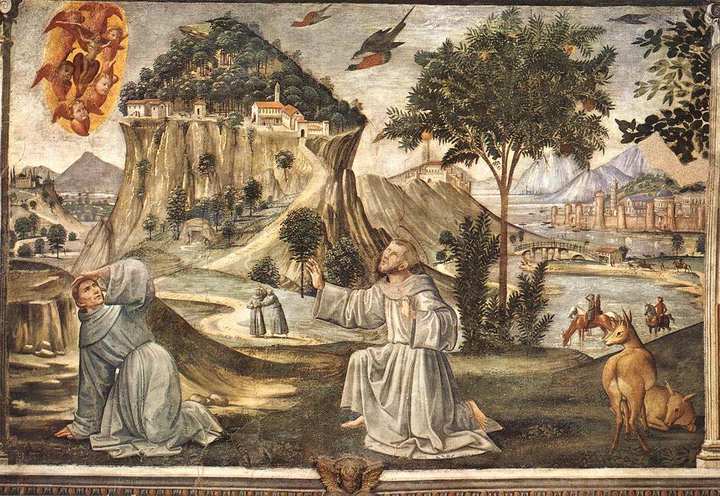
The Stigmata of St. Francis
La Verna, TuscanySeptember 1224
Two years before his death, Francis of Assisi receives the wounds of the Crucified on the mountain of La Verna — the first widely attested stigmata in Catholic history, and the pattern for all later ones.
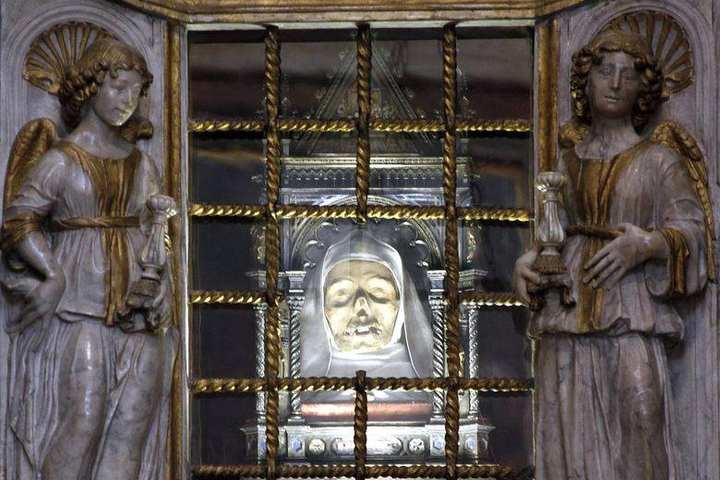
St. Catherine of Siena
Siena and RomeStigmata 1375; died 1380
A Dominican tertiary, mystic, and Doctor of the Church who received invisible stigmata, lived on the Eucharist for long periods, and told a pope to go home to Rome — and was obeyed.
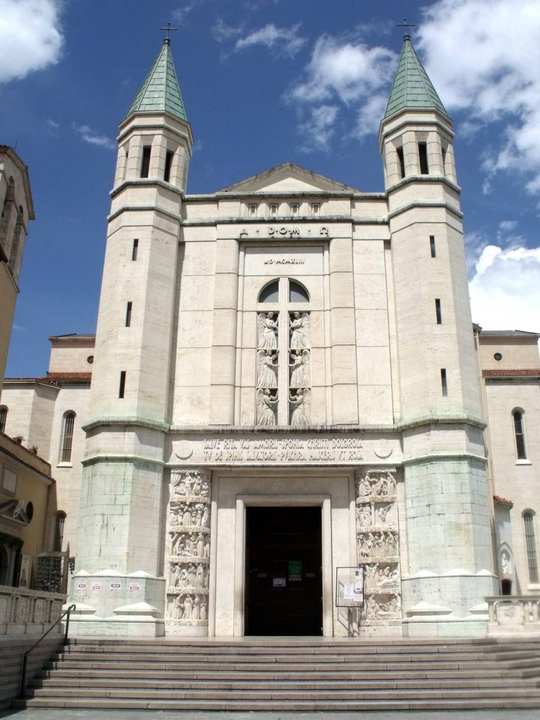
St. Rita of Cascia
CasciaDied 1457
Wife, mother, widow, Augustinian nun. A thorn-wound in her forehead for fifteen years; roses and figs in January at her death; a body still shown. Patron of impossible cases.
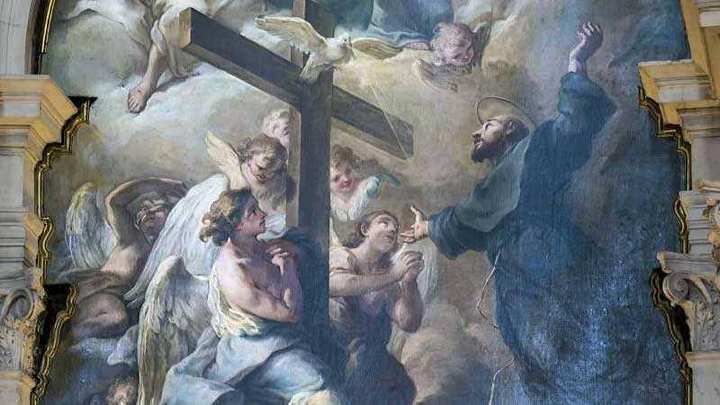
St. Joseph of Cupertino
Cupertino, Assisi, OsimoLevitations c. 1630–1663
A Conventual Franciscan of limited academic gifts, whose ecstasies included public levitations so frequent that his superiors hid him. Witnesses include cardinals, a pope’s circle, and annoyed friars.
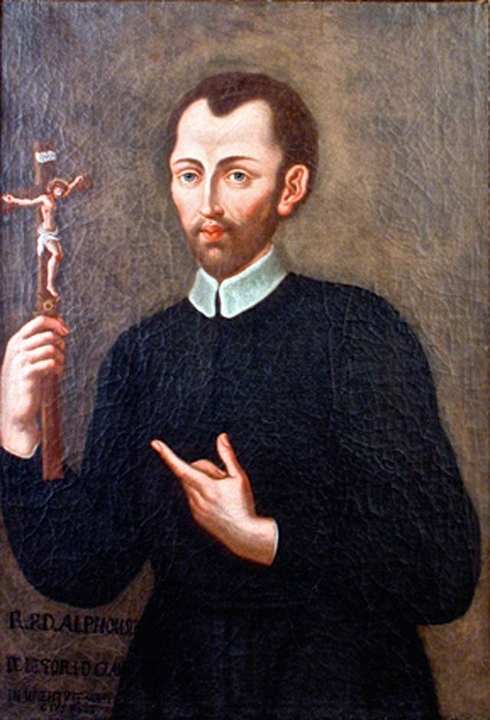
St. Alphonsus Liguori’s Mass in Arienzo
Arienzo / Rome21 September 1774
The founder of the Redemptorists, old and immobilized in Arienzo, is seen in the papal palace at the death of Clement XIV, and returns to his chair. One of the most cited bilocations in a canonization process.
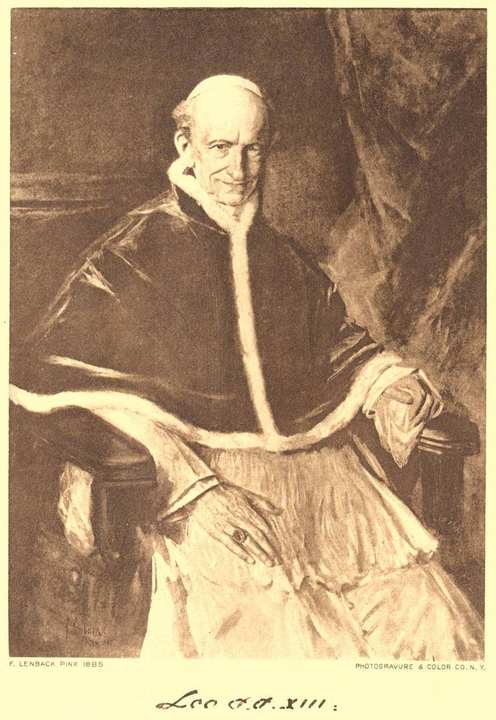
The vision of Pope Leo XIII
The Vatican1884–1886
Pope Leo XIII ordered the Church to say the Prayer to Saint Michael after Low Mass. Catholics also tell of a vision in which he heard God and the devil, and of a century of license given to Satan. The prayer is certain. The conversation, in the form people now quote, is not.
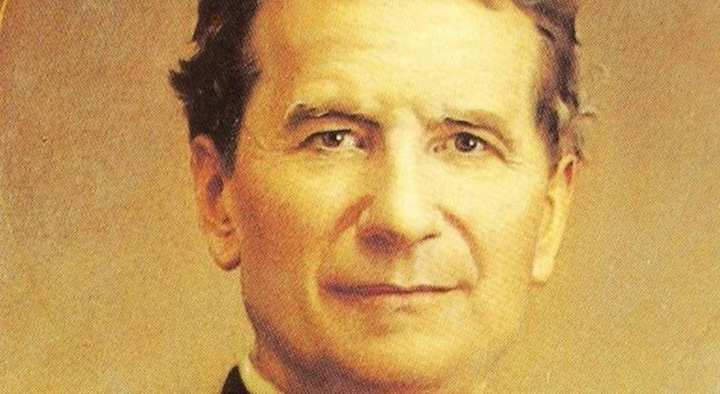
St. John Bosco
TurinDied 1888
Priest of street boys, founder of the Salesians, whose dreams — the two columns, the wolves turned lambs — guided an order, and whose life accumulated healings, multiplying chestnuts, and a reputation for reading the future of his boys.
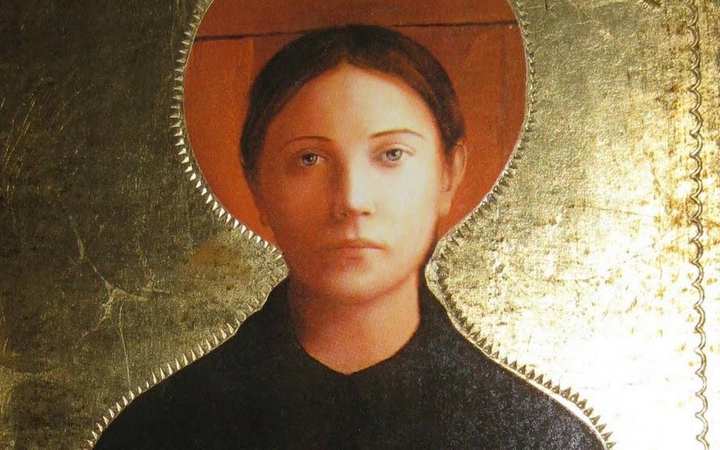
St. Gemma Galgani
LuccaStigmata 1899; died 1903
A young laywoman, orphaned, ill, refused by a convent, who received the stigmata on Thursday evenings and the visible marks of the scourging, and who died at twenty-five. Photographed, confessed, canonized.
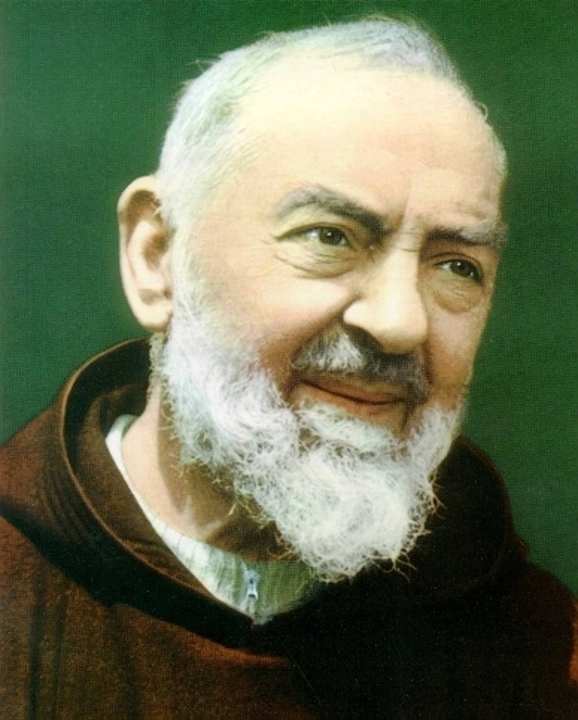
St. Pio of Pietrelcina
San Giovanni RotondoStigmata 1918; died 1968
A Capuchin friar who bore the five wounds of Christ for fifty years, heard confessions for ten hours a day, and was accused, banned, filmed, loved, and finally canonized. The most investigated mystic of modern times.
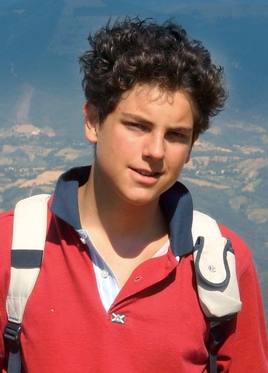
St. Carlo Acutis
Milan; buried at AssisiDied 2006; canonized 2025
A teenager who coded a website of Eucharistic miracles, went to Mass daily, and died of leukemia at fifteen. The first millennial saint — and the reason many people first learned that Lanciano and Bolsena exist.
Korea
1 sign, in the order of their years
Lebanon
1 sign, in the order of their years
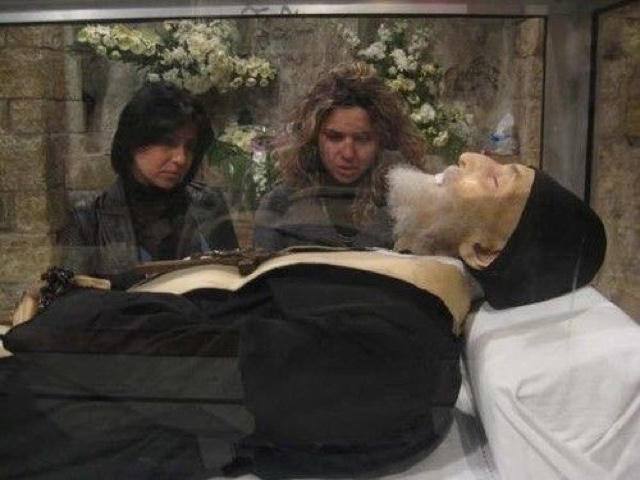
Peru
1 sign, in the order of their years
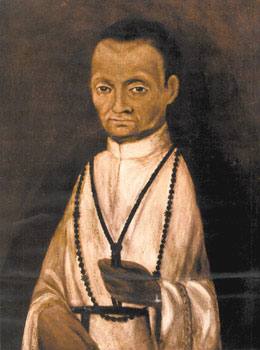
Spain
1 sign, in the order of their years