The reading
What his mother taught him
Before he left for the war she taught him four lines. Michael, Michael of the morning, fresh choir of Heaven adorning, keep me safe today, and in time of temptation, drive the devil away. He writes that he said them every day in Korea, and that he taught them to the Marines who would listen. The prayer is older than the war. It is an English devotion to the Archangel, not a verse of Scripture and not a formula the Church requires. It is the hinge of this story because the stranger in the snow is said to have known it without being taught.
The man who joined the patrol
The letter, as Catholics have retold it since a Navy chaplain read it aloud, places him on a patrol that loses its company in heavy snow. Another Marine falls in beside him. Michael has not seen him before. He is large, and he is not out of breath. They talk. Michael asks his name. The man says Michael. The wounded man thinks that is a coincidence worth a joke. The other says the prayer back to him — Michael, Michael of the morning — and then says there is trouble ahead. The snow thins. They come over a rise. Seven soldiers in padded coats have their rifles already up.
Seven rifles, and a man who would not drop
He shouts for the other Michael to get down and throws himself on the frozen ground. The rifles fire almost together. He hears the rounds. The other man is still standing. Michael gets up to drag him down and is hit in the chest. Arms he describes as strong lay him in the snow. He looks up. The man is no longer the size of a Marine. Light is on the face. There are wings. There is a sword. Then the letter’s writer loses the scene. He wakes in a hospital. The doctors say the wound will not kill him. That is not the sentence he is afraid to write. The sentence is the sword.
What the officer said he saw
In the usual telling, the commanding officer asks how one wounded man killed seven men without firing. The bodies, he says, were opened by a blade, not by bullets from the Marine’s rifle. Michael says the other Marine did it, a man also named Michael. The officer says there is no other Michael in the unit. He says he could see the ridge, and that he saw this Marine walking alone. Navy chaplain Captain Father Walter Muldy later said he had spoken with the Marine, with the mother, and with the sergeant, and that he read the letter on the radio. The Marine’s surname is not in the public account. No diary, no after-action report, and no named regiment have been produced for a court or a diocese to test.
What this is, and what it is not
It is not Gargano, where a shrine has stood for fifteen centuries. It is not the Prayer to Saint Michael, which a Pope ordered the Church to say. It is one soldier’s letter, received by a chaplain, and then loved by people who already believed the prince of the heavenly host does not abandon a man who calls him. The Church has never opened a process. A Catholic may believe the letter. A Catholic is not obliged to. The Creed already says that angels are real. It does not say they appeared on that ridge. It also does not say they cannot.
Reading
How to read St. Michael in the Korean snow
If you came here for St. Michael, this is the story people now tell beside the old ones. It is not Fátima. It is not Gargano. It is a son writing to his mother. That is the right size for a private mercy: not a new dogma, a man who was not left alone in the snow.
The prayer is the hinge. A woman teaches a boy four lines. The boy says them in a war. Catholic life is often that small, and then suddenly it is not. Whether the luminous warrior was the Archangel is a matter of prudent belief, not of the Creed. The Creed already says that angels are real. It does not say they must appear on a Korean ridge. It also does not say they cannot.
The same mystery
Signs that belong with this one
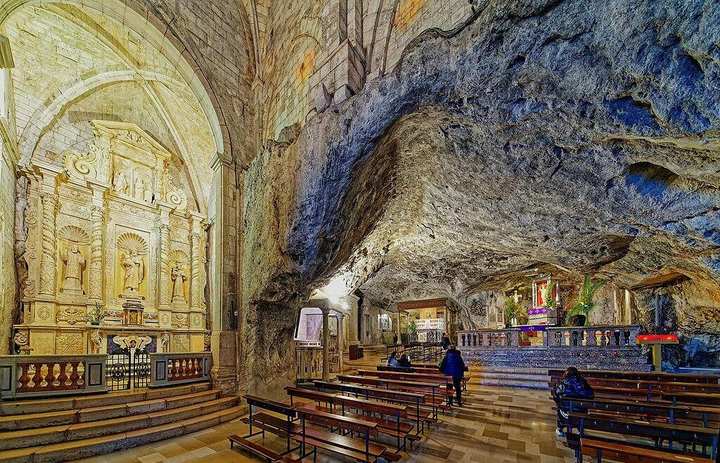
- The cave of Saint Michael
The same prince, fifteen centuries earlier, chose a cave in Italy and told a bishop the stones were already a church. If Korea is a battlefield mercy, Gargano is the shrine that taught Europe Michael’s name.
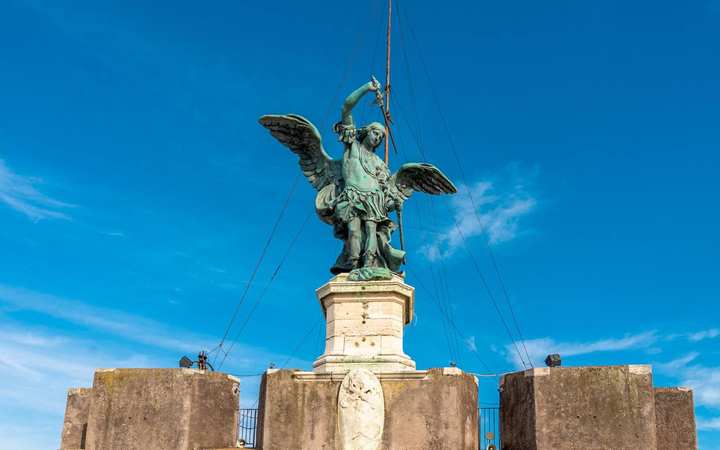
- Michael over the plague
Rome, 590: Michael sheathing a sword over a dying city. Korea, 1950: a sword unsheathed over a dying Marine. The Church has always pictured him with a weapon that is not ours.
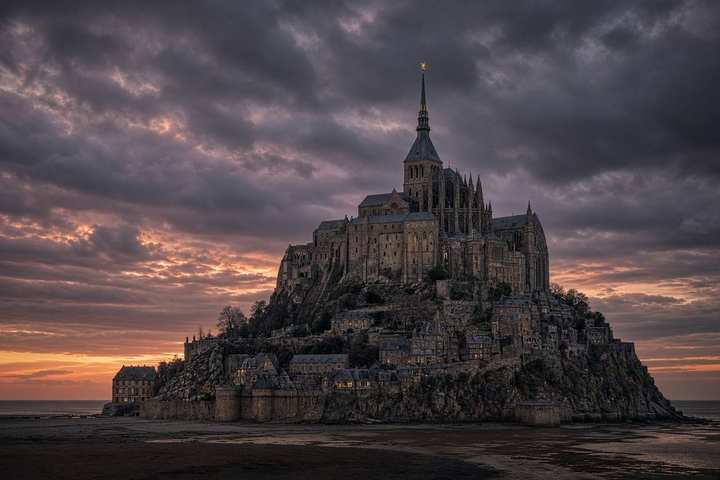
- The rock Michael asked for
Aubert built an abbey on a rock in the tide because Michael asked for a house. Soldiers have been asking him for cover ever since.
Pray this
Prayers that sit with the story
Church status
How this sign has been received
Unverified
No Bishop has judged the letter. The status in this encyclopedia is unverified: a popular account with a named chaplain attached, not a recognised apparition. Father Muldy’s word gives it more weight than an unsigned chain letter, and less than a canonical inquiry. It is kept beside Gargano and the vision of Pope Leo XIII so that Saint Michael’s page shows both the public shrines and the private cry.
Sources
- Letter of a U.S. Marine named Michael to his mother, 1950, as read on the radio by Navy chaplain Father Walter Muldy — surname and unit not in the public telling
- Catholic retellings: Rhode Island Catholic; National Catholic Register; the prayer “Michael, Michael of the morning”
For the classroom
St. Michael in the Korean snow (1950, A frozen ridge in Korea). Grade in this encyclopedia: Unverified. In the winter of 1950 a wounded Marine named Michael writes to his mother. She had taught him a short prayer. On a ridge he met another Marine of the same name, who already knew the words. Seven rifles fired. He was hit. The other man became, in his telling, a figure of light with a sword. The officer who found him said there was no second Michael in the outfit, and that the seven dead had been cut down by a blade.