The reading
How it began
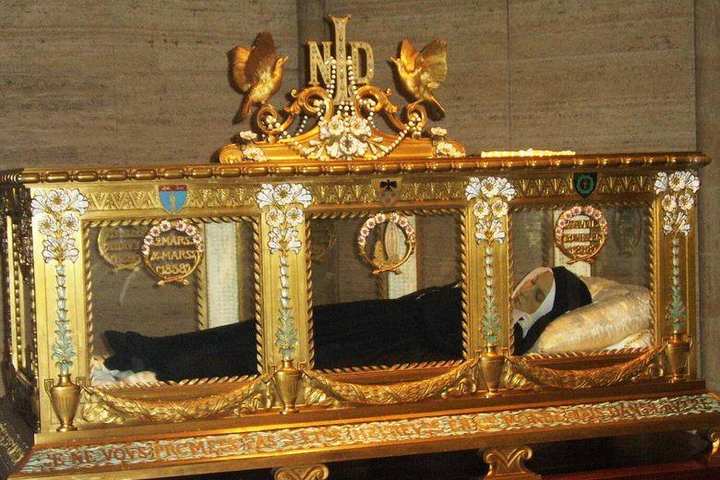
Carlo Antonio Divini dies on 24 September 1721 after years of missions and a long illness that took his hearing, his sight, and his walk. People come to the tomb at once. Pius VI beatifies him in 1786. The next year the relics are covered with a wax figure, placed in a glass coffin, and moved into a chapel built for him. Gregory XVI canonizes him in 1839. The figure is what the church shows.
The day itself
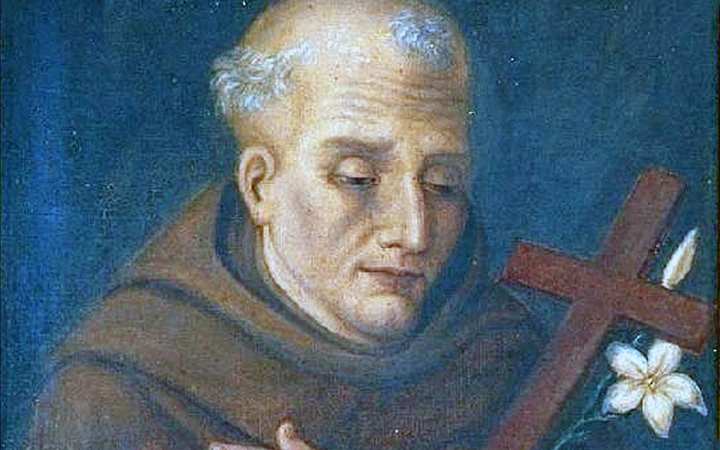
Carlo Antonio Divini was born at San Severino on 1 March 1653, orphaned young, and took the name Pacifico among the Friars Minor. Illness took his hearing, nearly all of his sight, and the use of his legs; he kept the hours of prayer and the confessional as far as the body allowed, and died on 24 September 1721. Pius VI beatified him on 4 August 1786. The following year the relics were covered with a wax figure, laid in a glass coffin, and placed in a chapel built for him in San Severino. That is what a pilgrim sees: wax over the relics, not an uncovered face from 1721. Gregory XVI canonized him on 26 May 1839. He is counted a patron of people who live with chronic pain, which matches the life better than a claim that the flesh never failed. The early healings at the tomb are depositions in the eighteenth-century process. They are not a Lourdes dossier.
Reading
How to read St. Pacifico of San Severino
A saint whose living body was already a ruin. After 1787 the shrine covered the relics with wax. The life was the long illness offered; the glass is a figure over what the tomb still holds.
Church status
How this sign has been received
Church-approved
Canonized by Pius XII. Relics at San Severino under the Friars Minor.
Sources
- Process of St. Pacifico
- Friary of San Severino Marche
For the classroom
St. Pacifico of San Severino (Died 1721, San Severino Marche). Grade in this encyclopedia: Church-approved. A Franciscan, deaf, blind, and lame in his last years. After the beatification the relics were covered with a wax figure and laid in a glass coffin in San Severino. Healings at the tomb began at once. What you see is the wax over the relics.