The reading
How it began
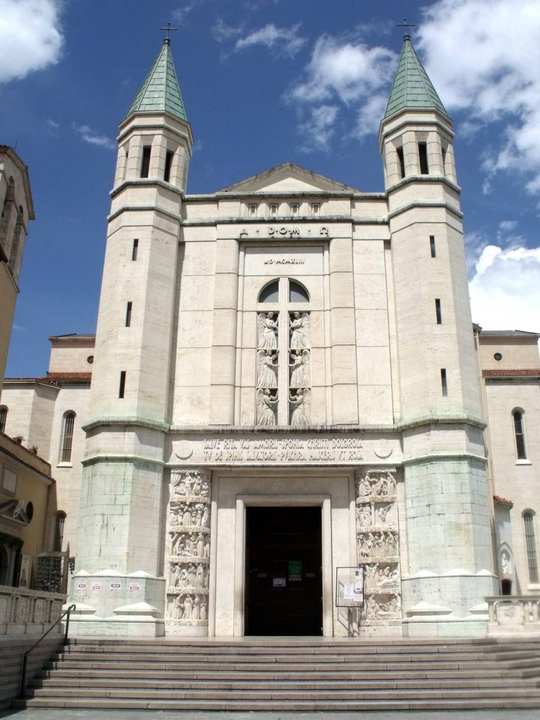
Margaret dies in 1297 after years of public penance that the town never quite let become private. The body is preserved in the basilica that bears her name, in a silver casket, visible. Cortona has always pointed to her as its Magdalene.
The day itself
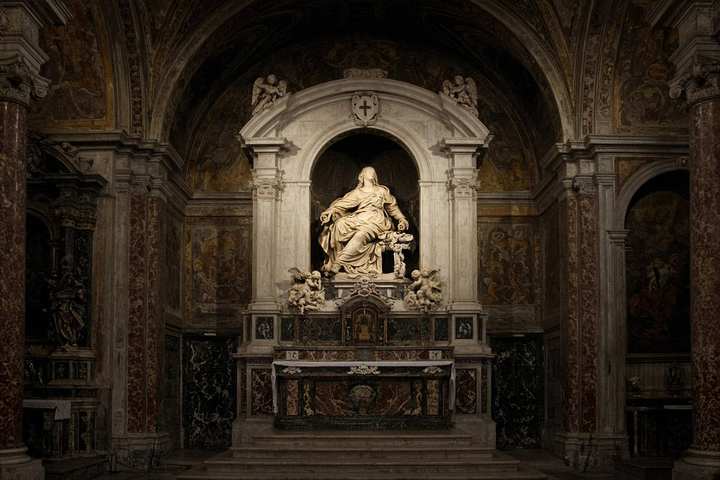
Margaret died at Cortona on 22 February 1297. She had come to the town as a mistress, with a child, after her lover was killed, and had been refused by the Franciscans until the friars of Cortona took her as a tertiary. The rest of her life was public penance, care of the sick, and a war of charity with a city that both used her and gossiped. The body was found incorrupt and is kept in the basilica built over her house, above the town, in a shrine behind the high altar. The face is a long-preserved face, dark, under a veil. Benedict XIII canonized her on 16 May 1728. The early life by her confessor, Fra Giunta Bevegnati, is detailed and sometimes theatrical; it is still the closest file. Cortona’s shrine is unusually clear about her beginning. The town did not edit the adultery out of the story in order to keep the body.
Reading
How to read St. Margaret of Cortona
Incorruption of a penitent is a theology of the past tense: the old life is dead; the body of the new one is kept. Franciscans have always needed that sermon.
Church status
How this sign has been received
Church-approved
Canonized 1728. Relics in the basilica at Cortona.
Sources
- Basilica of St. Margaret of Cortona
- Legend of St. Margaret, Franciscan Third Order
For the classroom
St. Margaret of Cortona (Died 1297, Basilica of St. Margaret, Cortona). Grade in this encyclopedia: Church-approved. A penitent: a noble’s mistress who lost him to murder, then took the Franciscan habit of the Third Order. Her body remains in Cortona, above the high altar, a woman who changed her life and was not allowed to disappear.