The reading
In plain speech
Paris in 1290 told a story of a Host that bled in a house on the Rue des Jardins, and built a chapel. The same story named a Jewish householder and ended in a burning.
That frame is a libel. This page will not repeat the killing as if it were the miracle. If a Host was desecrated, the sacrilege does not depend on the chronicle’s chosen suspect.
1. What it does not prove
A chapel on a street does not prove the judicial story that paid for the chapel. Remembering a possible sacrilege is allowed. Choosing a people as the permanent suspect is not.
The Eucharist is the Lord’s gift, not a weapon against the Jewish people.
2. The one sentence
The Billettes are a Parisian cult and an anti-Jewish lie told together — the lie is refused, and the Faith does not rest on 1290. It rests on Jesus Christ.
The older telling follows.
The record
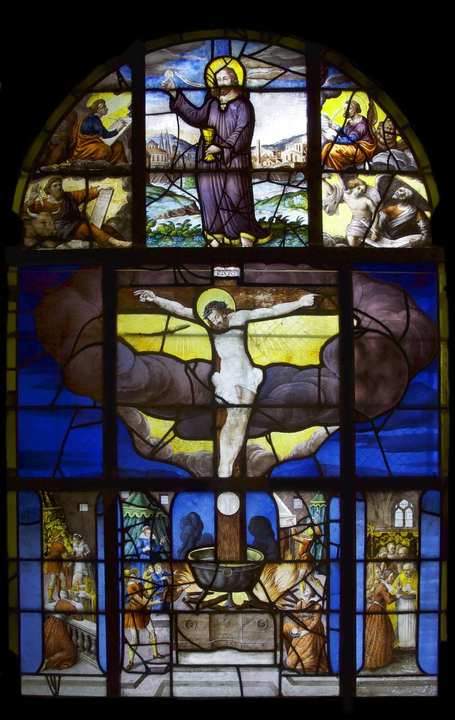
In 1290, under Philip the Fair, Paris told this story: a woman pawned her clothes to a Jewish moneylender and was told to bring a consecrated Host in place of payment; he stabbed the Host; it bled; the woman confessed; the man was burned; a chapel was built where the house had stood. The chapel of the Billettes, and later a monastery, kept the memory. A confraternity grew. The story was painted, staged, and repeated.
The record, part 2
It is the same pattern as Brussels a century later. A Host, a knife, a Jewish neighbour, a fire. Paris in 1290 was not a court of forensic science. It was a city that already knew how the story was supposed to end. This encyclopedia will not repeat the killing as if it were the miracle. Nostra Aetate forbids the theology that made the story feel obvious. If a Host was desecrated in that street, the desecration is a sacrilege whoever held the knife. The name the chronicle supplies was extracted under a story that had only one acceptable ending.
The record, part 3
The chapel of the Billettes stood until the Revolution reassigned it. The cult of “the miracle of the Billettes” is part of Parisian religious history and part of the history of anti-Jewish violence in France. Both sentences belong on the page. Neither sentence makes the Real Presence depend on 1290.
Reading
How to read Paris, the Billettes
Remembering a sacrilege is allowed. Choosing a people as the permanent suspect is not. The Eucharist is the Lord’s gift to Israel’s messiah and to the nations, not a weapon against the elder brothers of the Church.
Church status
How this sign has been received
Long veneration
Medieval Parisian cult, suppressed as a working chapel by the Revolution’s confiscations. The anti-Jewish frame is rejected. Included so the map of claims is complete and honest.
Sources
- Medieval Parisian accounts of the Billettes, read against their judicial context
- Second Vatican Council, Nostra Aetate 4
For the classroom
Paris, the Billettes (1290, Paris). Grade in this encyclopedia: Long veneration. A Host was said to have bled in a house in the Rue des Jardins in 1290, and a chapel rose on the spot. The medieval story accused a Jewish householder. That accusation is a libel. The chapel’s later life is a different history from the crime it was used to justify.