The reading
How it began
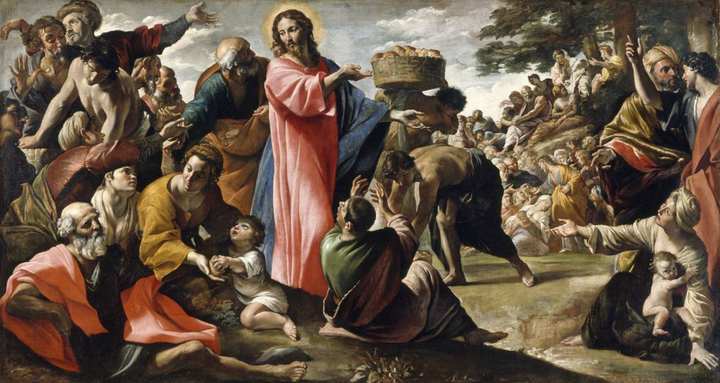
On the night he was betrayed, Jesus took bread, blessed, broke, and gave it: “This is my body.” He took the cup: “This is my blood of the covenant.” He commanded the apostles to do this in memory of him.
The day itself
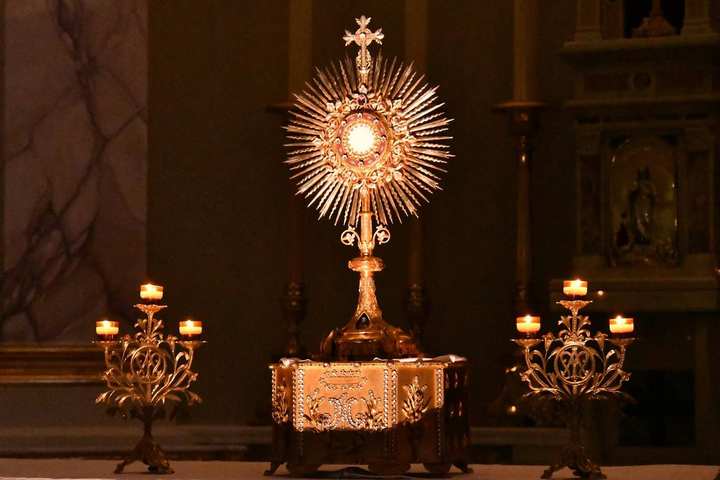
The Church has done it ever since. Not as a passion play, and not as a mere reminder. She claims that the risen Christ makes the one sacrifice present, and that what stands on the altar after the consecration is not bread and wine anymore, though the appearances remain.
What was kept
This happens in obscure chapels, in prisons, on battlefields, at quiet weekday Masses with twelve people and a crying child. No bleeding, no laboratory. The Church thinks this is the greater thing.
Reading
How to read The Eucharist
St. Thomas Aquinas called the Eucharist the greatest of miracles, because it is not a brief exception to nature but a lasting sacramental order in which Christ gives himself as food. The senses are not informed. Faith is.
That is why theologians are, paradoxically, cautious about bleeding Hosts. A Eucharistic miracle can help a doubter, as at Lanciano. It can also tempt people to hunt for spectacle and to treat ordinary Mass as a lesser presence. It is not lesser.
The word transubstantiation is technical: the substance of bread and wine ceases, the substance of Christ’s body and blood is present, the accidents (taste, weight, chemistry of wheat) remain. It is the Church trying not to say less than Jesus said.
The chair of Peter
Popes who belong with this sign
Church status
How this sign has been received
Sacred Scripture
The real presence is defined Catholic faith (Fourth Lateran Council, Council of Trent). You may struggle with it. You may not reduce it to a symbol and remain in Catholic doctrine.
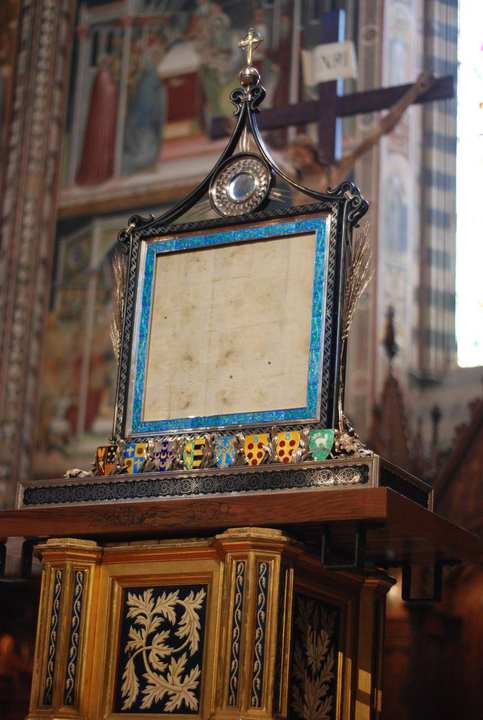
Later Eucharistic miracles are never required for this faith. They are, at most, extra lights. The Church investigates them locally, sometimes permits veneration of a relic-Host, and continues to say Mass the next morning as usual.
The shrine today
Why pilgrims still go
You go to Rome because the apostles died here, the popes still live here, and the bones of the Church are under the floor. It is not a theme park of the baroque. It is the parish of the whole world.
Rome & the Vatican — the reasonsSources
- Matthew 26; Mark 14; Luke 22; John 6; 1 Corinthians 11
- Council of Trent, Decree on the Eucharist
- Catechism of the Catholic Church 1322–1419
- St. Thomas Aquinas, Summa Theologiae III, q. 75–77
For the classroom
The Eucharist (from the Last Supper, Upper Room, Jerusalem — and every altar since). Grade in this encyclopedia: Sacred Scripture. The one Catholic “miracle” that happens quietly, daily, without spectacle: bread and wine become the Body and Blood of Christ. Spectacular Host-wonders are footnotes to this.