
The reading
In plain speech
In Siena, consecrated Hosts stolen in 1730 were found in a poor-box and have been reserved ever since, looking like bread long after ordinary unleavened bread should have crumbled.
Archbishops have inspected them. The Church permits the cult. It has not defined a miracle as an article of faith. “Unexplained” is not the same word as “proved”.
1. A simple scale
A piece of unleavened wheat bread, left in air, usually moulds or turns to dust in years, not in centuries. The Siena Hosts have been kept under glass, not in a modern sealed vault for the whole time, and chemists have not found a preservative that accounts for what remains.
That duration is the argument. It is an argument, not a commandment to believe.
2. What it does not prove
It does not prove that Christ is absent when a Host does grow old and is reverently consumed or dissolved, which is the ordinary care of the Church. Presence lasts as long as the appearances of bread last. Siena is a staying, not a law that bread may never change.
Nor does a photograph of an old Host replace Holy Communion.
3. The one sentence
Siena is bread that has not gone stale across centuries of reservation — inspected, venerated, and still not the reason the Church believes. The Last Supper is.
The older telling follows.
The record
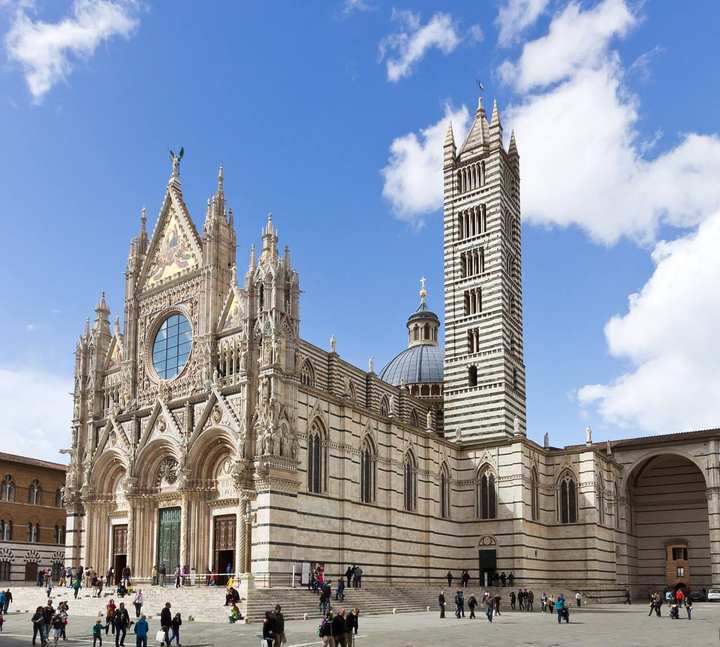
On 14 August 1730, the eve of the Assumption, thieves rob the Franciscan church of St. Francis in Siena and take a ciborium of consecrated Hosts. Two days later 351 Hosts (the count varies slightly in retellings) are found stuffed in the alms-box of St. Mary of Provenzano, soiled but unbroken.
The record, part 2
They are identified, purified as far as possible, and — because they remain the Eucharist as long as the appearances of bread remain — reserved. The expected mold and crumbling of ordinary unleavened bread does not come.
The record, part 3
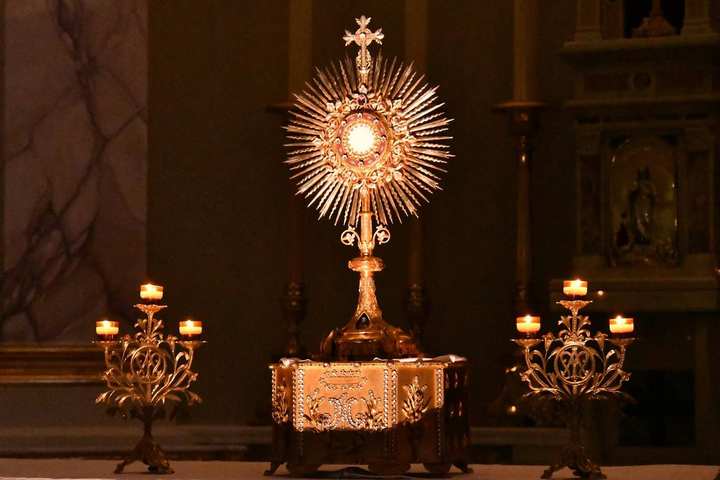
Periodic canonical inspections follow over the centuries. In some examinations a Host was consumed by a priest to test taste and freshness. The remaining Hosts are still in Siena, fewer now, still looking like bread.
Reading
How to read The Hosts of Siena
This is not a bleeding. It is a staying. The Catholic imagination, so often accused of craving the grotesque, is here faced with something almost dull: bread that will not go stale when it should. The sign matches the doctrine. Christ’s presence is not a flash. It abides.
There is also a sermon about theft and the poor-box. What was stolen from the altar is found among the coins of the poor, as if the Sacrament had chosen the right hiding place.
Church status
How this sign has been received
Long veneration
Archbishops of Siena have conducted formal recognitions. In 1914 and later, scientific commissions reported the Hosts’ preservation as unexplained by ordinary means of conservation. The cult is authorized. St. John Paul II, visiting, is reported to have said that this is one of the wonders of the Eucharist.
Investigation
What has been examined
Unleavened wheat bread, left in air, typically molds or dries to powder in years, not centuries. The Siena Hosts have been kept under glass, not hermetically sealed in inert gas for the whole period. Chemists consulted in the twentieth century did not find a preservative that would account for the state of the remaining pieces. As always, “unexplained” is not a synonym for “proved miracle,” but the duration is the argument.
Sources
- Basilica of St. Francis, Siena
- Canonical inspections of 1789, 1850, 1914 and later
For the classroom
The Hosts of Siena (1730 – present, Siena). Grade in this encyclopedia: Long veneration. Consecrated Hosts stolen from St. Francis in Siena are recovered from a poor-box, dusty and filthy — and remain intact, without corruption, for centuries. They are still reserved and occasionally tasted for decay.