The reading
1. What the archdiocese’s countryside still walks
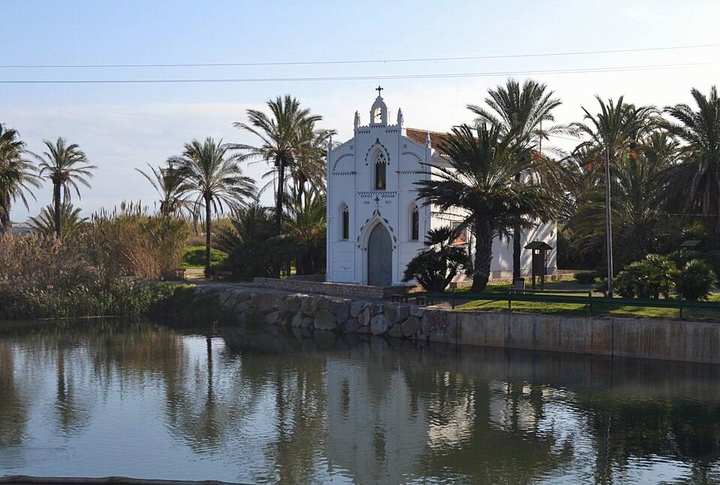
The story belongs to the old road between Alboraya and Almàssera. A priest was taking Holy Communion to someone who was dying. Water — a flood, or the irrigation channel — took the Hosts from him. Fish rose with them, or held them, until they could be recovered. A hermitage, els Peixets, marks the place. Tellings disagree whether the fish were two or three. The disagreement is a sign that the file is a beloved local narrative, not a single notarised minute.
2. What the chapel establishes
The chapel establishes that Valencia has kept this hour as Eucharistic memory for centuries, and that an anniversary is still kept. It does not establish a zoological miracle under modern observation. Viaticum is already holy before any fish appears. The dying person was the reason the priest went out. That is the part of the story that does not depend on the count of fish.
Reading
How to read Alboraya
Communion for the dying is the Church’s ordinary miracle. Alboraya’s legend is a village refusing to let a lost Host stay lost.
Church status
How this sign has been received
Long veneration
Local hermitage and traditional cult, archdiocese of Valencia. The year 1348 is the date the story is usually given, not a decree.
Sources
- Hermitage of the Peixets, Alboraya
- Archdiocesan memory of the Viaticum narrative
For the classroom
Alboraya (Told as 1348, Alboraya, by Valencia). Grade in this encyclopedia: Long veneration. A priest carrying Viaticum to the dying is said to have lost the Hosts in the water, and fish are said to have held them up. The hermitage of the Peixets is the memory made into a chapel. The number of fish is not the doctrine.