Skip to content

Jesus Christ

Feast Every Sunday · Easter · Corpus Christi

The miracle the Church is required to believe. Not a later wonder. The Resurrection. Every bleeding Host, every shroud, every face in the bread is a footnote to that.

Sacred art

Statues and images

No photograph of Jesus Christ is shown. The honour goes to the person, and through the person to God. It is not a substitute for the life written below.

The whole treasury

This archive is not a museum of oddities. It is a set of signs around one man. If you are new here, do not start with Zeitoun. Start with the empty tomb. Then the Mass. Then, if you want, the rest.

Pray with Jesus

The prayers

Signs that name Jesus

If it belongs to Jesus, it is here, with a door back into the story.

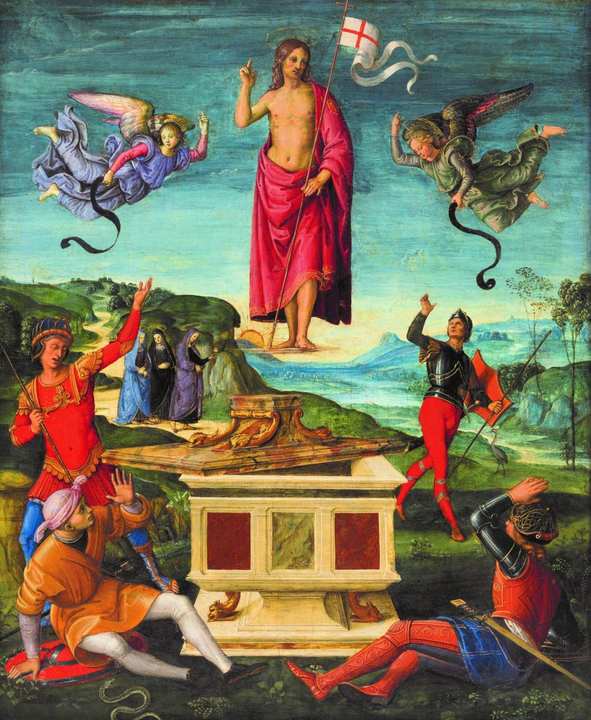
The Resurrection — Jerusalem
GospelSacred Scripture

The Resurrection

Jerusalemc. AD 33

On the third day Jesus rose from the dead. This is not one Catholic miracle among others. It is the reason there is a Church, a Gospel, or any later sign worth hearing.

EucharisticLong veneration

Lanciano

Lanciano, Abruzzo8th century (c. 750)

The most famous Eucharistic miracle in the West: a doubting monk sees the Host become Flesh and the wine Blood. The relics are still reserved — and were studied in the twentieth century. They are not the reason the Church believes in the Eucharist.

2 studied signs on this image

The Volto Santo of Lucca — Lucca
ImageLong veneration

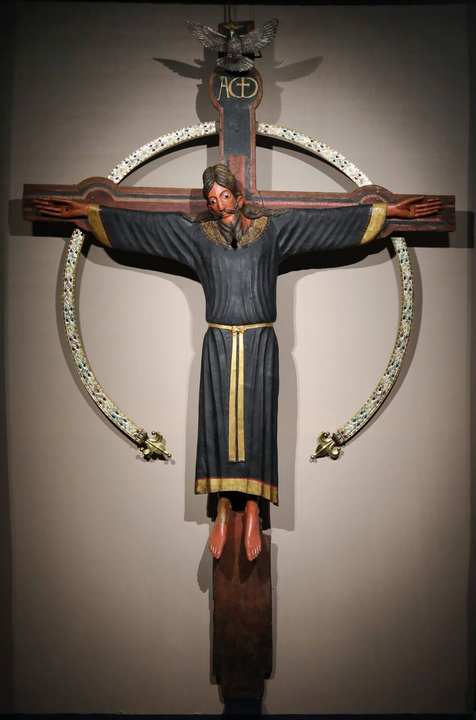
The Volto Santo of Lucca

LuccaIn Lucca by the 8th century

A monumental wooden crucifix with a clothed, living Christ, said to have been carved by Nicodemus and to have arrived by riderless ship. For medieval Europe, this was the Holy Face.

Meerssen — Meerssen, Limburg
EucharisticLong veneration

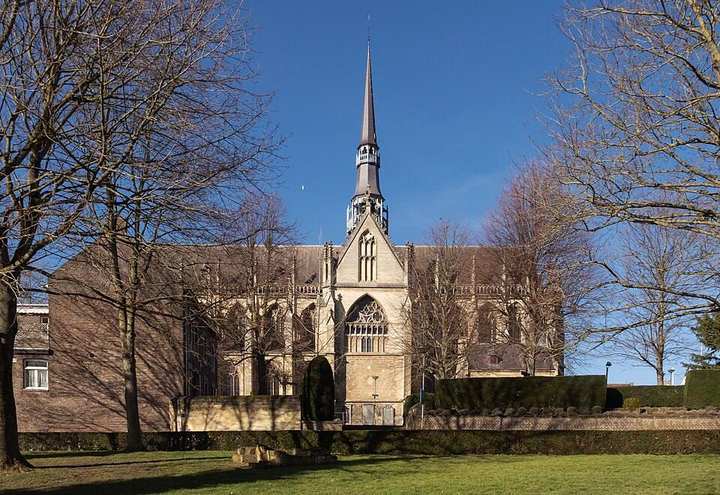
Meerssen

Meerssen, LimburgThirteenth-century telling; the Host later lost

A thirteenth-century account says the chalice at Mass lacked the water, and that a sign followed. A later tale adds a farmer and a fire. The medieval object is gone. The basilica of the Blessed Sacrament is not.

Rimini — Rimini
EucharisticLong veneration

Rimini

Rimini1227

A heretic said he would believe if his mule knelt before the Host rather than eat. The animal left the oats and knelt. St. Anthony of Padua was holding the monstrance.

Bolsena–Orvieto — Bolsena, then Orvieto
EucharisticLong veneration

Bolsena–Orvieto

Bolsena, then Orvieto1263

A Bohemian priest, doubting the Real Presence, sees the Host bleed onto the corporal. Urban IV, then at Orvieto, is shown the linen — and Corpus Christi enters the calendar of the whole Church.

Głotowo — Głotowo, Warmia
EucharisticLong veneration

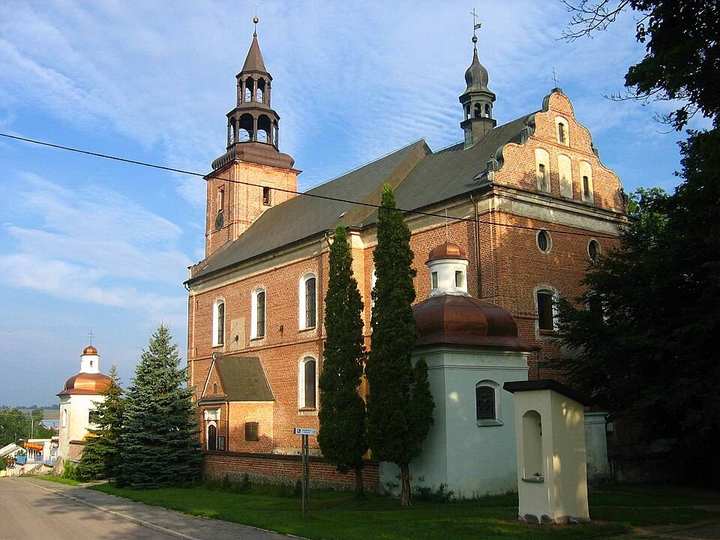
Głotowo

Głotowo, WarmiaMedieval; sanctuary later

A Host hidden for safety is said to have been found when oxen knelt at the plough. The archdiocese keeps a real sanctuary of the Blessed Sacrament and of the Passion. The kneeling oxen are a medieval motif, and the page says so.

Kraków, Corpus Christi — Kazimierz, Kraków
EucharisticLong veneration

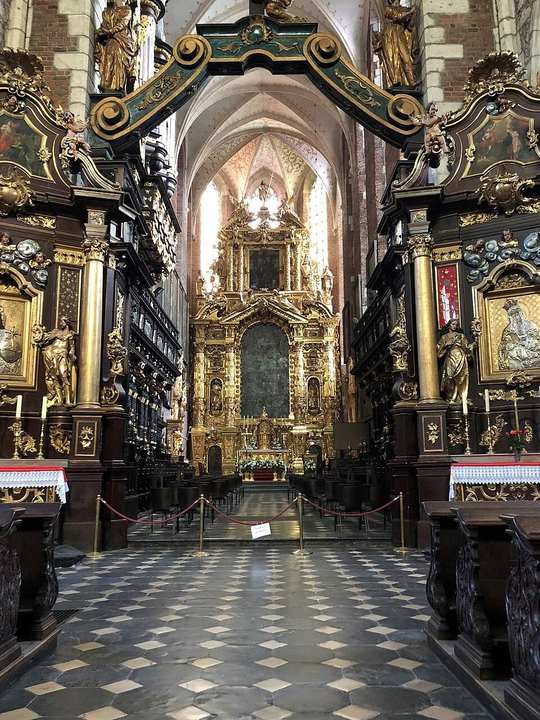
Kraków, Corpus Christi

Kazimierz, KrakówParish older than the legend of 1345

A popular tale says a Host found in 1345 caused Casimir the Great to found the Corpus Christi church. The building’s own dates begin before 1341. The parish is real. The founding miracle, told that way, cannot be.

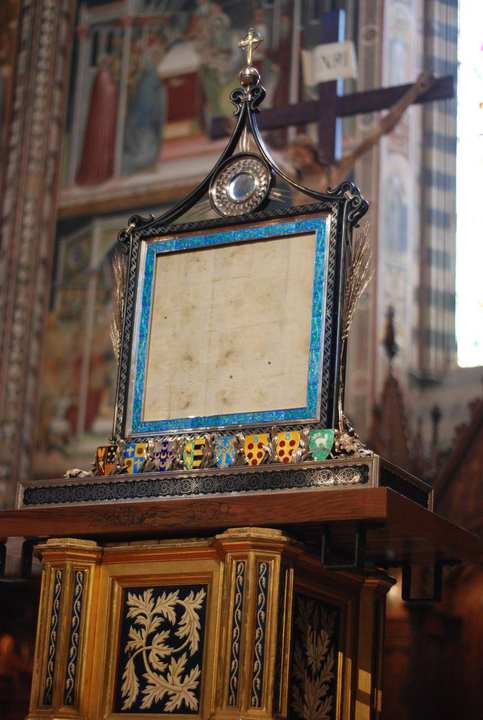
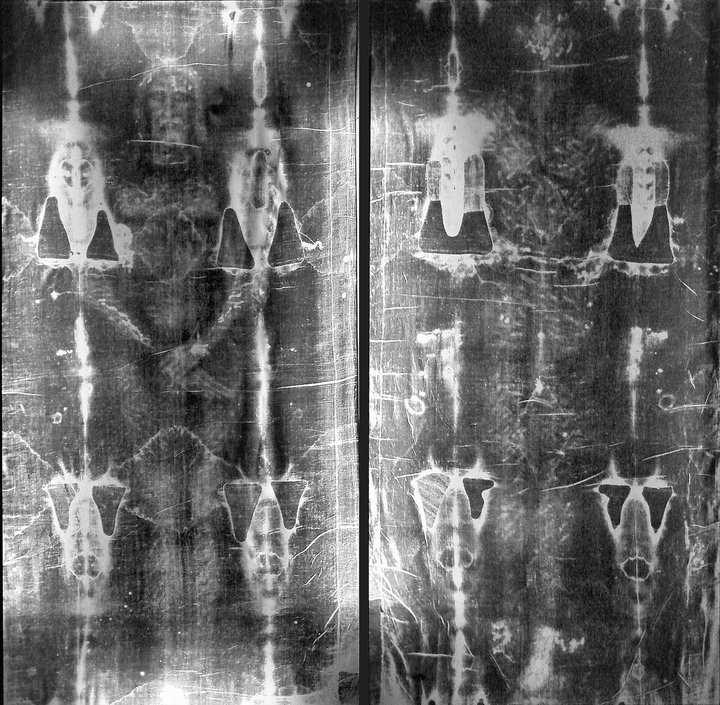
The Shroud of Turin — Turin (earlier Lirey, Chambéry). The full length of the Shroud, front and back, as the photographic negative shows the body: head, scourged back, crossed hands, and the wounds. Not the face alone.
ImageOpen / under study

The Shroud of Turin

Turin (earlier Lirey, Chambéry)First documented 1354; claimed as 1st century

The Shroud of Turin is a linen cloth bearing the faint image of a crucified man. Many Catholics believe it may be the burial cloth of Jesus Christ. The Church has not formally declared it authentic.

6 studied signs on this image

The wounds on the Shroud — Turin. The full length of the Shroud, front and back, as the photographic negative shows the body: head, scourged back, crossed hands, and the wounds. Not the face alone.
ImageOpen / under study

The wounds on the Shroud

TurinRead on the cloth; Gospel 1st century

The man on the Shroud has been flogged, crowned, nailed through the wrists, and pierced in the side. The wounds can be studied one by one. Together they are a map of the Passion as the Gospels tell it — and as Roman execution actually worked.

A studied sign

Brussels — Brussels
EucharisticLong veneration

Brussels

Brussels1370

Hosts stabbed and bloodied were carried to the cathedral and venerated for centuries. The medieval telling accused the Jewish community of Brussels. That accusation was used to kill. The Church does not ask anyone to believe it. The Hosts and the injustice are two different facts, and both are told here.

Poznań — Poznań
EucharisticLong veneration

Poznań

PoznańMedieval shrine; the accusation withdrawn

Poznań has a church of Corpus Christi and an old story of Hosts found. The archdiocese says the tale that blamed Jews was never confirmed, and that the medieval sources support a found Host and a shrine — not a charge against a people.

Ettiswil — Ettiswil, Lucerne
EucharisticLong veneration

Ettiswil

Ettiswil, Lucerne1447

A stolen Host, thrown into a field, marked the place. A chapel rose. Ettiswil’s pilgrimage of the Blessed Sacrament comes from that theft.

The 1898 negative — Turin Cathedral. The full length of the Shroud, front and back, as the photographic negative shows the body: head, scourged back, crossed hands, and the wounds. Not the face alone.
ImageOpen / under study

The 1898 negative

Turin Cathedral28 May 1898

On the night of 28 May 1898, Secondo Pia photographed the Shroud. In the darkroom the negative plate showed a positive face — a man, not a stain. The cloth had been behaving like a photographic negative for centuries, and no one had known.

A studied sign

Saint-André, Réunion — Saint-André, Réunion
EucharisticLong veneration

Saint-André, Réunion

Saint-André, Réunion1902

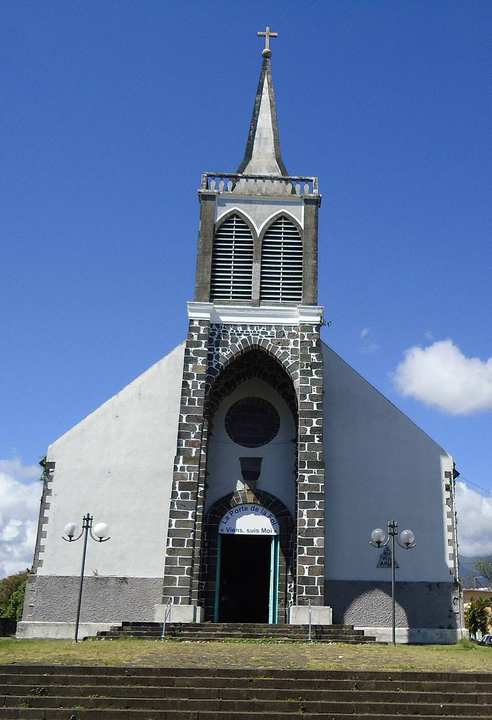
Lava from the Piton de la Fournaise runs at the church of Saint-André. The parish carries the Blessed Sacrament to the flow. The lava stops at the door. The cooled rock is still there.

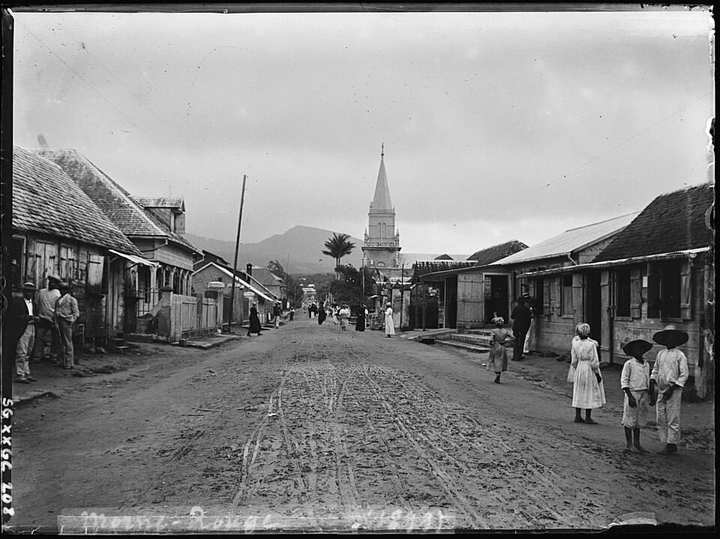
Morne-Rouge — Morne-Rouge, Martinique
EucharisticLong veneration

Morne-Rouge

Morne-Rouge, Martinique8 May 1902

As Montagne Pelée was about to destroy Saint-Pierre, the parish of Morne-Rouge carried the Blessed Sacrament to the edge of the lava. The flow stopped at the place where the priest blessed it.

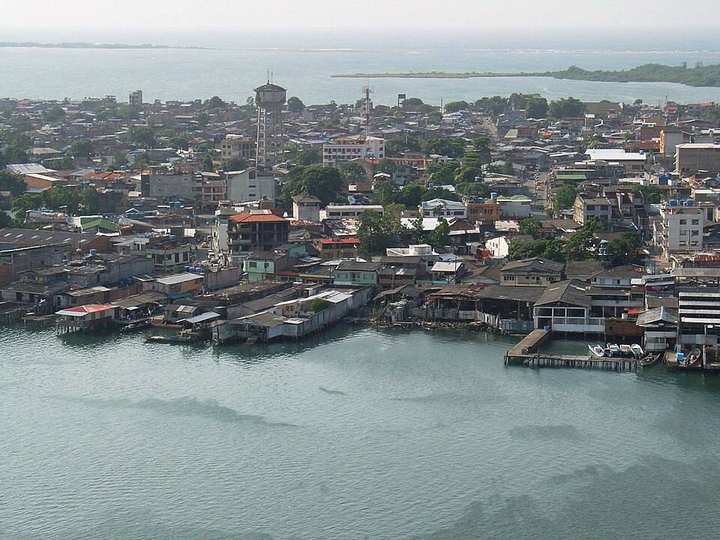
Tumaco — Tumaco, on the Colombian Pacific
EucharisticLong veneration

Tumaco

Tumaco, on the Colombian Pacific31 January 1906

After the earthquake of 31 January 1906, as a tsunami runs at the island town, two Augustinian friars walk to the beach with the Blessed Sacrament. The water is said to have stopped at their feet. The town was left standing.

How the image was formed — Turin. The full length of the Shroud, front and back, as the photographic negative shows the body: head, scourged back, crossed hands, and the wounds. Not the face alone.
ImageOpen / under study

How the image was formed

TurinSTURP 1978; later optical experiments

The faint image on the Shroud is not a painting in any ordinary sense. It lives in the topmost fibers of the linen. People have asked what kind of power could yellow cloth that thinly, that completely, without burning it through. That question is a study, not a dogma.

A studied sign

The blood on the Shroud — Turin. The full length of the Shroud, front and back, as the photographic negative shows the body: head, scourged back, crossed hands, and the wounds. Not the face alone.
ImageOpen / under study

The blood on the Shroud

TurinStudied 1973–1978 and after

The red stains on the Shroud are not the same substance as the body-image. Tests have reported real blood, human, often type AB, with serum separation at the margins. The blood is a study of its own because it arrived first.

A studied sign

EucharisticOpen / under study

Buenos Aires

Parish of Santa María, Buenos Aires1992, 1994, 1996

Dropped and recovered Hosts, later found with a red substance, were photographed and sampled. Pathologists reported human heart tissue. The bishop at the time was Jorge Mario Bergoglio — later Pope Francis. Rome has issued no universal decree.

EucharisticOpen / under study

Casa San Pablo

Casa San Pablo, Santo Domingo30 October 2011

During Adoration of the Blessed Sacrament at Casa San Pablo in Santo Domingo, a photograph is said to show the Host in the monstrance pouring light — red and blue and gold. The Church has not issued a decree that this photograph is a miracle.

EucharisticChurch-approved

Vilakkannur

Christ the King Church, Vilakkannur, Kerala2013; Holy See, 2025

During Mass on 15 November 2013, a face — bearded, wounded, the Holy Face as the Church has always painted him — appears on the consecrated Host. The Host is reserved in a jeweled monstrance. In 2025 the Holy See allowed the diocese to present the event as a Eucharistic miracle.