The reading
How it began
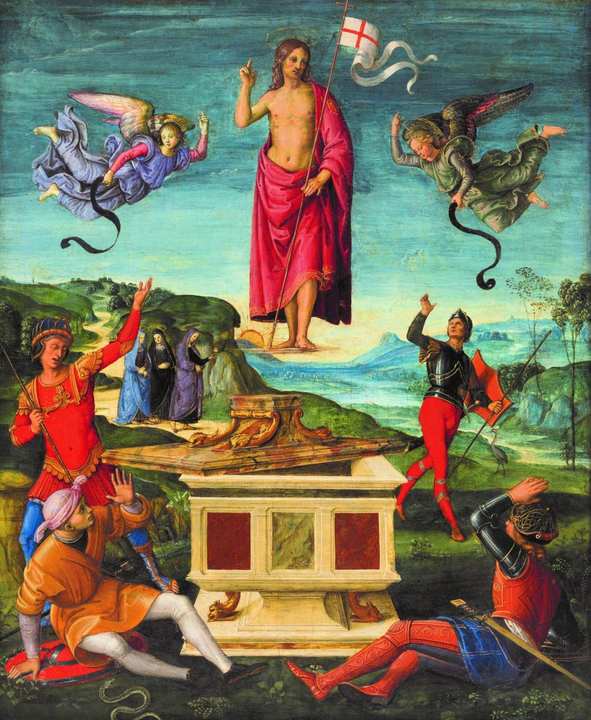
Jesus was crucified under Pontius Pilate, died, and was buried. The Sabbath passed. At dawn on the first day of the week, women came to the tomb and found the stone moved, the body gone. Angels announced what the disciples were slow to believe: he is not here; he has risen.
The day itself
The risen Christ appears — not as a ghost, and not as a man merely resuscitated. He can be touched; he eats fish; the wounds remain. He also comes through locked doors and is not always recognized at first. Mary Magdalene thinks he is the gardener. The disciples at Emmaus know him in the breaking of the bread.
What was kept
Paul, writing within a few decades, recites an already traditional list: Cephas, the Twelve, more than five hundred at once, James, all the apostles, and last of all Paul himself. “If Christ has not been raised, your faith is futile.”
Reading
How to read The Resurrection
Catholics do not believe the Resurrection because of Fátima or Lanciano. They read Fátima and Lanciano, if they read them at all, because of the Resurrection. It is the Father’s vindication of the Son, the defeat of death, the first body of the new creation.
It is also stubbornly material. The Church refused, early and often, to let the Resurrection become a metaphor for the disciples’ feelings. Something happened to Jesus’ body. The tomb was empty. The witnesses were not preaching an interior dawn. They were preaching a person they had met on the other side of execution.
Every Catholic claim about incorrupt saints, about a Host that becomes heart tissue, about a restoration of a lost leg, is trying — sometimes clumsily — to say: this world is the world in which that man rose.
The chair of Peter
Popes who belong with this sign
Pray this
Prayers that sit with the story
Church status
How this sign has been received
Sacred Scripture
The Resurrection is the first article the apostles preached. It is not optional, not private, not a later devotion. Sunday exists because of it. The Eucharist is celebrated because of it. Baptism is a drowning and a rising with him.
Historical arguments (the empty tomb, the conversions of James and Paul, the rise of the Church in the place of a crushed movement) matter. They do not replace the witness. The Church hands on what the Church received.
The shrine today
Why pilgrims still go
This is not a later shrine. This is the map of the Gospel. The empty tomb, the lake, the cave at Bethlehem, the stone of the agony. Every other Catholic pilgrimage is an echo of having been here — or of wishing you had.
The Holy Land — the reasonsSources
- Matthew 28; Mark 16; Luke 24; John 20–21; 1 Corinthians 15
- Catechism of the Catholic Church 638–655
For the classroom
The Resurrection (c. AD 33, Jerusalem). Grade in this encyclopedia: Sacred Scripture. On the third day Jesus rose from the dead. This is not one Catholic miracle among others. It is the reason there is a Church, a Gospel, or any later sign worth hearing.