The reading
In plain speech
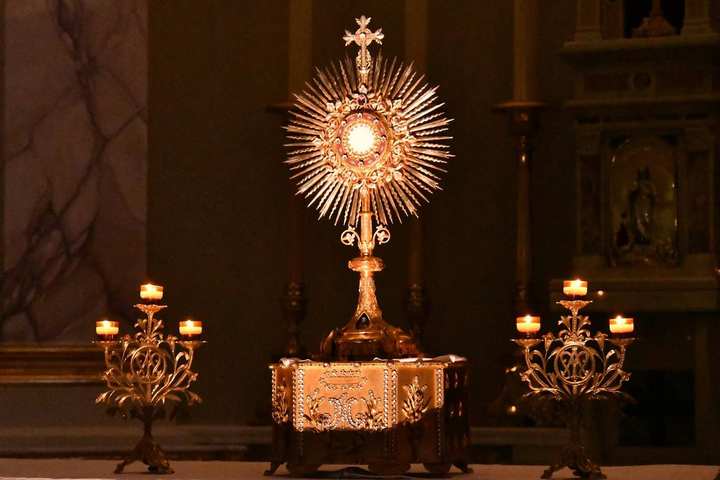
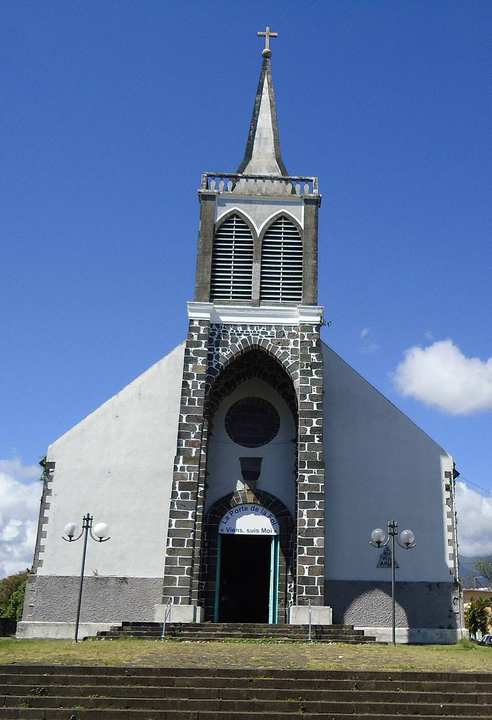
In 1902 lava from the Piton de la Fournaise ran at the church of Saint-André on Réunion. The parish carried the Blessed Sacrament to the flow. The island says the lava stopped at the door. Cooled rock is still pointed out.
No Roman congregation has defined that geology. A procession is not a machine for stopping fire.
1. What it does not prove
Whether the flow would have stopped a metre earlier is a question the rock cannot settle. What is settled is that the people put the holiest thing in the building between themselves and the fire.
You are not asked to believe a trick that always works. You are asked to believe the Mass.
2. The one sentence
Saint-André is a lava flow, a monstrance, and a threshold the parish still shows — local memory, not a dogma, and not the foundation of the Faith. Jesus Christ is.
The older telling follows.
The record
In 1902 an eruption of the Piton de la Fournaise sent a lava flow toward Saint-André. The parish priest had the Blessed Sacrament brought out. The procession met the flow. Accounts from the island say the lava halted at the threshold of the church and cooled there. A mass of volcanic rock in front of the building was left as the marker, and the parish has treated the day as a deliverance by the Eucharist.
The record, part 2
Réunion was, and is, a French diocese. The story belongs with Tumaco’s, the same year-shape — a natural disaster, a monstrance carried out of the church, a line the destruction did not cross — and with the older Rogation processions in which the Sacrament or the relics were carried to a fire or a flood. No Roman congregation has defined the physics of that lava. The rock at the door is what the town shows.
Reading
How to read Saint-André, Réunion
The point of carrying the Host to the lava is not that God owes a parish a geological exception. It is that the people believed the holiest thing in the building should stand between them and the fire. Whether the flow would have stopped a metre earlier is a question the rock cannot settle. The procession is settled. It happened, and they built nothing over the place where they say it stopped.
Pray this
Prayers that sit with the story
Church status
How this sign has been received
Long veneration
Diocesan and parish memory on Réunion. Long local veneration. Not a universal decree.
Sources
- Parish of Saint-André, Réunion
- Local accounts of the 1902 eruption
For the classroom
Saint-André, Réunion (1902, Saint-André, Réunion). Grade in this encyclopedia: Long veneration. Lava from the Piton de la Fournaise runs at the church of Saint-André. The parish carries the Blessed Sacrament to the flow. The lava stops at the door. The cooled rock is still there.