The reading
Blood first, image second
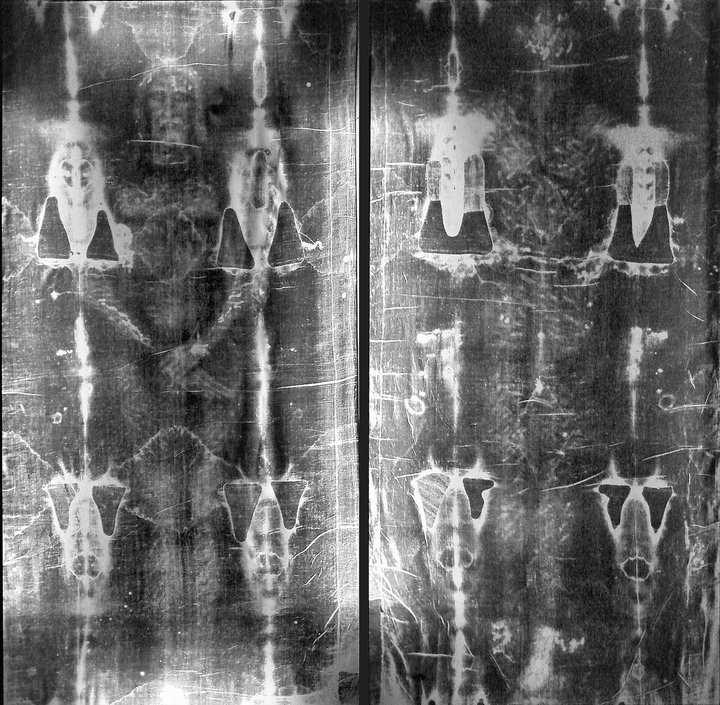
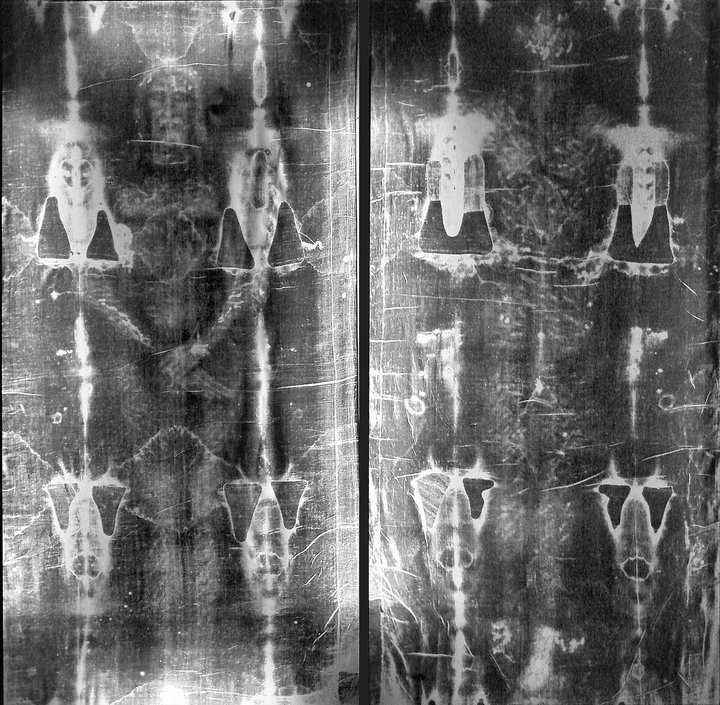
Where blood is thick on the cloth, the body-image is not. The yellow of the image does not run through the clots. That order matters. A painter who first sketched a body and then added blood would have to keep the paint off the red, perfectly. A body laid on a cloth would stain with wounds first; whatever later yellowed the flax would yellow around the stains. STURP’s chemistry treated the blood as blood: tests for heme, for proteins, for the orange fluorescence of serum at the edges of some flows.
Pierluigi Baima Bollone and others reported blood group AB. AB is rare in Europe and less rare in the Middle East. It is also the group often reported for the Sudarium of Oviedo and, in some papers, for Lanciano. That coincidence is repeated in popular books as if it were a signature. It is a data point. AB is not a fingerprint of Christ. It is consistent with a man from that world, and consistent with contamination, and consistent with a medieval victim, if the cloth is medieval. This archive records the report and does not build a creed on a blood type.
Flows that follow gravity, then rest
The blood on the forearms runs at two angles, as if a crucified man pushed up to breathe and sagged again. The blood on the back has the shape of contact with a cloth in a tomb, not of a man still standing. Some flows on the head have been read as the movement from the cross to the horizontal. Forensic readers who accept the cloth as a real burial wrapping find this natural. Readers who think it a fake find it a very careful fake.
The colour of the stains is still red. Old blood typically goes brown-black. Explanations have been offered: the presence of bilirubin from a tortured body, keeping a redder hue; or a medieval pigment mixed with blood; or both, in different stains. Heller and Adler, of STURP, argued for real blood with bilirubin. Others have claimed red ochre and vermilion in some areas (McCrone). The conflict is old and not theatrical in this house: two laboratories, two readings, one cloth. A Catholic can say: there is blood on it, and there may be some later colour besides, and the argument is not finished.
Reading
How to read The blood on the Shroud
Blood on a cloth is not a metaphor. The Mass is not a metaphor either. If this is his blood, the relic is almost too much to bear. If it is another executed man’s blood, or a medieval mixture, the Mass is not smaller. The study exists so that we do not say more than the stains will carry, and so that we do not say less.
Pray this
Prayers that sit with the story
Church status
How this sign has been received
Open / under study
The Church venerates relics of the Passion when they are credible. She has not issued a blood-type of Christ. AB on a linen is not a sacrament.
Investigation
What has been examined
STURP (Heller, Adler): heme, proteins, serum halos; argument for real blood. Baima Bollone: group AB. McCrone: claimed iron-oxide pigment. The body-image and the blood are chemically distinct; blood appears to predate the image. Redness of the stains remains a live question (bilirubin vs pigment vs both).
Sources
- J. H. Heller and A. D. Adler, STURP blood papers
- P. Baima Bollone, blood-group studies on the Shroud
- W. McCrone, Judgment Day for the Turin Shroud (the pigment claim)
For the classroom
The blood on the Shroud (Studied 1973–1978 and after, Turin). Grade in this encyclopedia: Open / under study. The red stains on the Shroud are not the same substance as the body-image. Tests have reported real blood, human, often type AB, with serum separation at the margins. The blood is a study of its own because it arrived first.