The reading
How it began
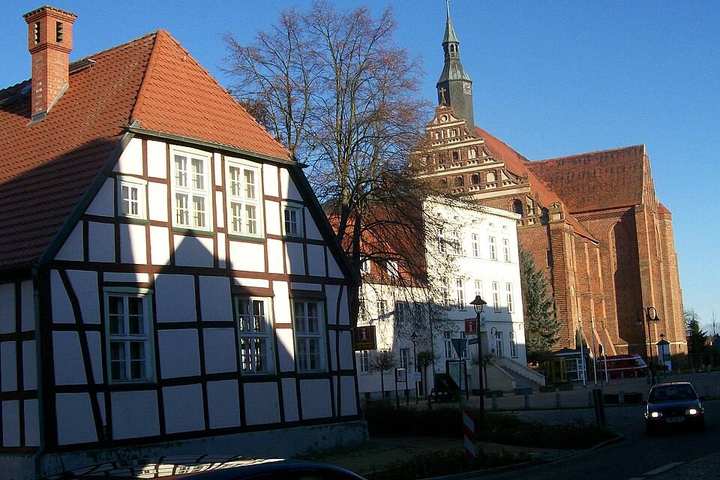
In August 1383 a fire destroyed the church of Wilsnack. The priest, Johannes Kabuz, said that in the ruins he found three Hosts, intact, each with a drop of blood. Pilgrims came in extraordinary numbers. The bishops of Havelberg promoted the shrine. Critics, including Jan Hus and later Nicholas of Cusa, said the cult was a fraud and a danger. Cusa, as papal legate, tried to suppress it in 1451. The pilgrimage was already too large to silence in a season.
The day itself
The Hosts do not survive as a modern relic a scientist can resample. The church that holds the memory was rebuilt. This page does not call Wilsnack approved. It calls it what the file is: a famous cult, a real fire, a priest’s report, and a Church argument that never settled into a single sentence. That is why the status is open, not venerated without comment.
Reading
How to read Wilsnack
A pilgrimage can be huge and still be argued. Wilsnack is in the list because hiding the argument would be a lie. Size is not a doctrine.
Church status
How this sign has been received
Open / under study
Promoted by the local bishops in the fifteenth century; opposed by reformers and by Nicholas of Cusa. Not a settled Roman approval. The historical fact of the cult is certain. The supernatural fact is disputed.
Sources
- Diocese of Havelberg, fifteenth-century acts
- Nicholas of Cusa, legatine decree of 1451
For the classroom
Wilsnack (1383, Bad Wilsnack, Brandenburg). Grade in this encyclopedia: Open / under study. Three Hosts were found in the ashes of a burned church, marked with blood. For a century Wilsnack was one of the great pilgrimages of Europe. It was also one of the most contested.