The reading
How it began
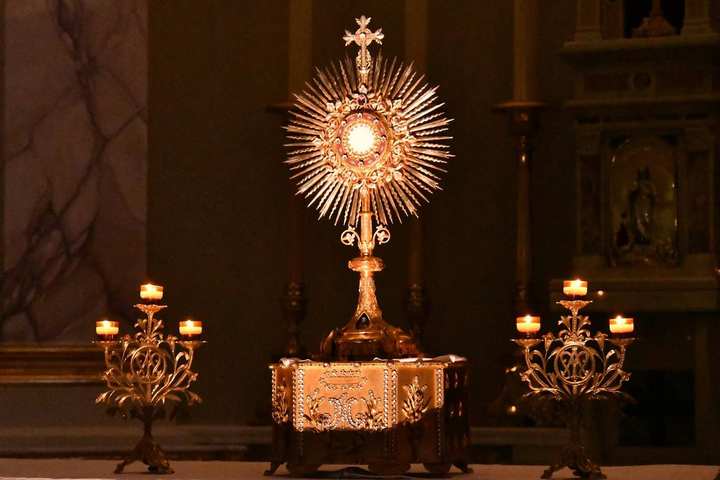
On 6 June 1453 a man stole the monstrance from the parish of Exilles, in the mountains, and rode toward Turin with the Host in a sack on a mule. In the square that is now the Piazza Corpus Domini the mule would not go on. The sack opened. The Host rose and remained suspended, shining, until the bishop of Turin, Ludovico da Romagnano, came with his clergy and took it in his hands.
The day itself
The church of Corpus Domini was built on that square. Turin keeps 6 June, or the Thursday the city assigns, as its own feast of the Body of the Lord, distinct from the universal Thursday after Trinity. The stolen monstrance is the city’s memory. The Host of that hour is not a relic still shown under glass in the way Lanciano shows flesh. The place is the square and the church.
Reading
How to read Turin, 1453
A theft is the plot of half the medieval Eucharistic stories. Turin’s version ends in public, in a square, with a bishop receiving what a thief could not carry. The city did not treat that as a private marvel.
Church status
How this sign has been received
Long veneration
Civic and diocesan cult from 1453. The church of Corpus Domini is the custodian of the memory.
Sources
- Church of Corpus Domini, Turin
- Diocesan memory of 6 June 1453
For the classroom
Turin, 1453 (6 June 1453, Turin). Grade in this encyclopedia: Long veneration. A thief stole a monstrance from the church in Exilles. At Turin the Host rose out of the sack and stayed in the air until the bishop came. The city built the church of Corpus Domini on the spot.