The reading
1. What the procession remembers
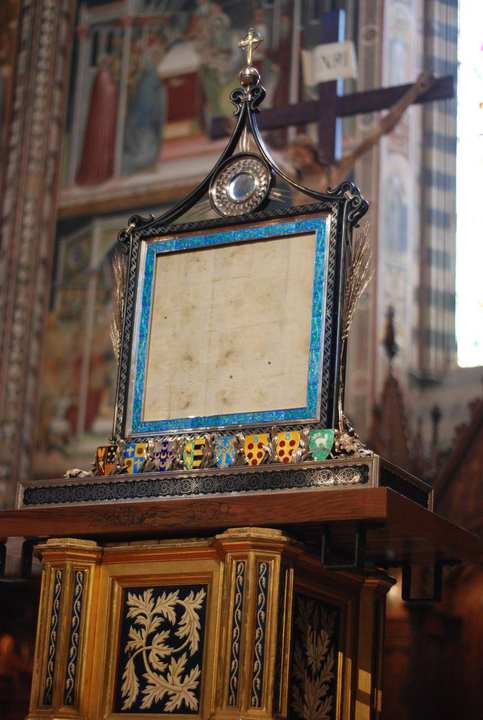
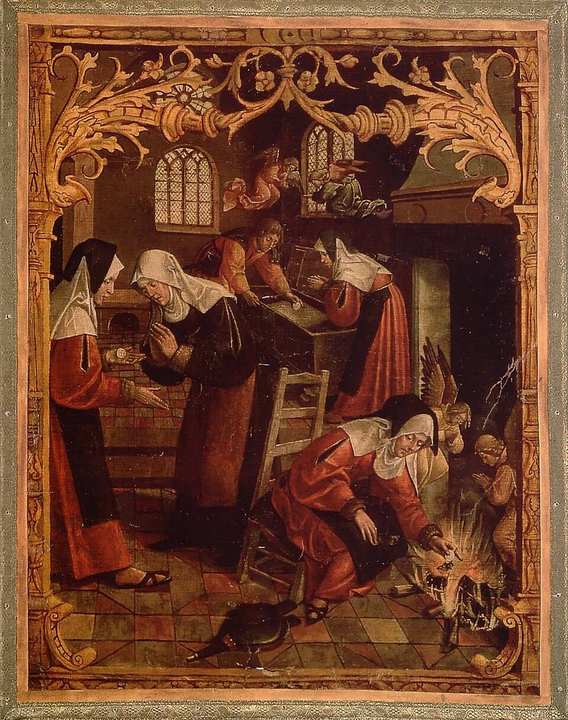
Around 1400, the local account says, wine bubbled over the chalice while the priest was in doubt about the Real Presence. When he acknowledged his error, the overflow stopped. A drop remained on the white cloth. Inventories speak of congealed red material. Later containers have held that cloth. The town’s procession still uses the story, and its colours, as a public catechism.
2. What was lost with the papers
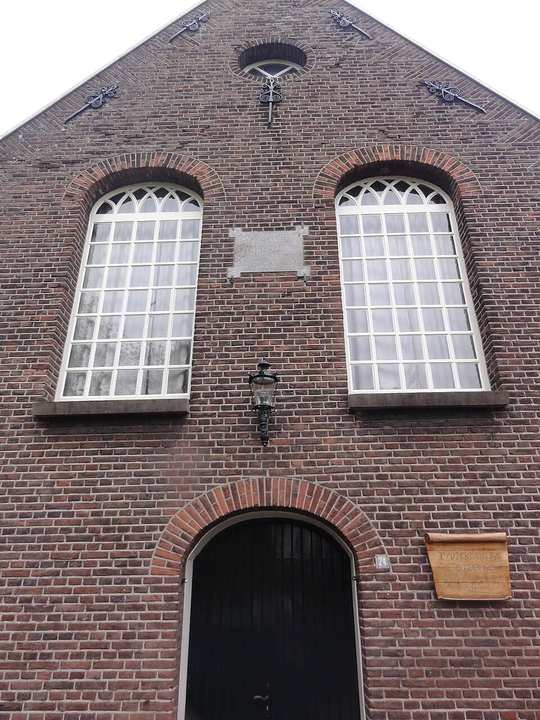
Records of the early cult were damaged. What a visitor meets now is a reconstructed memory: a church, a cloth inside later reliquaries, and a procession that knows why it walks. That is enough for devotion. It is not enough to describe the stain as heart tissue, or to date a laboratory that never happened.
Reading
How to read Boxmeer
Doubt at the altar is an old priestly wound. Boxmeer’s answer, if the story is true, was not an argument. It was the cup refusing to stay ordinary until the priest did.
Church status
How this sign has been received
Long veneration
Medieval local cult and a continuing procession. The cloth is venerated. It has not been the subject of a published modern analysis that this page can cite.
Sources
- Parish and procession of Boxmeer
- Scholarly inventories of the corporal, about 1400
For the classroom
Boxmeer (about 1400, Boxmeer, North Brabant). Grade in this encyclopedia: Long veneration. A priest who doubted is said to have seen the wine rise in the chalice until he took back the doubt, leaving a red mark on the corporal. Boxmeer still walks in memory of that cloth. The mark is not a modern blood study.