The reading
How it began
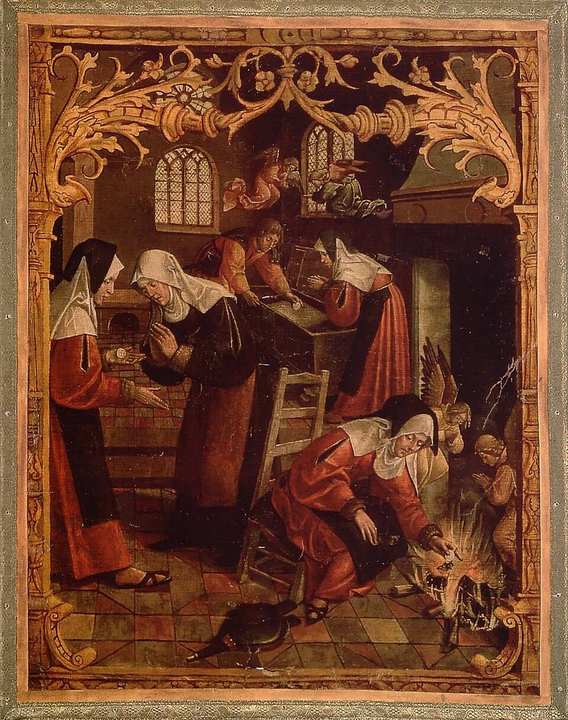
On the night of 15 March 1345 a man in a house on the Kalverstraat was dying. A priest brought him Viaticum. The man could not keep the Host down. What he brought up was thrown into the fire in the hearth, which is what a household of that century did with a Host that could no longer be consumed. The next morning the Host was in the coals, unburned.
The day itself
It was carried to the parish church, the Oude Kerk. A chapel of the Miracle rose on the Kalverstraat. Pilgrims came from across the Low Countries. In 1578, at the Alteration, Amsterdam became officially Reformed, public Catholic worship was suppressed, and the Host of 1345 was lost. The walk did not stay lost. In 1881 Catholics began the Stille Omgang again, a night procession without banners, past the place of the house. It is still held in March.
What was kept
What remains is not a Host in a monstrance. It is a street, a chapel site, and a walk the city knows. The Church of the city received the miracle in the Middle Ages. The Church does not claim the original Host survived the Reformation.
Reading
How to read Amsterdam
A Host that will not burn is a sign about the Sacrament, not a charm against fire. The harder sentence in Amsterdam is the one after 1578: the object went, and the memory was kept by people who walked in the dark without it.
Church status
How this sign has been received
Long veneration
Medieval civic cult, confirmed by the bishops of the time and by indulgences. Interrupted by the Alteration. The Stille Omgang is an approved Catholic devotion of the diocese. The Host itself is not extant.
Sources
- Parish memory of the Oude Kerk and the Begijnhof
- The Stille Omgang, revived 1881
For the classroom
Amsterdam (15 March 1345, Amsterdam). Grade in this encyclopedia: Long veneration. A dying man received Viaticum and vomited. The Host was thrown on the fire and did not burn. Amsterdam has walked the Silent Walk in memory of it ever since the devotion was allowed back.