
The reading
1. What the diocese records
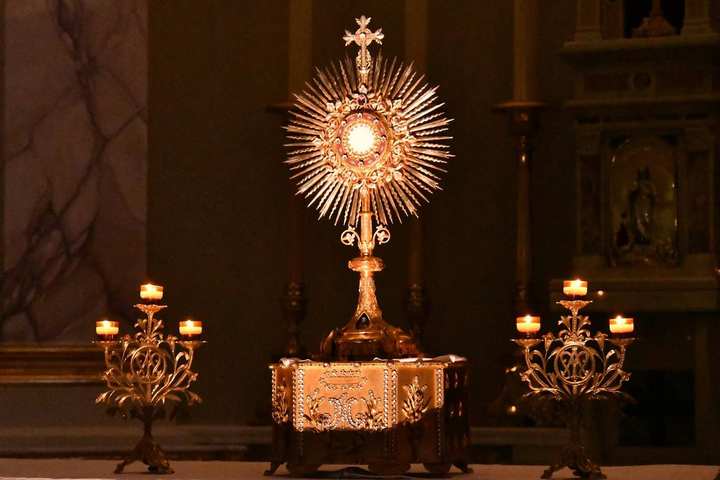
In 1969 the church was robbed. Hosts were thrown aside. A child is said to have found them. The diocese’s account tells the recovery of dozens of Hosts — the number usually given is sixty-three — and their return to adoration. In 1970 the bishop decreed that adoration should not stop.
2. What the decree is
A decree of perpetual adoration is a real act of the Church. It says: these Hosts will be worshipped, and the theft will not be the end of the story. It does not say that a published chemical analysis found living tissue. No such public laboratory finding belongs in this file. Visitors sometimes want every recovered Host to bleed. San Mauro’s witness is quieter, and stronger for being quiet: the Sacrament was treated as waste, and the parish refused the waste.
Reading
How to read San Mauro La Bruca
Perpetual adoration here is reparation with a date on it. The date is enough.
Church status
How this sign has been received
Locally approved
Diocesan decree of perpetual adoration, 1970, after the recovery of 1969. Not a claim of a miraculous change in the species.
Sources
- Diocese, account of the recovery at San Mauro La Bruca
- Decree of perpetual adoration, 1970
For the classroom
San Mauro La Bruca (1969; adoration decreed 1970, San Mauro La Bruca). Grade in this encyclopedia: Locally approved. After a theft, a child is said to have found discarded Hosts. The diocese records their recovery and, in 1970, a decree of perpetual adoration. That decree is about worship. It is not a laboratory result.