

The reading
How it began
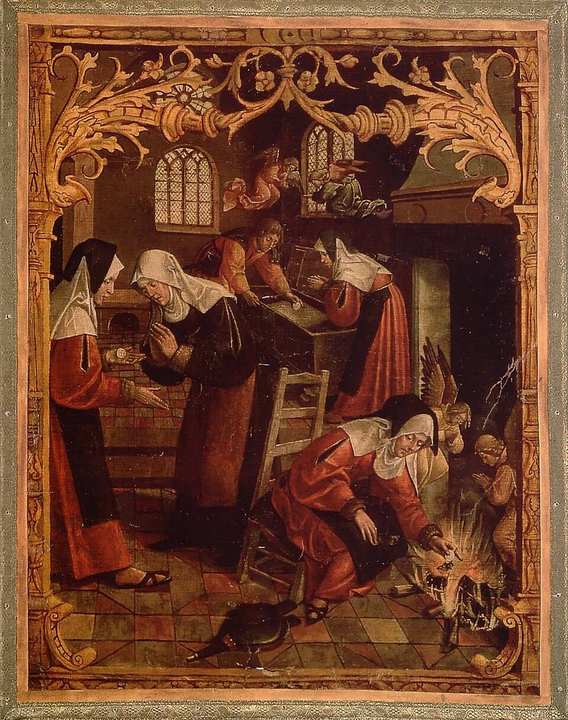
In 1317 a priest of the region was taking Communion to a sick woman. He opened the pyx and found the Hosts stained with blood, or standing in blood. He was afraid to continue. The Hosts were brought to the abbey of Herkenrode, a Cistercian house of women near Hasselt, which became a pilgrimage.
The day itself
The abbey was suppressed in the French period. The cult and what could be saved of the relics passed to the church of St. Quentin in Hasselt, which still keeps the memory of the Sacrament of Herkenrode. The grade is a medieval monastic reception, not a modern medical file.
Reading
How to read Herkenrode
Viaticum is the Church’s ordinary way of carrying Christ to a bed. Herkenrode says that on one of those walks the priest saw what he was carrying. The abbey is gone. The errand is not an oddity. It is still what a priest does on a weekday afternoon.
Church status
How this sign has been received
Long veneration
Medieval cult of the abbey; continued at Hasselt after the suppression.
Sources
- Abbey of Herkenrode, chronicle tradition
- St. Quentin, Hasselt
For the classroom
Herkenrode (1317, Herkenrode, near Hasselt). Grade in this encyclopedia: Long veneration. A priest carrying Hosts to a sick woman saw blood in the pyx. The Hosts were taken to the Cistercian abbey of Herkenrode. The cloth and the memory stayed with the nuns.