Skip to content
MarianLocally approved

Our Lady of Good Success

Quito apparitions

Quito·Ecuador·1594–1634

Mother Mariana de Jesús Torres, a Conceptionist nun, reports lengthy apparitions of Mary as “Good Success,” with prophecies about a later, corrupted age. A statue still stands in the choir. The diocese has permitted the cult of the image; the prophecies are more contested in popular retellings than in the archives.
Listen

Woman

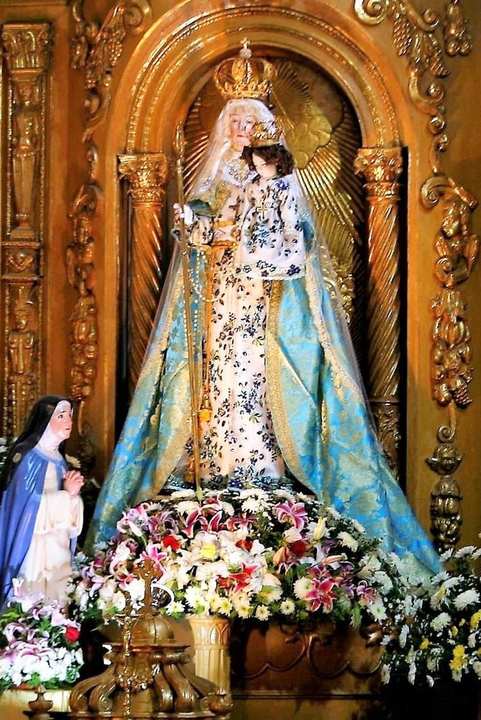
The statue of Our Lady of Good Success in the Conceptionist convent, Quito: Mary as the Purification, the Child in her arms, the staff and the keys.

The photographs

Our Lady of Good Success

Our Lady of Good Success — Quito

The statue of Our Lady of Good Success in the Conceptionist convent, Quito: Mary as the Purification, the Child in her arms, the staff and the keys.

The object or shrine of this sign.

Our Lady

Talks on YouTube

These play here. They are not the Church’s judgement. If a frame will not start, open it on YouTube.

Hosts said to beat like a heart

Servants of God

Placed with the Eucharistic miracles, and also with Our Lady, as asked. It is a film about the Eucharist.

Watch on YouTube

Persons

The reading

How it began

The Royal Monastery of the Immaculate Conception in Quito was founded in 1577. Among its Conceptionist nuns was Mariana Francisca de Jesús Torres y Berriochoa, born in 1563, who entered as a child and died in 1635. The convent’s papers, and a later life of her, say that between 1594 and 1634 she received apparitions of Mary under the title Our Lady of Good Success of the Purification — Buen Suceso, a phrase that in Spanish of that century means a favourable event, a good outcome, not a modern slogan.

The day itself

Mary, in that telling, asked for a statue to be made as she wished to be honoured: the Purification, the Child in her arms, a crozier and the keys of the cloister, because she would govern the house in difficult times. Francisco del Castillo, a sculptor, began the work. The convent’s memory is that the figure was finished in a way no chisel quite accounts for. The statue still stands in the choir of that convent. It is the official image of this devotion. Healings and a stable local cult follow it.

What was kept

Twentieth-century pamphlets extend the messages into highly specific prophecies of later crises in the Church. Scholars who have sat with the convent’s papers are often more cautious than the pamphlets. The difference matters. A crowned statue in Quito is one kind of fact. A paragraph in a 1990s booklet is another. The Catholic reader’s job is the usual one: honour the image the bishop has crowned; test the later words; refuse to let pamphlets outrun the file.

Reading

How to read Our Lady of Good Success

Quito is a case of a real, old, local Marian cult wrapped, later, in an apocalyptic publishing industry. The Catholic reader’s job is the usual one: honor the image, test the later words, refuse to let pamphlets outrun the bishop.

Pray this

Prayers that sit with the story

Church status

How this sign has been received

Locally approved

The Archdiocese of Quito has crowned the statue and permitted the devotion. It has not made every popular prophecy a matter of faith. Status: locally approved devotion to the image; messages to be read with care.

Sources

  • Conceptionist Monastery of the Immaculate Conception, Quito
  • Archdiocese of Quito, liturgical permissions

For the classroom

Our Lady of Good Success (1594–1634, Quito). Grade in this encyclopedia: Locally approved. Mother Mariana de Jesús Torres, a Conceptionist nun, reports lengthy apparitions of Mary as “Good Success,” with prophecies about a later, corrupted age. A statue still stands in the choir. The diocese has permitted the cult of the image; the prophecies are more contested in popular retellings than in the archives.
Related signs

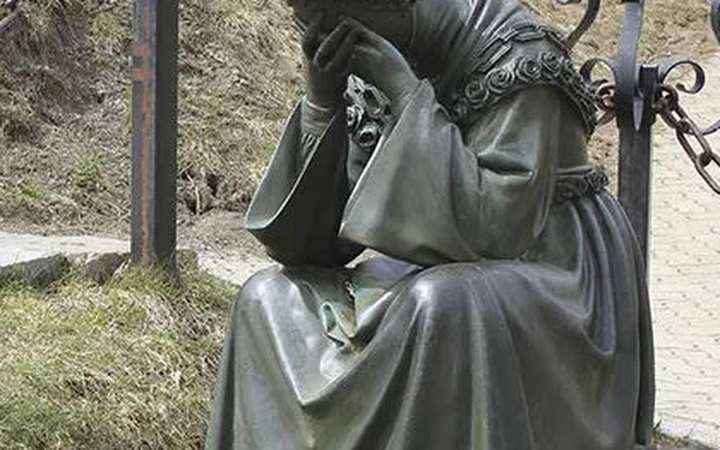
Our Lady of La Salette — La Salette-Fallavaux, Alps. The weeping Madonna of La Salette: Mary seated, face in her hands, as the two children found her.
MarianChurch-approved

Our Lady of La Salette

La Salette-Fallavaux, Alps1846

On 19 September 1846, two poor children, Maximin Giraud and Mélanie Calvat, met a woman weeping on a mountain above La Salette. She spoke of people using her Son’s name as a swear-word, and of Sunday being spent as an ordinary market day instead of at Mass. The Bishop of Grenoble approved the apparition in 1851.

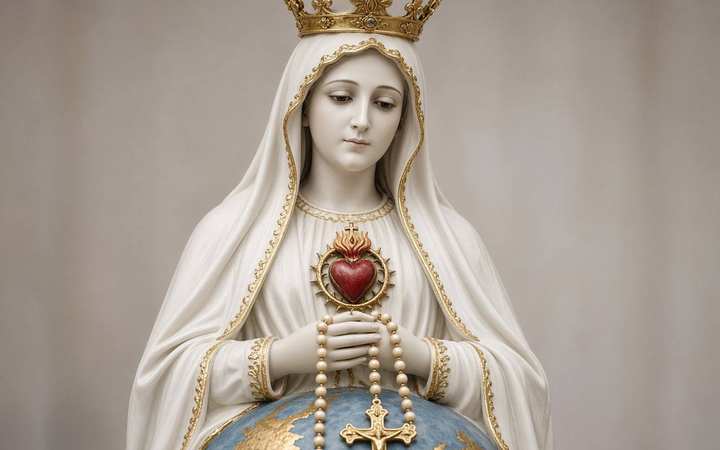
Our Lady of Fátima — Cova da Iria, Fátima. The statue of Our Lady of Fátima: white, crowned, the rosary, the Immaculate Heart.
MarianChurch-approved

Our Lady of Fátima

Cova da Iria, Fátima1917

In 1917, in a hollow of pasture called the Cova da Iria, near the village of Fátima in Portugal, three shepherd children — Lúcia dos Santos, ten, and her cousins Francisco Marto, nine, and Jacinta Marto, seven — saw a lady brighter than the sun, six times, on the 13th of the month from May to October. She asked for the rosary every day, for the conversion of sinners, for devotion to her Immaculate Heart, and that a chapel be built. On 13 July she showed them hell and spoke of war and of Russia. On 13 October, before a crowd of tens of thousands standing in the rain, including reporters who had come to mock, the sun appeared to dance. Francisco and Jacinta died in the influenza. Lúcia lived until 2005 as a nun. The bishop of Leiria declared the apparitions worthy of belief on 13 October 1930.

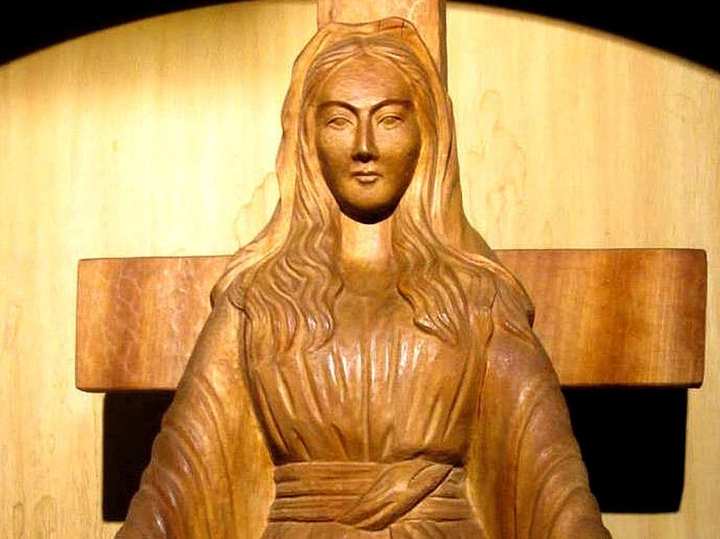
Our Lady of Akita — Akita
MarianLocally approved

Our Lady of Akita

Akita1973–1981

Sr. Agnes Sasagawa hears a voice from a wooden statue; the statue weeps 101 times; a cross-shaped wound appears on the sister’s hand. Bishop Ito declared the events supernatural in 1984. Rome has been more reserved in later comments.

Filed under Marian Apparitions.