Skip to content
MarianChurch-approved

Our Lady of Pontmain

Our Lady of Hope

Pontmain, Mayenne·France·1871·Feast 17 January

In a village of the Franco-Prussian War, children see a smiling lady in the sky; adults mostly do not. A message forms letter by letter: “Pray, my children. God will hear you in a short time.” The Prussian advance stops.
Listen

Woman

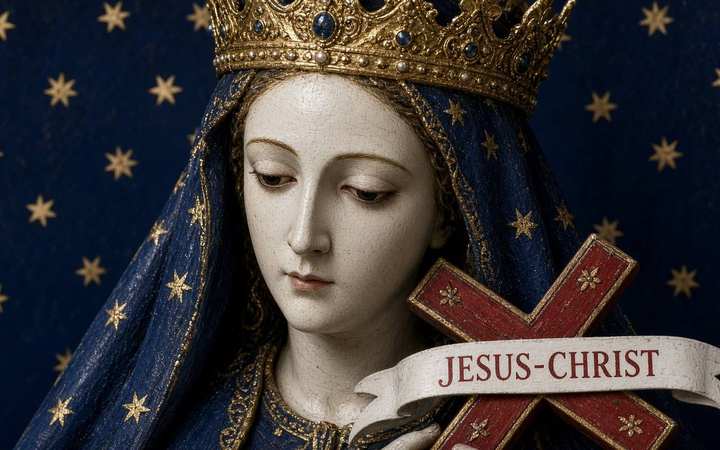
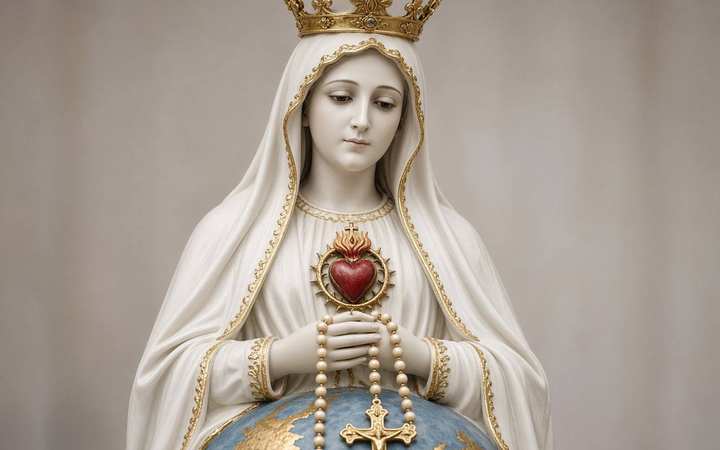
Our Lady of Hope: the Pontmain statue — gold diadem, starry robe, the red crucifix that reads JESUS-CHRIST.

The photographs

Our Lady of Pontmain

Our Lady of Pontmain — Pontmain, Mayenne

Our Lady of Hope: the Pontmain statue — gold diadem, starry robe, the red crucifix that reads JESUS-CHRIST.

The object or shrine of this sign.

Our Lady

Talks on YouTube

These play here. They are not the Church’s judgement. If a frame will not start, open it on YouTube.

Hosts said to beat like a heart

Servants of God

Placed with the Eucharistic miracles, and also with Our Lady, as asked. It is a film about the Eucharist.

Watch on YouTube

Persons

The reading

In plain speech

On 17 January 1871, in a village expecting the Prussian army, children said they saw a lady in the night sky. Adults mostly saw little or nothing. A line of words formed: pray, and God will hear you shortly. The advance halted. An armistice followed within days.

The Bishop of Laval approved the apparition in 1872. The Church has not defined the military history as a miracle of physics. The children saw. The grown-ups prayed anyway.

1. What it does not prove

Hope is not a promise that every war will stop at a parish boundary. The crucifix on her breast is red. Hope does not cancel the Cross.

Vision is not the condition of fidelity. Most of the village never saw her, and they still had the Rosary in the snow.

2. The one sentence

Pontmain is a lady in a wartime sky, a bishop’s yes, and a village that prayed — not the foundation of the Faith. Jesus Christ is.

The older telling follows.

The record

The evening of 17 January 1871. The Barbedette boys see, above a house, a lady in a dark-blue robe sown with gold stars, a red crucifix on her breast. Other children see her. The adults see nothing, or only a triangle of light. The parish priest leads the rosary in the snow. A banner of words appears under her feet, a few letters at a time, like a schoolroom chart: Pray, my children… My Son allows himself to be moved.

The record, part 2

That night the Prussian units near Laval halt. The armistice of the war follows days later. No one in Pontmain is killed in the fighting. The villagers, who had been expecting occupation, receive it as an answered prayer.

Reading

How to read Our Lady of Pontmain

Pontmain is a wartime mercy with almost no theology beyond hope. The children see; the grown-ups pray anyway. That is a good picture of the Church. Vision is not the condition of fidelity.

The lady’s crucifix is red, the color of the Passion. Hope is not the denial of the cross. It is the cross held in a sky that has not abandoned the village.

Pray this

Prayers that sit with the story

Church status

How this sign has been received

Church-approved

Bishop Wicart of Laval approved the apparition in 1872 after a canonical investigation. A basilica stands at Pontmain. The title Our Lady of Hope is liturgical in the diocese.

The shrine today

Why pilgrims still go

January 1871, a Prussian army in the next valley, children looking up. A lady in the sky, a message that unrolled like a banner: But pray, my children. God will hear you in a short time. The advance stopped. Approved. A village still looking up.

Pontmain — the reasons

Sources

  • Episcopal judgment of Laval, 1872
  • Shrine of Notre-Dame de Pontmain

For the classroom

Our Lady of Pontmain (1871, Pontmain, Mayenne). Grade in this encyclopedia: Church-approved. In a village of the Franco-Prussian War, children see a smiling lady in the sky; adults mostly do not. A message forms letter by letter: “Pray, my children. God will hear you in a short time.” The Prussian advance stops.
Related signs

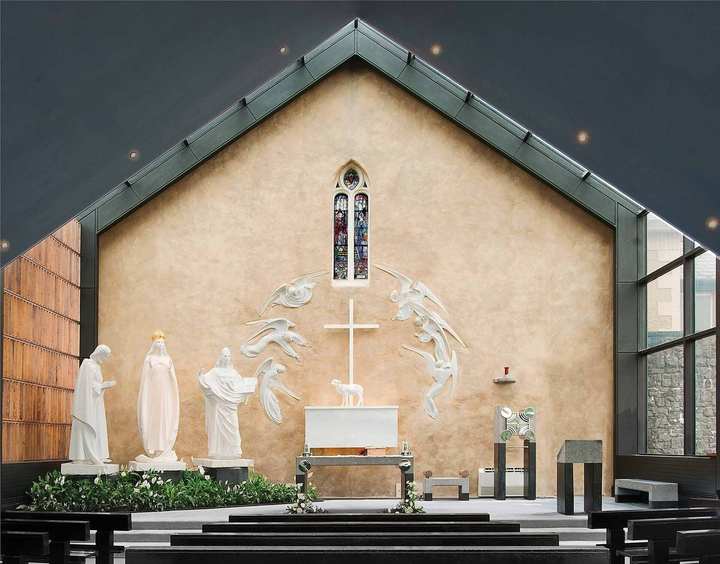
Our Lady of Knock — Knock, County Mayo. The Apparition Chapel at Knock: the white figures of Our Lady, Saint Joseph, and Saint John, the Lamb on the altar, angels on the gable wall.
MarianChurch-approved

Our Lady of Knock

Knock, County Mayo1879

On a wet evening, fifteen villagers see Mary, St. Joseph, St. John the Evangelist, and a Lamb on an altar against the parish gable. No word is spoken. The rain does not touch the vision.

Our Lady of Fátima — Cova da Iria, Fátima. The statue of Our Lady of Fátima: white, crowned, the rosary, the Immaculate Heart.
MarianChurch-approved

Our Lady of Fátima

Cova da Iria, Fátima1917

In 1917, in a hollow of pasture called the Cova da Iria, near the village of Fátima in Portugal, three shepherd children — Lúcia dos Santos, ten, and her cousins Francisco Marto, nine, and Jacinta Marto, seven — saw a lady brighter than the sun, six times, on the 13th of the month from May to October. She asked for the rosary every day, for the conversion of sinners, for devotion to her Immaculate Heart, and that a chapel be built. On 13 July she showed them hell and spoke of war and of Russia. On 13 October, before a crowd of tens of thousands standing in the rain, including reporters who had come to mock, the sun appeared to dance. Francisco and Jacinta died in the influenza. Lúcia lived until 2005 as a nun. The bishop of Leiria declared the apparitions worthy of belief on 13 October 1930.

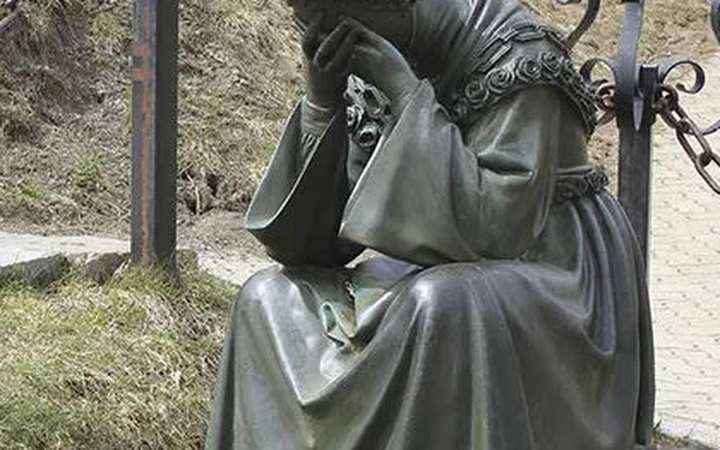
Our Lady of La Salette — La Salette-Fallavaux, Alps. The weeping Madonna of La Salette: Mary seated, face in her hands, as the two children found her.
MarianChurch-approved

Our Lady of La Salette

La Salette-Fallavaux, Alps1846

On 19 September 1846, two poor children, Maximin Giraud and Mélanie Calvat, met a woman weeping on a mountain above La Salette. She spoke of people using her Son’s name as a swear-word, and of Sunday being spent as an ordinary market day instead of at Mass. The Bishop of Grenoble approved the apparition in 1851.

Filed under Marian Apparitions.