
Statues
A weeping Madonna is the most reported wonder of the last two centuries, and the class most often explained by heat, paint, or a man’s blood on plaster. The files that survive the first week have names, dates, confiscations, and laboratories. This section shows the official statue of that case — the object itself — not a column borrowed from Zaragoza.
The file
How this section is read
Statues weep more often in the newspapers than in the diocesan archives. A hollow plaster head will collect condensation. A paint will run in a heatwave. A hoaxer with a dropper can hold a crowd for a weekend. Bishops know this. The first move in a serious case is not a procession. It is a confiscation, an X-ray, a chemist.
A few files outlast the weekend. Syracuse, 1953: a plaster plaque of the Immaculate Heart in a working-class kitchen, tears that a medical commission collected and called human. Akita, 1973 to 1981: a wooden statue in a convent in Japan, 101 weepings, a deaf nun, a bishop’s yes. Civitavecchia, 1995: a forty-two-centimetre Medjugorje souvenir in a garden at Pantano, fourteen reported weepings of blood, a CAT scan that found no device, a laboratory that named male human blood, a bishop who said he saw it in his own hands. None of these is Our Lady of the Pillar. The pillar is a jasper column in Zaragoza with its own legend and its own page. Mixing the photographs is how an archive becomes a drawer of other people’s statues.
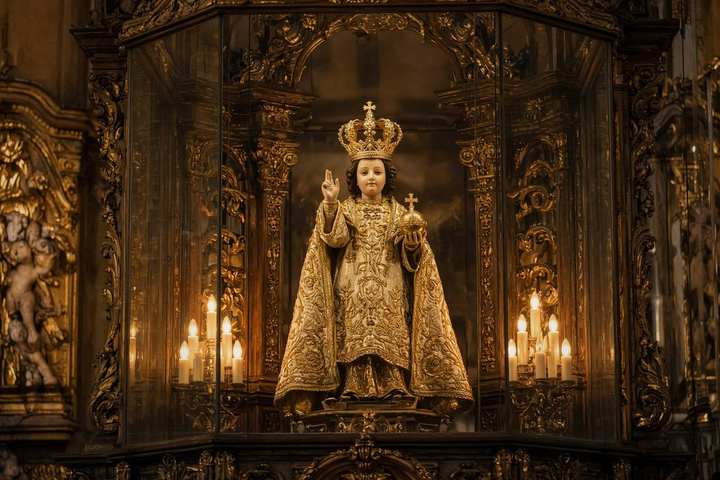
Each entry here is the official figure of that devotion: the Infant of Prague as crowned in the Carmel, the dark clay of Aparecida, the wooden Akita, the Civitavecchia Queen of Peace in her glass case, the Syracuse plaque. If the category is about her, the picture is of her.
6 signs
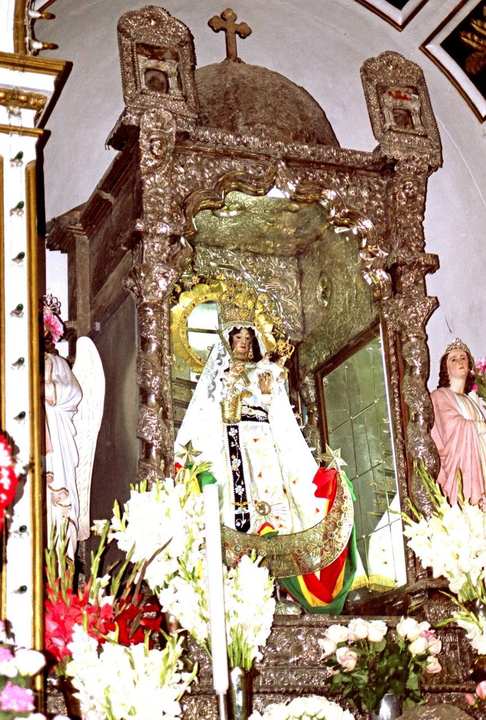
Bolivia
1 sign, in the order of their years
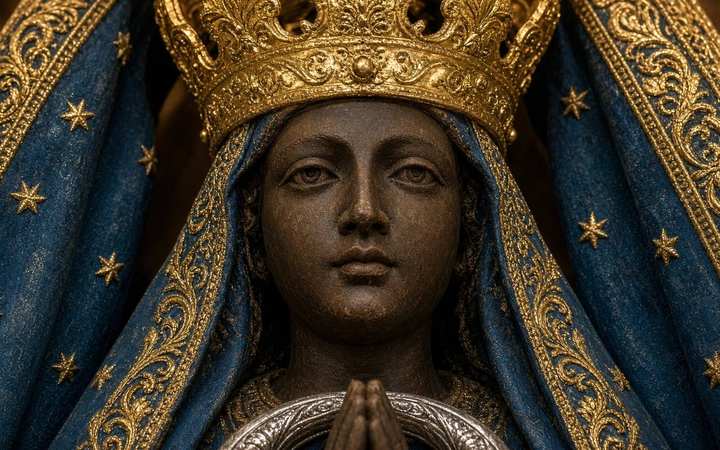
Brazil
1 sign, in the order of their years
Czech Republic
1 sign, in the order of their years
Italy
2 signs, in the order of their years
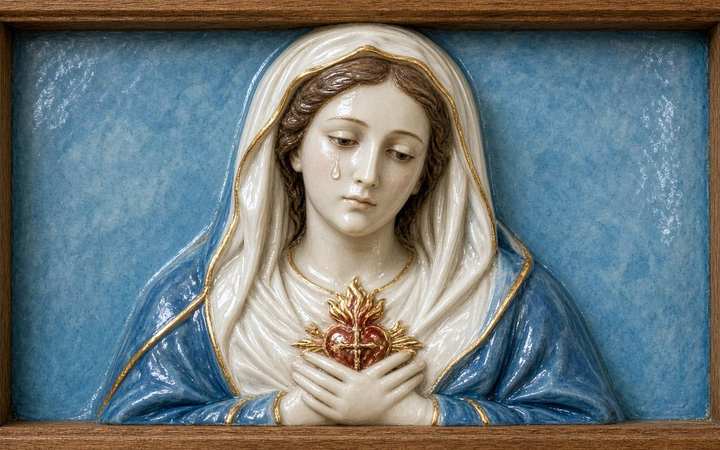
The Weeping Madonna of Syracuse
Syracuse, Sicily29 August – 1 September 1953
A cheap plaster plaque in a worker’s apartment sheds human tears for four days. A commission, scientists, and the bishops of Sicily take depositions. Pius XII spoke of it. A vast basilica now stands over the site.
The Madonna of Civitavecchia
Pantano, Civitavecchia2 February 1995
On 2 February 1995, at about 16:20, in a garden at Pantano on the edge of Civitavecchia, a five-year-old girl named Jessica Gregori stopped in front of a plaster statue forty-two centimetres high and called to her father. Blood, she said, was coming from its eyes. Over the next six weeks the same object was reported to weep fourteen times — in the garden, in the house, and at last in a bishop’s hands. A CAT scan at the Gemelli hospital found no device inside the plaster. Two forensic professors named the first stains as human blood, male. John Paul II later blessed a gold crown and a rosary for the figure. Rome has never declared a miracle. The statue is still in a glass case at Sant’Agostino.
Spain
1 sign, in the order of their years