The reading
In plain speech
Spain’s great shrine at Zaragoza venerates a jasper column and a small statue of Our Lady and the Child. The tradition says that in the year 40, while she was still alive in Jerusalem, Mary appeared to the Apostle James on the bank of the Ebro and asked for a church.
No first-century document records that night. The Church has not treated it as a modern approved apparition with a decree of supernatural fact. The shrine is ancient, papal, and loved. The year 40 is the claim. The pillar is the object.
1. What you can say without pretending
Zaragoza is one of the oldest Marian sanctuaries in the West. Pilgrims still kiss a worn place on the jasper. That wear is a fact about devotion. It is not a proof of the year 40.
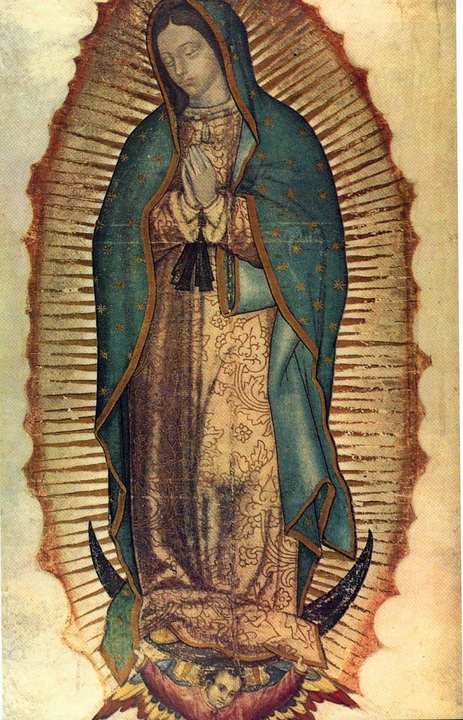
The statue is not the tilma of Guadalupe and not any other Madonna. It is this image, on this column.
2. What it does not prove
An apostolic legend, even a holy one, is not the same as the Gospel, which the Church does propose as revealed. You may pray here with the whole Hispanic world. You are not obliged to defend every detail of a story written down centuries later.
The meaning is still Catholic: Mary accompanies the mission at the edge of the map. A pillar supports. It does not save. Her Son does.
3. The one sentence
The Pillar is a column, a small statue, and a founding story the Church venerates without proving — and the Faith rests on Jesus Christ, not on the jasper.
The older telling follows.
The record
The tradition, written down centuries later, says this. St. James the Greater, son of Zebedee, was preaching in Hispania and was failing. On the night of 2 January in the year 40 — the date the Spanish liturgy still keeps, though no first-century document records it — he was on the bank of the Ebro at Caesaraugusta, the Roman city that would become Zaragoza. Mary, still alive in Jerusalem, appeared to him, standing on a pillar of jasper, attended by angels, and asked for a church on that spot. James built a chapel. The pillar remained.
The record, part 2
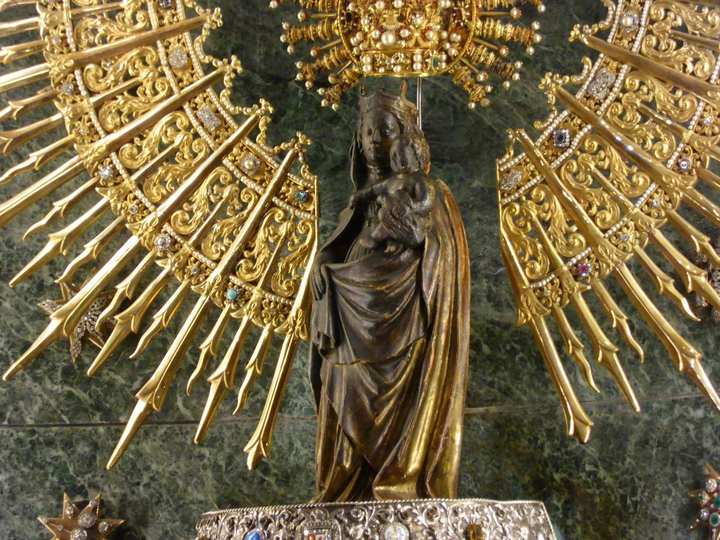
What a historian can say is more modest and still large. Zaragoza is one of the oldest Marian sanctuaries in the West. The object of the cult is a column of jasper, about 1.8 metres, and a wooden statue of the Virgin and Child, about 39 centimetres, in a late-Gothic or early-Renaissance style, standing on it. Popes have granted the shrine extraordinary honours. The feast is 12 October, which is also Spain’s national day. The Hispanic world has two great Madonnas: Guadalupe in Mexico, the Pillar in Zaragoza. They are not the same woman in two photographs. They are two shrines, two objects, two stories.
The record, part 3
The basilica on the river is baroque, vast, and later. The pillar is the reason it exists. Pilgrims still kiss a worn spot on the jasper through an opening in the chapel. That worn spot is the document. The year 40 is the claim.
Reading
How to read Our Lady of the Pillar
Even if one treats the year 40 as unprovable, the meaning the Church has prayed here is clear: Mary accompanies mission at the edge of the map. A pillar is a support, not a portrait. Spain came to the faith leaning on it.
Pray this
Prayers that sit with the story
Church status
How this sign has been received
Long veneration
The shrine is a basilica, the patroness of the Hispanic world together with Guadalupe. The apparition is sacred tradition in the Spanish Church, not a modern approved apparition with a signed decree of supernaturality. Status: venerated, apostolic legend.
The shrine today
Why pilgrims still go
Tradition says Mary appeared to the apostle James on a pillar, while she was still alive in Jerusalem — the first Marian apparition. Whether you take the chronology as history or as Spain’s oldest love-story, the basilica on the Ebro is a working heart.
Zaragoza — the Pillar — the reasonsSources
- Basilica of Our Lady of the Pillar, Zaragoza
- Spanish liturgical tradition, 12 October
For the classroom
Our Lady of the Pillar (Tradition: 12 January AD 40, Caesaraugusta (Zaragoza)). Grade in this encyclopedia: Long veneration. Spain’s founding Marian story: the Virgin, while still living in Jerusalem, appears to the Apostle James on the Ebro and leaves a jasper pillar. A small statue of mother and child stands on that column in Zaragoza. A basilica stands around it. It is apostolic legend, loved, not historically proved. The photograph is this statue on this pillar — not any other Madonna.