The reading
The garage men thought she would jump
It is a Tuesday night in Cairo, April 1968, not a year after a war. Farouk Mohammed Atwa is among the mechanics at the Public Transport garage across the street from St. Mary’s. He sees a white figure on the church roof and yells that a girl is going to kill herself. Someone is sent for a priest. Someone is sent for the police. The figure does not jump. She is light. She moves. She is, they will say later, bowing in front of the cross on the dome.
A city that would not go home
The nights that follow are not a handful of seers in a field. They are a street that will not clear. Buses stop. People climb walls. Muslims recite the Fatiha. Copts cry Ya Adra — O Virgin. Some see doves of light. Some see her in procession around the roof, sometimes holding an olive branch, sometimes blessing with both hands, never speaking. Pope Kyrillos VI looks. Photographs were taken.
Healings, and then the quiet
Cures are claimed: a mechanic’s gangrene, cancers, blindness. The Coptic Church gathers names. The Catholic Church does not annex the event. Zeitoun is not a Catholic trophy. Mary, honored in the Qur’an as well as in Luke, appeared over a Coptic dome in a Muslim capital. Then, across 1969, 1970, into 1971, the visits thin. Then they stop. The church is still there. The roof is ordinary in daylight.
Reading
How to read Our Lady of Zeitoun
Zeitoun is public in a way Lourdes is not. No secret. No seer with a monopoly. A whole neighborhood arguing with its own eyes. A Catholic reads it without stealing it: the Mother of Jesus is not a denomination. If she came, she came as peace after a war, as a woman of light who did not preach a new gospel, only stood where everyone could see her.
Put this page beside Knock — another silent Mary — and beside Guadalupe — another Mary for a people who were not Europeans first. The pattern is the poor, the rooftop, the refusal to be owned.
The same mystery
Signs that belong with this one
- Our Lady of Knock
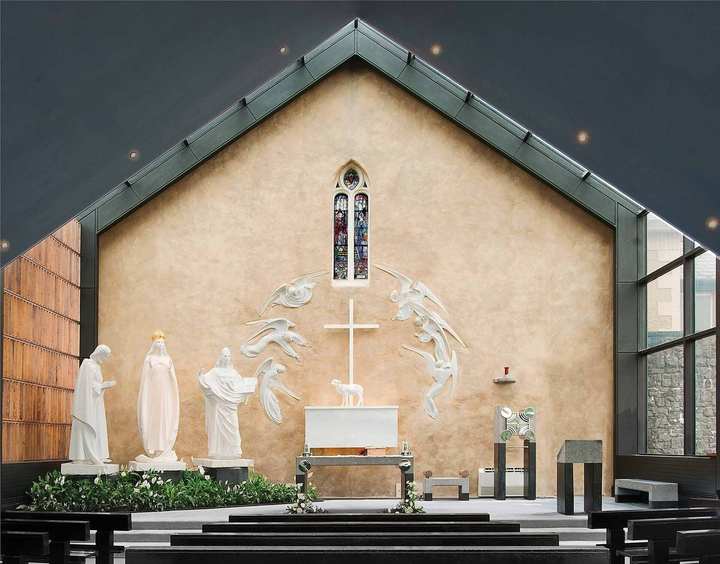
Ireland, 1879: Mary, Joseph, and John on a gable, in rain, in silence. Zeitoun is Knock in a louder city. She still does not need a speech.
- Our Lady of Guadalupe
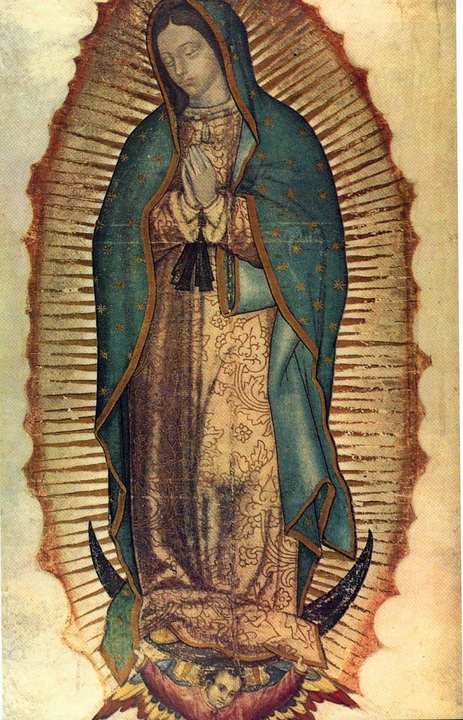
A tilma for a continent that was not yet baptized. Zeitoun is a roof for a city that already prayed to her in two religions. Same mother. Different door.
- Our Lady of Fátima
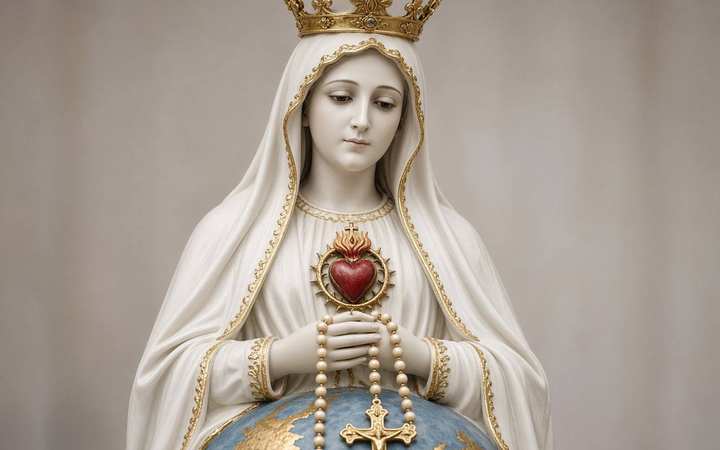
Fátima had words and a secret. Zeitoun had none. If you are tired of messages, look at a woman who only stood.
Pray this
Prayers that sit with the story
Church status
How this sign has been received
Open / under study
Pope Kyrillos VI of the Coptic Orthodox Church formed a commission and declared the apparitions true. Rome has issued no parallel decree and no condemnation. Status for Catholics: open. Included here because the scale was public and because Catholic witnesses stood in the street. The Catholic Church has not declared that photograph a miracle.
The shrine today
Why pilgrims still go
1968. A luminous woman on the dome of a Coptic church, seen by crowds of Muslims and Christians, photographed, reported in the papers, never giving a message. The Coptic pope received it. Catholics have gone ever since. You go because Mary appeared over a city that still holds the Holy Family’s memory.
Zeitoun — the reasonsSources
- Coptic Patriarchate, 1968 statements of Pope Kyrillos VI
- Photographic record of the Zeitoun apparitions, 1968–1971
For the classroom
Our Lady of Zeitoun (1968–1971, Zeitoun, Cairo). Grade in this encyclopedia: Open / under study. For three years a luminous woman — Mary, the crowds said — stood on the roof of a Coptic church in a Muslim city. Mechanics saw her first. Then tens of thousands. Muslims and Christians. Cameras. Silence. Blessing. Then she faded.