The reading
How it began
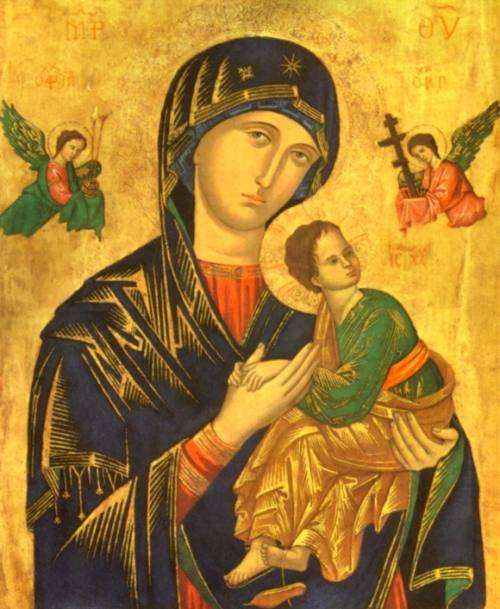
The icon comes from the Eastern Mediterranean, in the style called Kykkotissa. Angels hold the cross, the nails, the spear. The Child clings to Mary; a sandal dangles. In 1865 Pius IX places it in the care of the Redemptorists with a command that amounted to a mission: make her known.
The day itself
Copies go to every continent. Healings and conversions are reported around the weekly Perpetual Help novena — ordinary parish piety, multiplied.
Reading
How to read Our Lady of Perpetual Help
The dangling sandal is the whole homily. Fear is allowed. The Child who is God is allowed to be afraid of the cross, and to hide in his Mother. Perpetual Help is not a theory of Mary’s power. It is a picture of what to do with terror.
Pray this
Prayers that sit with the story
Church status
How this sign has been received
Long veneration
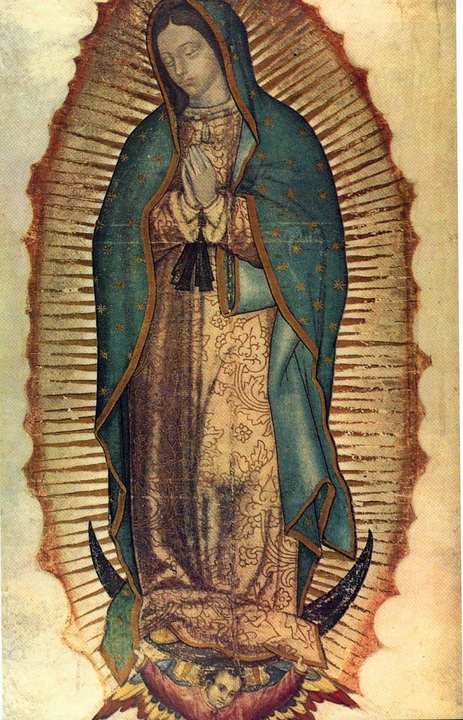
Papal crowning, a universal feast in the Redemptorist family, one of the most reproduced Catholic images after Guadalupe. Venerated; not an apparition.
Sources
- Church of Sant’Alfonso, Rome
- Pius IX, 1865 instruction to the Redemptorists
For the classroom
Our Lady of Perpetual Help (Cretan icon, 15th c.; in Rome from 1499, Church of St. Alphonsus, Rome). Grade in this encyclopedia: Long veneration. A Cretan icon of Mother and Child, the Child’s sandal falling as he sees the instruments of the Passion. Entrusted by Pius IX to the Redemptorists to be made known everywhere.