The reading
How it began
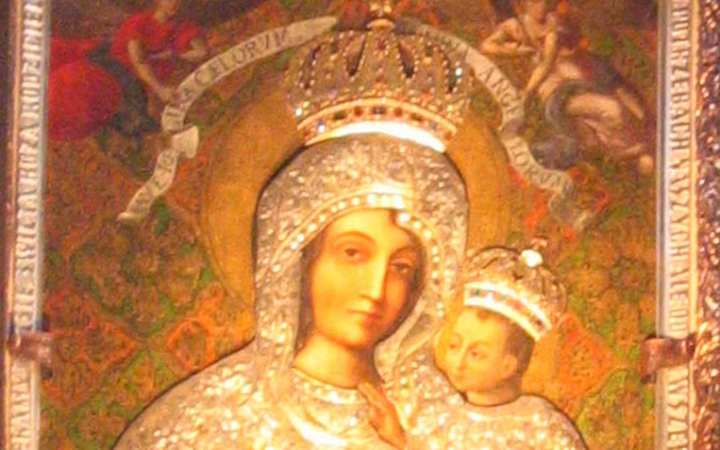
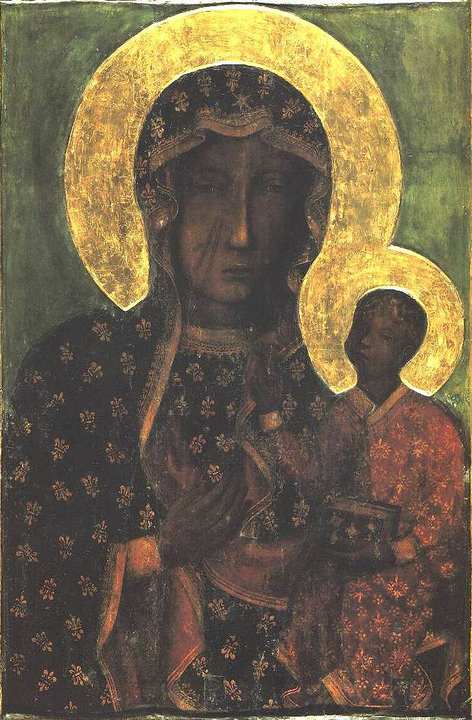
The Pauline monks receive the image in 1382. Legend ascribes it to St. Luke painting on a table of the Holy Family — a way of saying: this is apostolic, this is ours from the beginning. History can say: it is an icon of Eastern type, precious, already old when it arrived.
The day itself
In 1430 Hussite raiders slash the face and break the image. The scars are kept in the repainting. In 1655 a small garrison at Jasna Góra holds off the Swedish deluge; the nation ascribes the impossible defense to Mary. In 1956 and 1979 the icon is the silent center of a people’s resistance.
What was kept
Pilgrims still approach on their knees across the sanctuary floor.
Reading
How to read Our Lady of Częstochowa
The scars are the theology. This Madonna is not unmarked. A wounded Mother of a wounded country. Catholic Poland has sometimes confused the icon with the nation; the icon’s own face forbids triumphalism.
Pray this
Prayers that sit with the story
Church status
How this sign has been received
Long veneration
Crowned by the Holy See, a national shrine, a feast on the Polish calendar. Veneration is maximal. Claims of Luke as painter are pious tradition, not a required belief.
The shrine today
Why pilgrims still go
The icon of the Mother of God, scarred on the cheek, kept by Pauline monks on a bright hill. Poland has gone to her for centuries — kings, workers, Solidarnośc, John Paul II as a son coming home.
Częstochowa — the reasonsSources
- Jasna Góra monastery archives
- John Paul II, pilgrimages to Częstochowa
For the classroom
Our Lady of Częstochowa (At Jasna Góra from 1382; tradition much older, Częstochowa). Grade in this encyclopedia: Long veneration. A darkened icon of Mother and Child, slashed on the cheek, which Poland credits with the defense of the monastery in 1655 and with the nation’s soul. Not “not made by hands,” but treated as a wonder-working presence.