The reading
How it began
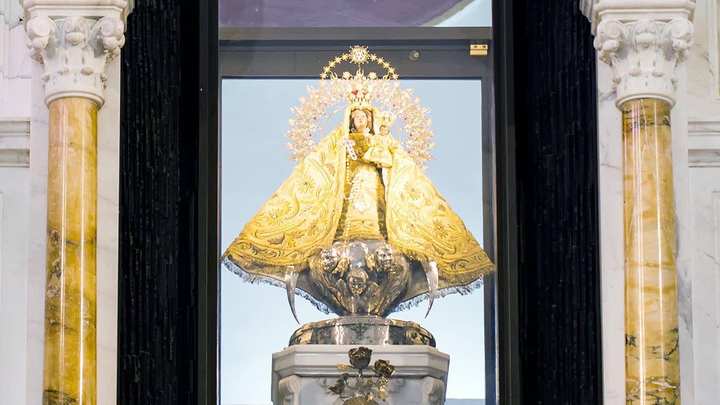
The traditional date is 1612. The image, a small Madonna and Child, is taken to the mines of El Cobre. Slaves and Spaniards share her. In 1916 Benedict XV names her patroness of Cuba. The basilica sits over the old mines. John Paul II, Benedict XVI, and Francis have all crowned or visited. Cubans in Miami keep her feast as a second national day.
Reading
How to read Our Lady of Charity of El Cobre
Charity as a title is already a theology. Found on the water by a Black child and two indigenous men: the island’s whole wound is in the boat. She has never been only the Church’s. She is Cuba’s, which is a harder and better thing.
Pray this
Prayers that sit with the story
Church status
How this sign has been received
Long veneration
Patroness of Cuba, 1916. A basilica-shrine. The finding is the founding legend of a received national cult.
The shrine today
Why pilgrims still go
Found on the water by two indigenous men and an African child: I am the Virgin of Charity. Cuba’s patroness, in a copper-mining town. You go because the island’s whole wound is in the boat, and she has never left it.
El Cobre — the reasonsSources
- Basílica Santuario Nacional de Nuestra Señora de la Caridad del Cobre
- Benedict XV, declaration of patronage, 1916
For the classroom
Our Lady of Charity of El Cobre (c. 1612–1613, El Cobre, Santiago de Cuba). Grade in this encyclopedia: Long veneration. Three men in a boat — two Indians, one African child — find a small statue on the water after a storm: “I am the Virgin of Charity.” She is Cuba’s patroness, the lady of a copper-mining town, of exiles, of a people who have had to carry her.