
The reading
How it began
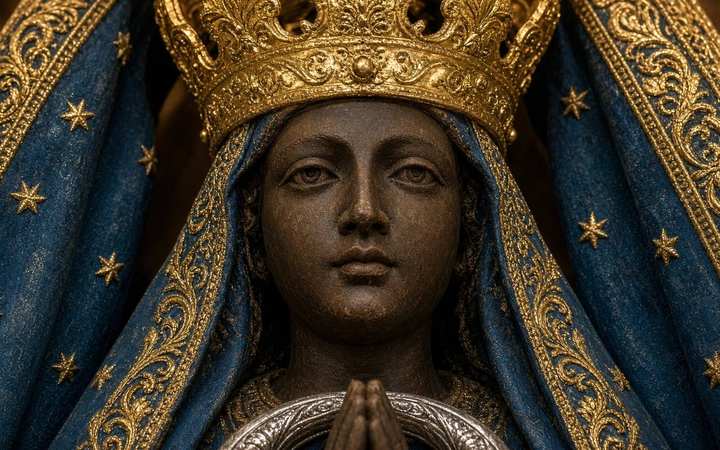
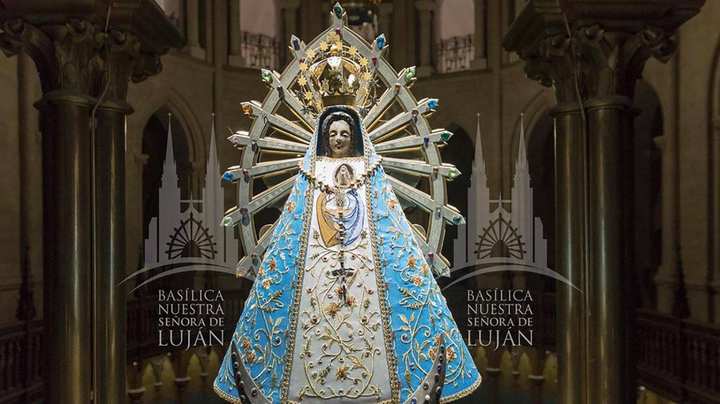
In 1630 a Portuguese settler’s cart, with two statues, sticks. The smaller image — a 38-centimetre Immaculate — is the weight that will not be moved. A slave, Manuel, becomes her first hermit. The present basilica is a neo-gothic landmark of the pampas. Popes have crowned her. John Paul II visited.
Reading
How to read Our Lady of Luján
Not an apparition of a lady in the air. A refusal of a statue to be taken where men wanted. The Church has always allowed images to become places. Luján is how a river crossing became a nation’s mother.
Pray this
Prayers that sit with the story
Church status
How this sign has been received
Long veneration
Patroness of Argentina by Leo XIII’s time; crowned; a basilica. The “miracle of the cart” is the founding legend, received in the cult, not defined as a public revelation.
The shrine today
Why pilgrims still go
A terracotta Immaculate who would not be moved from a river crossing. Argentina’s mother. You go because a nation still walks to her, and because the image is small enough to break your idea of how a patroness should look.
Luján — the reasonsSources
- Basilica of Our Lady of Luján
- Episcopal Conference of Argentina
For the classroom
Our Lady of Luján (1630, Luján, Buenos Aires Province). Grade in this encyclopedia: Long veneration. A small terracotta image of the Immaculate, being carried from Brazil, will not move from a spot on the Luján river until it is set down. A shrine grows. She is patroness of Argentina, Uruguay, and Paraguay.