
The reading
How it began
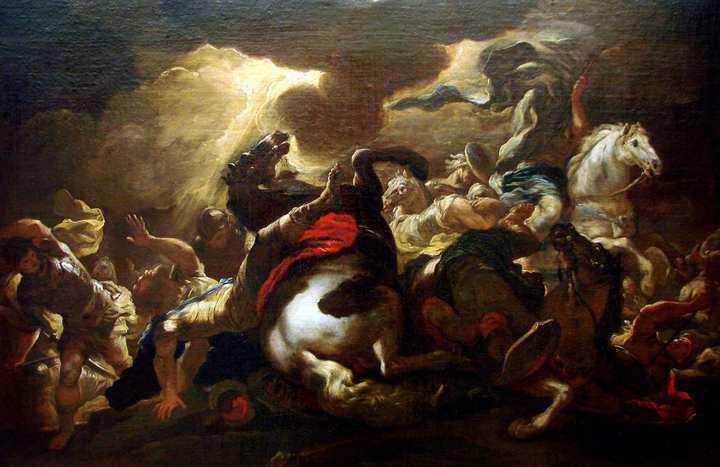
Saul of Tarsus is a devout Pharisee, present at Stephen’s death, hunting the disciples. On the road to Damascus a light from heaven flashes. He falls. A voice calls him by name and identifies the people Saul is harming with himself: why are you persecuting me?
The day itself
Saul is blinded for three days, led by the hand. In Damascus, Ananias — who has every reason to be afraid — lays hands on him. Something like scales fall from his eyes. He is baptized. The hunter becomes the man who will carry the name of Jesus before Gentiles, kings, and the children of Israel.
What was kept
Paul will tell this story more than once, under oath and under pressure. He insists he did not receive the Gospel from men. He also insists he went up to Jerusalem and laid his Gospel before Peter and James, lest he be running in vain.
Reading
How to read The Conversion of St. Paul
This is the pattern of grace that Catholics mean by conversion: not self-improvement, but being found by the one you were fighting. It is also a lesson about the Church. To strike the disciples is to strike Christ. Later apparitions that divide the Church against her pastors fail this test.
Paul’s life after the vision is as important as the light. Miracles that produce no obedience, no charity, no long fidelity are not Pauline, whatever lights they involve.
The chair of Peter
Popes who belong with this sign
Church status
How this sign has been received
Sacred Scripture
The conversion is Scripture, feast-day, and the Church’s favorite proof that grace is not a reward for the already holy. Paul’s letters are canonical. The vision does not float free of the apostolic college; it is yoked to it.
The shrine today
Why pilgrims still go
Europe’s old walking prayer. You go because an apostle’s tomb is at the end of a road, and because the road itself — the blisters, the strangers, the Mass in village after village — does the preaching.
Santiago de Compostela — the reasonsSources
- Acts 9, 22, 26; Galatians 1–2
For the classroom
The Conversion of St. Paul (c. AD 34, Road to Damascus). Grade in this encyclopedia: Sacred Scripture. A persecutor of the Church is thrown down by a light and a voice: “Saul, Saul, why are you persecuting me?” The risen Jesus makes an apostle out of an enemy.