The reading
How it began
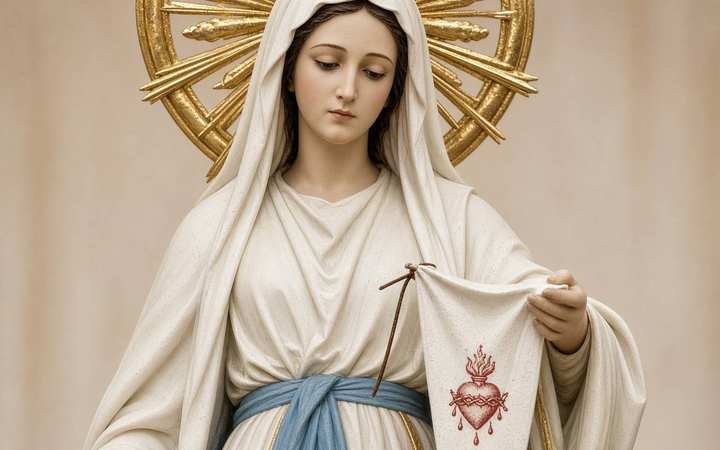
Estelle is a servant, written off by doctors. In February 1876 a lady in white comes to the sickroom: “If you want to serve me, be simple.” Fifteen apparitions follow. Estelle is well. The message is almost only: mercy, the Sacred Heart, a scapular to be worn as a sign of it.
The day itself
Leo XIII and later Pius XI permit the scapular of the Sacred Heart. The shrine is a quiet one — no city of hotels. Estelle lives until 1929, examined, consistent, untheatrical.
Reading
How to read Our Lady of Pellevoisin
After Lourdes, France might have been tired of seers. Pellevoisin is smaller, and in that sense cleaner: a healing, a mercy, a piece of cloth. No secrets. No sun.
Pray this
Prayers that sit with the story
Church status
How this sign has been received
Church-approved
The scapular was approved by the Holy See. The Archbishop of Bourges authorized the devotion. Estelle’s virtue and the healing were studied. Status: approved devotion arising from apparitions received by the local Church.
Sources
- Shrine of Our Lady of Pellevoisin
- Estelle Faguette, account of the apparitions
For the classroom
Our Lady of Pellevoisin (1876, Pellevoisin, Indre). Grade in this encyclopedia: Church-approved. Estelle Faguette, dying of tuberculosis, sees Mary fifteen times. She is healed. The lady shows a scapular of the Sacred Heart and asks for mercy to be believed. Rome approved the scapular; the archbishop approved the devotion.