Skip to content
MarianChurch-approved

Our Lady of Beauraing

The Virgin with the Golden Heart

Beauraing·Belgium·1932–1933·Feast 29 August

Thirty-three apparitions to five children in a Belgian railway town. Mary asks for a chapel, for prayer, and shows a golden heart. The bishop approves in 1943.
Listen

Woman

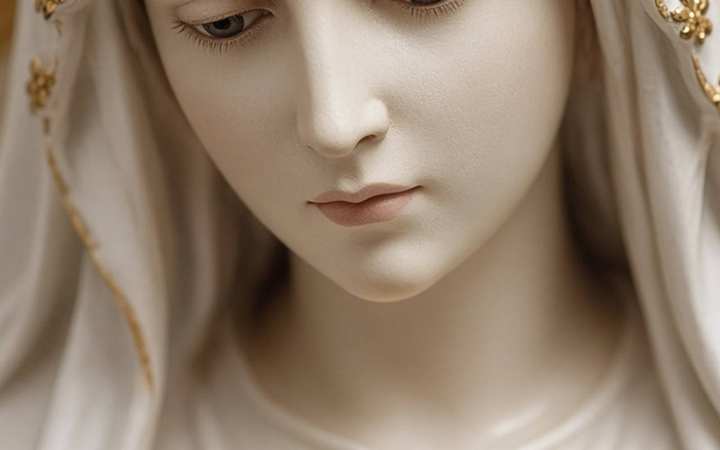
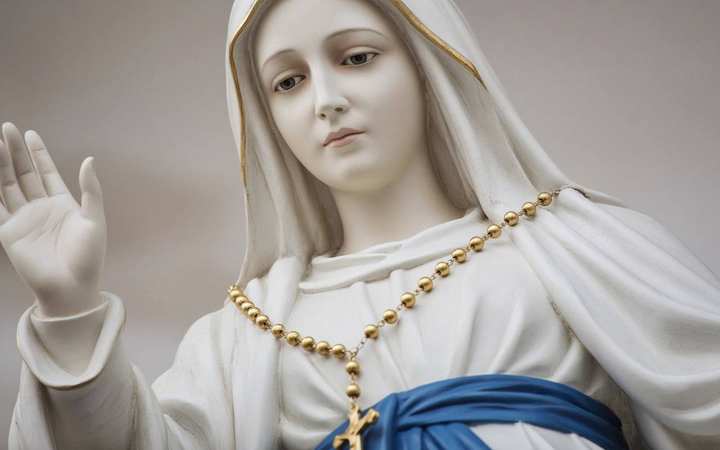
The Virgin of the Golden Heart — Our Lady of Beauraing.

The photographs

Our Lady of Beauraing

Our Lady of Beauraing — Beauraing

The Virgin of the Golden Heart — Our Lady of Beauraing.

The object or shrine of this sign.

Our Lady

Talks on YouTube

These play here. They are not the Church’s judgement. If a frame will not start, open it on YouTube.

Hosts said to beat like a heart

Servants of God

Placed with the Eucharistic miracles, and also with Our Lady, as asked. It is a film about the Eucharist.

Watch on YouTube

Persons

The reading

In plain speech

From November 1932 to January 1933, five children at Beauraing in Belgium said they saw Our Lady under a hawthorn. She asked for prayer and a chapel, and showed a heart of gold. The Bishop of Namur declared the apparitions authentic in 1949.

Approved means the Church finds the events worthy of belief. It does not mean a new Gospel, and it does not mean every healing claimed at the hawthorn has been judged.

1. What it does not prove

The message is almost the same as other approved apparitions of that generation: pray, convert, build a small chapel. The lack of novelty is not a weakness. False claims are often more original.

A golden heart is charity made visible, not a piece of jewellery, and not a rival of the Sacred Heart.

2. The one sentence

Beauraing is five children, a hawthorn, and a bishop’s yes — received, and still not the foundation. Jesus Christ is.

The older telling follows.

The record

Five children of two families, aged 9 to 15, see a lady in white under a hawthorn near a convent school, from 29 November 1932 to 3 January 1933. She calls herself the Immaculate Virgin and the Mother of God. She asks that people “pray, pray much.” She shows a heart of gold. She promises to convert sinners.

The record, part 2

The usual circus gathers: police, doctors, jokes in the press. The children are tested — they do not flinch at lights, they speak of the same details. Healings are later reported at the site.

Reading

How to read Our Lady of Beauraing

Beauraing’s image is the golden heart — not jewelry, but charity made visible. The Depression and the coming war are the background. Mary’s request is almost monotonous across Belgium and France in this era: pray, convert, build a small chapel. The monotony is a kind of authenticity. False apparitions are usually more original.

Pray this

Prayers that sit with the story

Church status

How this sign has been received

Church-approved

Bishop André-Marie Charue of Namur authorized the cult in 1943 and in 1949 declared the apparitions authentic. Approved.

The shrine today

Why pilgrims still go

1932–33. Five children, a golden heart, a lady who asked for a chapel and for people to be good. Approved. The hawthorn is still there. So is the request.

Beauraing — the reasons

Sources

  • Diocese of Namur, decrees 1943 and 1949
  • Shrine of Beauraing

For the classroom

Our Lady of Beauraing (1932–1933, Beauraing). Grade in this encyclopedia: Church-approved. Thirty-three apparitions to five children in a Belgian railway town. Mary asks for a chapel, for prayer, and shows a golden heart. The bishop approves in 1943.
Related signs

Our Lady of Banneux — Banneux
MarianChurch-approved

Our Lady of Banneux

Banneux1933

Eight apparitions to Mariette Beco, 11. Mary leads her to a spring: “This spring is reserved for all nations — to relieve the sick.” She calls herself the Virgin of the Poor.

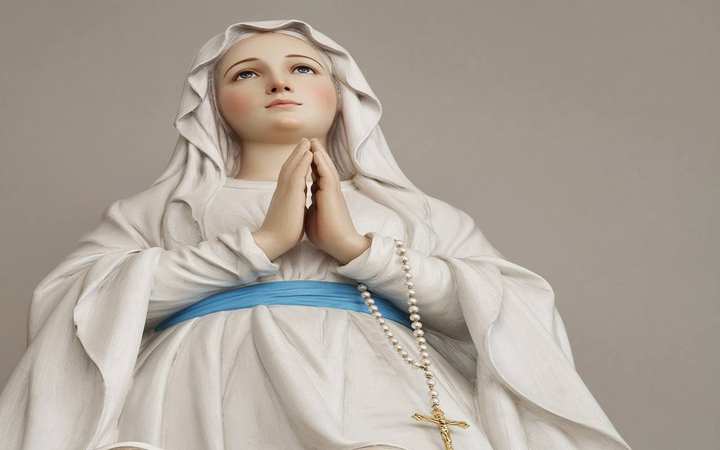
Our Lady of Lourdes — Massabielle, Lourdes. The statue of Our Lady of Lourdes: white veil, blue sash, a golden rose on each foot.
MarianChurch-approved

Our Lady of Lourdes

Massabielle, Lourdes1858

Between 11 February and 16 July 1858, in a limestone cave on the edge of Lourdes that the town used as a rubbish dump, a fourteen-year-old miller’s daughter named Bernadette Soubirous saw a young woman in white eighteen times. The woman spoke the dialect of the valley. She asked for prayer, for penance, for a spring of water, for a chapel, and for a procession. On 25 March, the feast of the Annunciation, she gave a name the child had never been taught: “I am the Immaculate Conception.” The bishop of Tarbes judged the apparitions worthy of belief in 1862. The spring still runs. The sick still come. Bernadette died at thirty-five, still ill, in a convent at Nevers.

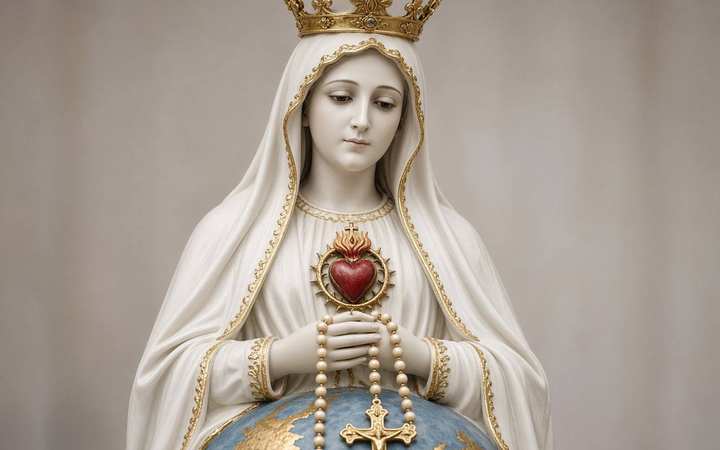
Our Lady of Fátima — Cova da Iria, Fátima. The statue of Our Lady of Fátima: white, crowned, the rosary, the Immaculate Heart.
MarianChurch-approved

Our Lady of Fátima

Cova da Iria, Fátima1917

In 1917, in a hollow of pasture called the Cova da Iria, near the village of Fátima in Portugal, three shepherd children — Lúcia dos Santos, ten, and her cousins Francisco Marto, nine, and Jacinta Marto, seven — saw a lady brighter than the sun, six times, on the 13th of the month from May to October. She asked for the rosary every day, for the conversion of sinners, for devotion to her Immaculate Heart, and that a chapel be built. On 13 July she showed them hell and spoke of war and of Russia. On 13 October, before a crowd of tens of thousands standing in the rain, including reporters who had come to mock, the sun appeared to dance. Francisco and Jacinta died in the influenza. Lúcia lived until 2005 as a nun. The bishop of Leiria declared the apparitions worthy of belief on 13 October 1930.

Filed under Marian Apparitions.