Skip to content

St. Joseph of Cupertino

Feast 18 September

The flying friar. Patron of students who cannot pass.

St. Joseph of Cupertino

Sacred art

Statues and images

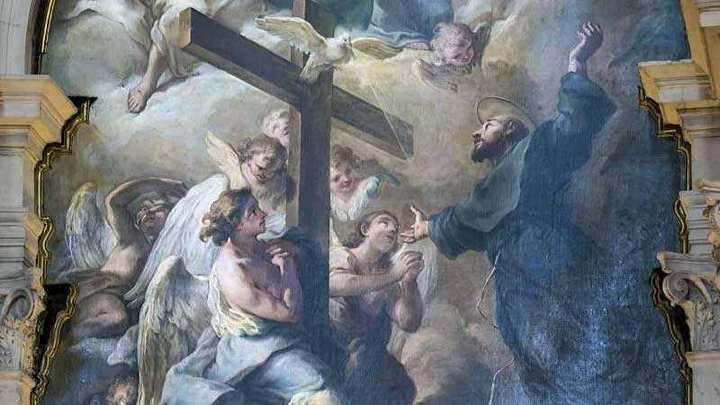
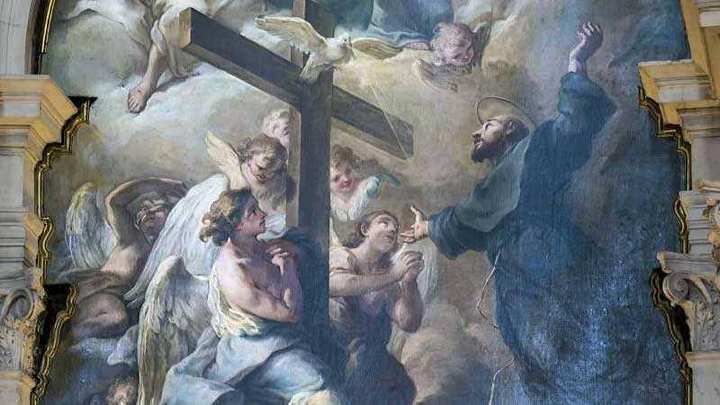
The portrait kept with St. Joseph of Cupertino is the image this library has of Joseph. The honour goes to the person, and through the person to God. It is not a machine, and it is not a substitute for the life written below.

The whole treasury

Franciscan. Levitation as a pastoral problem. Died 1663. The Church canonized the humility, and recorded the flights.

Pray with Joseph

The prayers

Signs that name Joseph

If it belongs to Joseph, it is here, with a door back into the story.

The Virgin Birth — Nazareth
GospelSacred Scripture

The Virgin Birth

Nazarethc. 1 BC

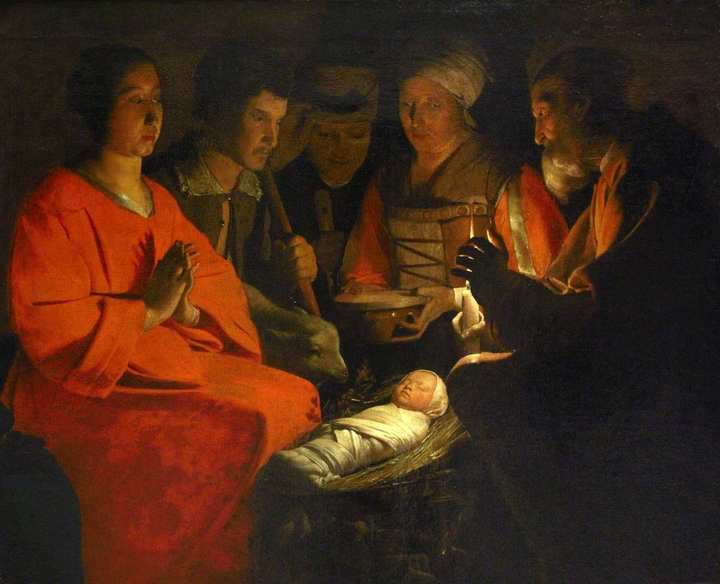
Jesus is conceived in Mary without a human father. The Church holds this as history, not as a metaphor for a spiritually impressive child.

St. Joseph of Cupertino — Cupertino, Assisi, Osimo
SaintChurch-approved

St. Joseph of Cupertino

Cupertino, Assisi, OsimoLevitations c. 1630–1663

A Conventual Franciscan of limited academic gifts, whose ecstasies included public levitations so frequent that his superiors hid him. Witnesses include cardinals, a pope’s circle, and annoyed friars.

St. María de León Bello y Delgado — San Cristóbal de La Laguna, Tenerife
RelicLong veneration

St. María de León Bello y Delgado

San Cristóbal de La Laguna, TenerifeDied 1731; still shown in La Laguna

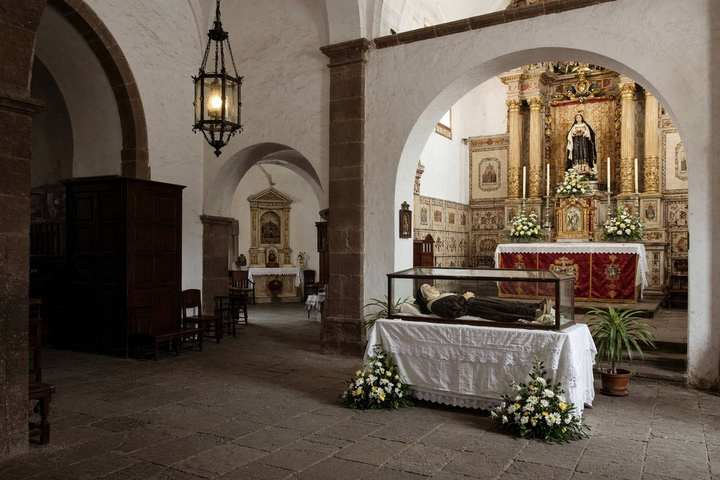
A Dominican sister of the Canary Islands, famous for levitation, bilocation, and prophecy. Her body remains intact in the convent of Santa Catalina, one of the best-preserved in Spain, exposed every 15 February.

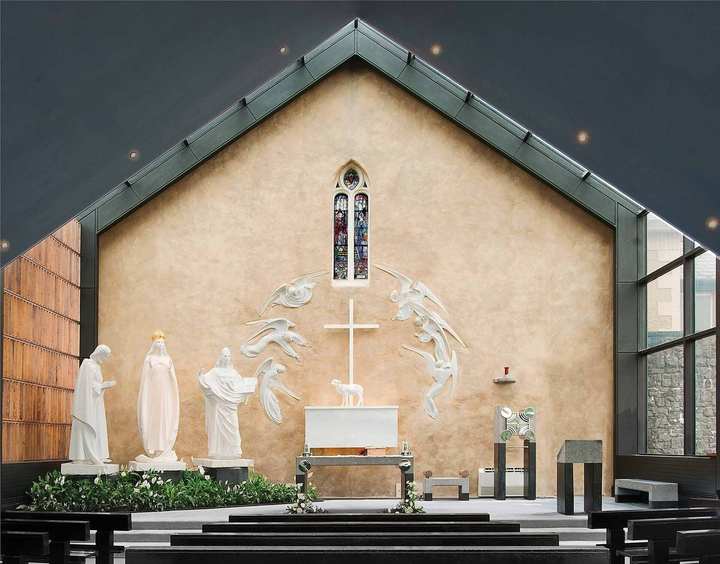
Our Lady of Knock — Knock, County Mayo. The Apparition Chapel at Knock: the white figures of Our Lady, Saint Joseph, and Saint John, the Lamb on the altar, angels on the gable wall.
MarianChurch-approved

Our Lady of Knock

Knock, County Mayo1879

On a wet evening, fifteen villagers see Mary, St. Joseph, St. John the Evangelist, and a Lamb on an altar against the parish gable. No word is spoken. The rain does not touch the vision.

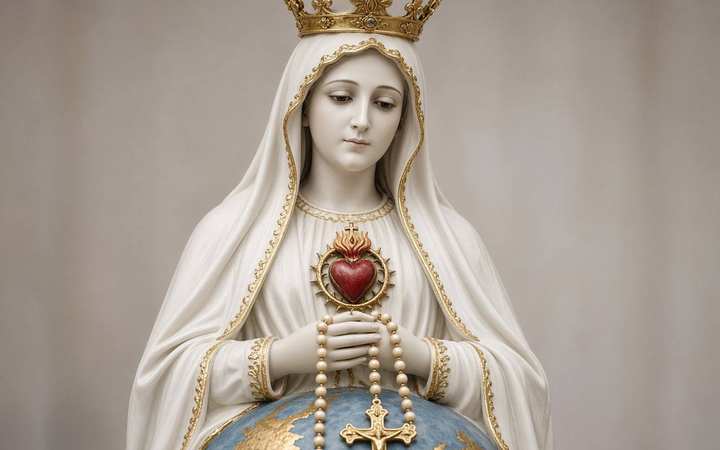
Our Lady of Fátima — Cova da Iria, Fátima. The statue of Our Lady of Fátima: white, crowned, the rosary, the Immaculate Heart.
MarianChurch-approved

Our Lady of Fátima

Cova da Iria, Fátima1917

In 1917, in a hollow of pasture called the Cova da Iria, near the village of Fátima in Portugal, three shepherd children — Lúcia dos Santos, ten, and her cousins Francisco Marto, nine, and Jacinta Marto, seven — saw a lady brighter than the sun, six times, on the 13th of the month from May to October. She asked for the rosary every day, for the conversion of sinners, for devotion to her Immaculate Heart, and that a chapel be built. On 13 July she showed them hell and spoke of war and of Russia. On 13 October, before a crowd of tens of thousands standing in the rain, including reporters who had come to mock, the sun appeared to dance. Francisco and Jacinta died in the influenza. Lúcia lived until 2005 as a nun. The bishop of Leiria declared the apparitions worthy of belief on 13 October 1930.