Skip to content

St. Basil the Great

Feast 2 January

Cappadocian Father. Father of Eastern monasticism. Doctor of the Church.

St. Basil the Great

Sacred art

Statues and images

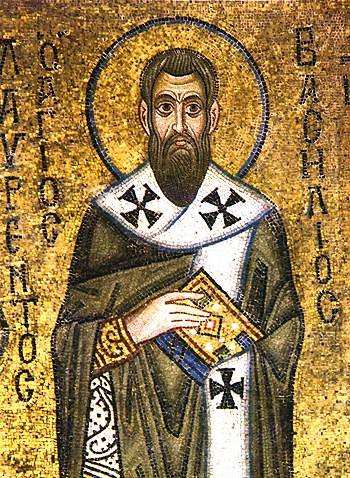
The portrait kept with St. Basil the Great is the image this library has of Basil. The honour goes to the person, and through the person to God. It is not a machine, and it is not a substitute for the life written below.

The whole treasury

Bishop of Caesarea. Organized hospitals. Wrote a rule. Died 379. The liturgy that bears his name is still sung.

Signs that name Basil

If it belongs to Basil, it is here, with a door back into the story.

EucharisticLong veneration

Lanciano

Lanciano, Abruzzo8th century (c. 750)

The most famous Eucharistic miracle in the West: a doubting monk sees the Host become Flesh and the wine Blood. The relics are still reserved — and were studied in the twentieth century. They are not the reason the Church believes in the Eucharist.

2 studied signs on this image

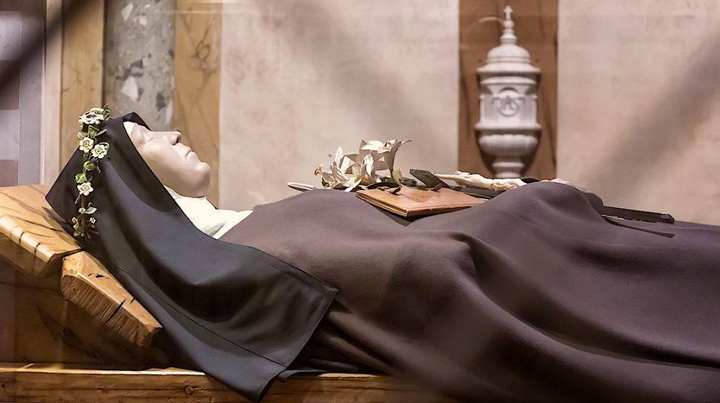
The Body of St. Clare of Assisi — Basilica of St. Clare, Assisi
RelicChurch-approved

The Body of St. Clare of Assisi

Basilica of St. Clare, AssisiDied 1253; found 1850

Francis’s first sister. In 1850 her tomb under the high altar was opened and the body found entire. She lies in the crypt at San Giorgio, dressed, the face later given a wax covering for dignity.

EucharisticLong veneration

Cascia

Siena, then Cascia1330

A priest takes Communion to a sick man, slips the Host unworthily into his breviary, and later finds it bleeding through the pages. The stained leaf is kept by the Augustinians of Cascia.

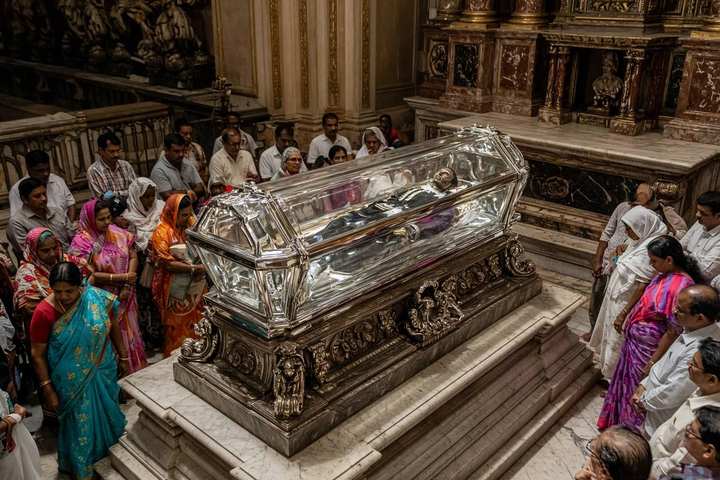
The Body of St. Francis Xavier — Basilica of Bom Jesus, Old Goa
RelicChurch-approved

The Body of St. Francis Xavier

Basilica of Bom Jesus, Old GoaDied 1552; body in Goa

The Jesuit missionary dies on Shangchuan Island. Lime is poured in the coffin to speed decay for a later transfer. Months later the body is found fresh. It has lain in Goa for centuries, reduced by relic-taking, still exposed on feast days.

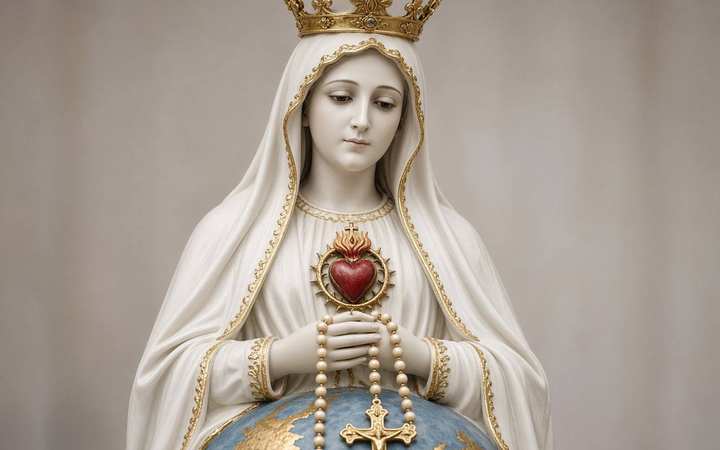
Our Lady of Fátima — Cova da Iria, Fátima. The statue of Our Lady of Fátima: white, crowned, the rosary, the Immaculate Heart.
MarianChurch-approved

Our Lady of Fátima

Cova da Iria, Fátima1917

In 1917, in a hollow of pasture called the Cova da Iria, near the village of Fátima in Portugal, three shepherd children — Lúcia dos Santos, ten, and her cousins Francisco Marto, nine, and Jacinta Marto, seven — saw a lady brighter than the sun, six times, on the 13th of the month from May to October. She asked for the rosary every day, for the conversion of sinners, for devotion to her Immaculate Heart, and that a chapel be built. On 13 July she showed them hell and spoke of war and of Russia. On 13 October, before a crowd of tens of thousands standing in the rain, including reporters who had come to mock, the sun appeared to dance. Francisco and Jacinta died in the influenza. Lúcia lived until 2005 as a nun. The bishop of Leiria declared the apparitions worthy of belief on 13 October 1930.
EucharisticOpen / under study

The flesh of Lanciano

San Francesco, LancianoLinoli reports 1971 and 1981; event 8th century

The upper relic at Lanciano is a thin, round piece of flesh, kept in a monstrance. In 1970–71 a pathologist, with permission, said what it is: human heart muscle. This study is that sentence, unpacked, without turning a microscope into a sacrament.

A studied sign