Skip to content

St. Anthony of Padua

Feast 13 June

Franciscan preacher. Finder of lost things. Doctor of the Church.

St. Anthony of Padua

Sacred art

Statues and images

The portrait kept with St. Anthony of Padua is the image this library has of Anthony. The honour goes to the person, and through the person to God. It is not a machine, and it is not a substitute for the life written below.

The whole treasury

Portuguese, died at thirty-five in 1231. The tongue is incorrupt. The sermons were for the Gospel, not for the lost keys, though the keys followed.

Signs that name Anthony

If it belongs to Anthony, it is here, with a door back into the story.

Rimini — Rimini
EucharisticLong veneration

Rimini

Rimini1227

A heretic said he would believe if his mule knelt before the Host rather than eat. The animal left the oats and knelt. St. Anthony of Padua was holding the monstrance.

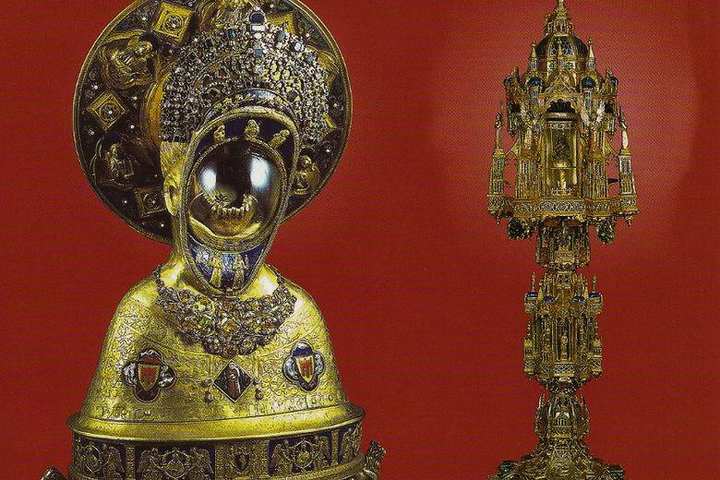
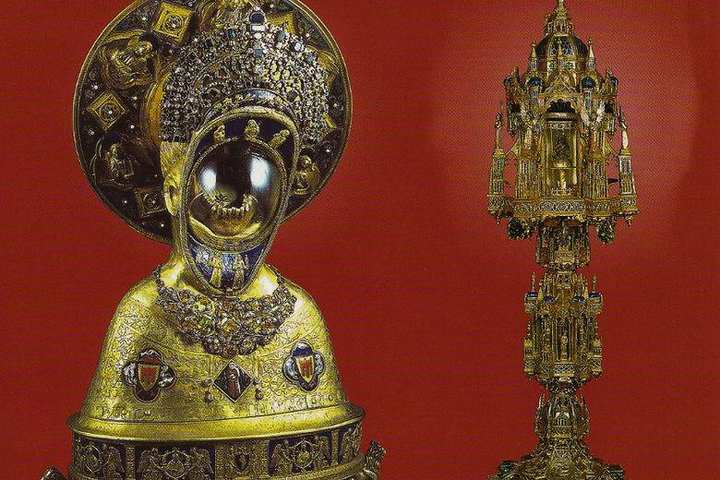
The Tongue of St. Anthony of Padua — Basilica of St. Anthony, Padua
RelicLong veneration

The Tongue of St. Anthony of Padua

Basilica of St. Anthony, PaduaDied 1231; tomb opened 1263

Thirty-two years after Anthony’s death, St. Bonaventure opens the tomb. The body is dust. The tongue is intact, red, as if still speaking. It is kept in a reliquary in the basilica, with the jaw and vocal apparatus.

Our Lady of Chiquinquirá — Chiquinquirá, Boyacá
ImageChurch-approved

Our Lady of Chiquinquirá

Chiquinquirá, BoyacáPainting renewed 26 December 1586

A painting of Our Lady, ruined by damp in a poor chapel, is said to have cleared and shone on 26 December 1586 while a woman prayed. Colombia’s national shrine stands on that hour. The renewal is a local tradition the Church has crowned, not a laboratory of pigment.

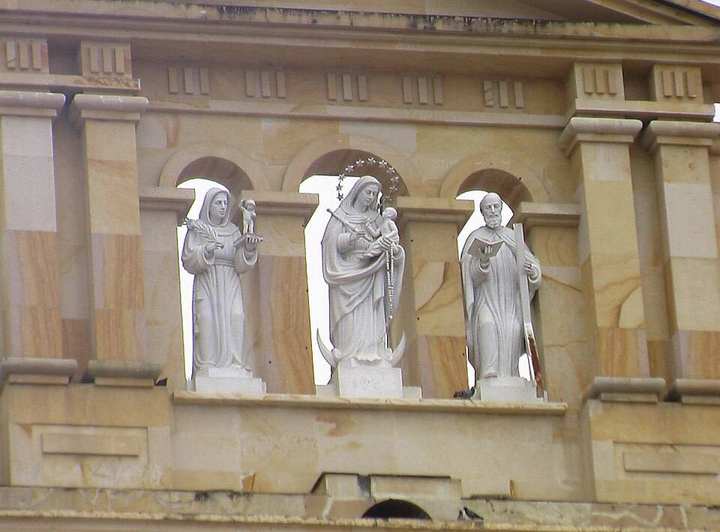
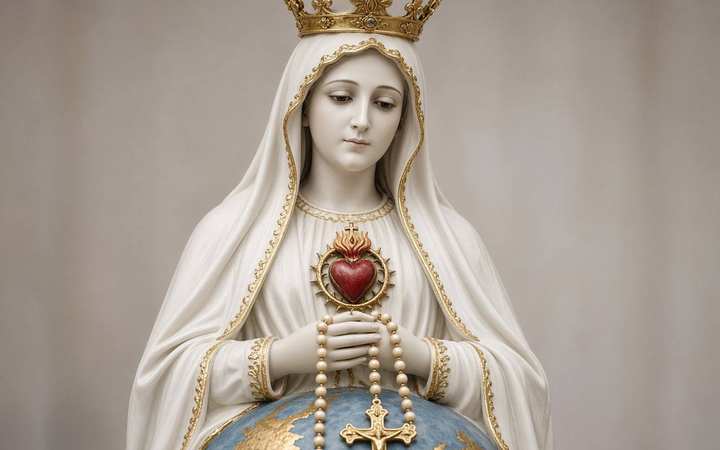
Our Lady of Fátima — Cova da Iria, Fátima. The statue of Our Lady of Fátima: white, crowned, the rosary, the Immaculate Heart.
MarianChurch-approved

Our Lady of Fátima

Cova da Iria, Fátima1917

In 1917, in a hollow of pasture called the Cova da Iria, near the village of Fátima in Portugal, three shepherd children — Lúcia dos Santos, ten, and her cousins Francisco Marto, nine, and Jacinta Marto, seven — saw a lady brighter than the sun, six times, on the 13th of the month from May to October. She asked for the rosary every day, for the conversion of sinners, for devotion to her Immaculate Heart, and that a chapel be built. On 13 July she showed them hell and spoke of war and of Russia. On 13 October, before a crowd of tens of thousands standing in the rain, including reporters who had come to mock, the sun appeared to dance. Francisco and Jacinta died in the influenza. Lúcia lived until 2005 as a nun. The bishop of Leiria declared the apparitions worthy of belief on 13 October 1930.
EucharisticLocally approved

Sokółka

Sokółka2008

A dropped Host, placed in water, develops a red stain. Independent pathologists report that the stain is heart muscle fused with the bread in a way they cannot explain. The Archbishop of Białystok authorized veneration.