The reading
How it began
In the 320s the emperor’s mother excavates around the Holy Sepulchre. Late antique sources (Ambrose, Rufinus, Socrates) tell of three crosses, a miracle of healing or resurrection to identify the Lord’s, and a basilica. A portion stays in Jerusalem; a portion goes to Rome (Santa Croce in Gerusalemme); a portion to Constantinople.
The day itself
Medieval Europe then multiplies fragments — enough, the joke goes, to build a ship. The joke is useful. The Church has always known that greed and piety both copy relics. Some fragments have continuous, serious pedigrees. Many do not.
What was kept
Helena’s finding is told by Ambrose in the funeral oration for Theodosius, by Rufinus, and by Socrates Scholasticus: an excavation at Jerusalem in the 320s, three crosses, a healing used to mark which wood was the Lord’s, a basilica raised by Constantine. A portion stayed in Jerusalem and was shown to pilgrims; Egeria, late in the fourth century, describes the Good Friday exposition and the deacon who guards the wood while people kiss it. A portion went to Rome and is claimed by Santa Croce in Gerusalemme, built around soil brought from Jerusalem. A portion went to Constantinople. After the loss of the Jerusalem wood to Saladin at Hattin in 1187, Western churches multiplied fragments. Some have papers. Many have only a story. The feast on 14 September is the Exaltation, from the recovery and the showing, and it is on the universal calendar whether or not the splinter in a given altar is authentic. Ask of each fragment who carried it, from which church, and under whose seal. If the answer is only “it has always been here,” that is the answer, and it is weaker than Egeria.
Reading
How to read The True Cross
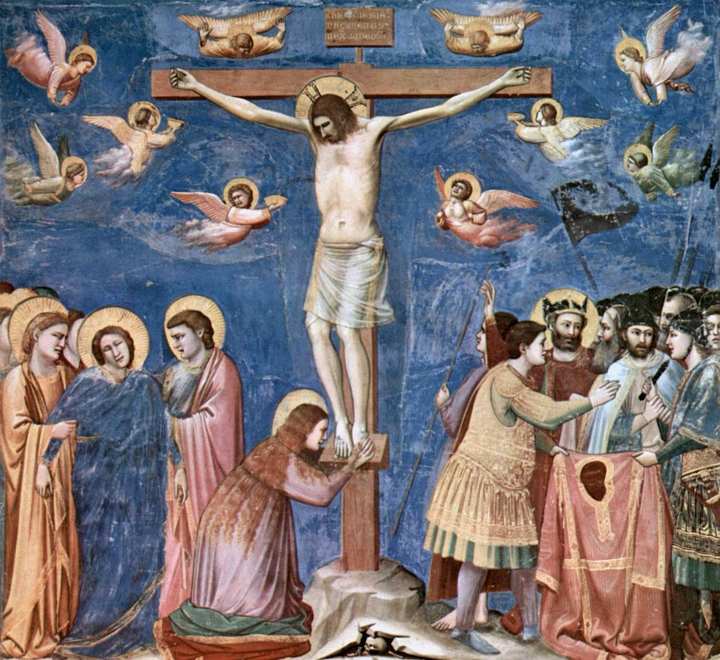
Catholics do not need a splinter to know that the Cross happened. A fragment, if authentic, is a wound you can stand near. If inauthentic, the feast of the Exaltation still stands, because the event does. Relics are a help to memory, not the memory’s foundation.
The chair of Peter
Popes who belong with this sign
Church status
How this sign has been received
Long veneration
The liturgy of 14 September is universal. Veneration of relics of the True Cross is among the oldest public cults after the martyrs. Individual fragments are only as good as their provenance. Status: the Cross, certain; this sliver, case by case.
The shrine today
Why pilgrims still go
You go to Rome because the apostles died here, the popes still live here, and the bones of the Church are under the floor. It is not a theme park of the baroque. It is the parish of the whole world.
Rome & the Vatican — the reasonsSources
- Rufinus, Church History X.7–8
- Santa Croce in Gerusalemme; Church of the Holy Sepulchre
For the classroom
The True Cross (Tradition: 326, Jerusalem, then the whole Church). Grade in this encyclopedia: Long veneration. St. Helena, mother of Constantine, is said to have found the wood of the Cross on Golgotha. Fragments were scattered across Christendom. The Church honors the Cross as instrument of salvation; the Church does not carbon-date every splinter.