
The reading
What the cloak is made of
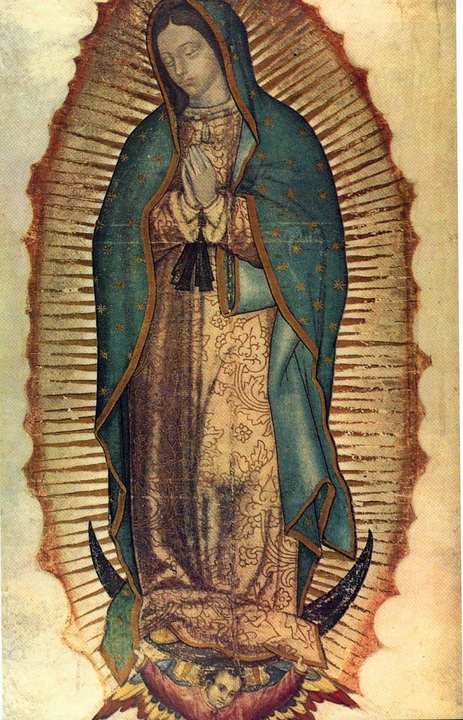
The traditional identification is maguey (agave) fiber, woven as ayate, the poor man’s cloak of central Mexico in the sixteenth century. Some later analysts have argued for a mixed weave, or for palm. The point of the material, in every telling, is the same: it is not European linen. It is not a panel prepared for a master. It is a tilma, two pieces joined, the seam running through the image, including through the face, which a painter who had a choice would not usually choose.
Cactus fiber, untreated, in a climate of humidity and salt from hands and incense, decays. Museums keep such textiles in the dark, at rest. The tilma has been on an altar, then behind glass, in a basilica that is not a vault. The longevity is the first mundane miracle people name, and it is not nothing. Textiles do sometimes outlive their expected years if they are lucky. Five centuries of public exposition is luck of a different size.
The seam, the size, the hanging
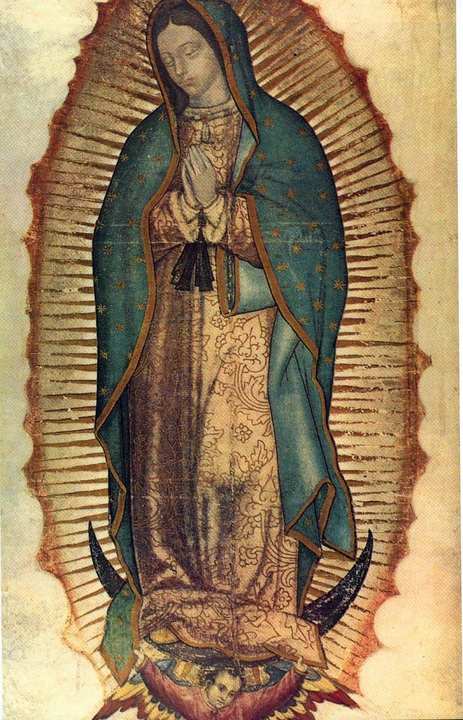
The cloak is about 1.70 metres by 1.05 metres, the height of a man of Juan Diego’s world. The join of the two widths is visible. In 1999 and at other restorations, the backing and the glass have been changed; the cloth itself is the same object the seventeenth century already described. Infrared work has been used to look under apparent touchings. The original is the woman: face, hands, mantle, robe. Crowns and rays have been added and, in the case of a sculpted crown once fixed to the image, removed.
A bomb in 1921 (its own pin) broke the glass and bent a crucifix on the altar. The cloth was not shredded. Nitric acid is supposed, in a nineteenth-century anecdote, to have been spilled on it and not to have eaten it. Anecdotes need the caution all sacristy stories need. The public fact is simpler: the tilma is still there. You can stand in the aisle of the modern basilica and see it with your own eyes, above the altar, the size of a person.
Reading
How to read The tilma cloth
God did not ask Juan Diego for a Flemish oak panel. He asked for a tilma, which is to say: the poor man’s coat. The sign is on the thing the man was already wearing. That is the Incarnation again, in fiber. The years it has lasted are a mercy for a people who need to keep looking. They are not a laboratory certificate. They are a mother who would not go.
Pray this
Prayers that sit with the story
Church status
How this sign has been received
Open / under study
The basilica guards the tilma as the image of the Patroness of the Americas. The material analysis is not a dogma. The object is.
Investigation
What has been examined
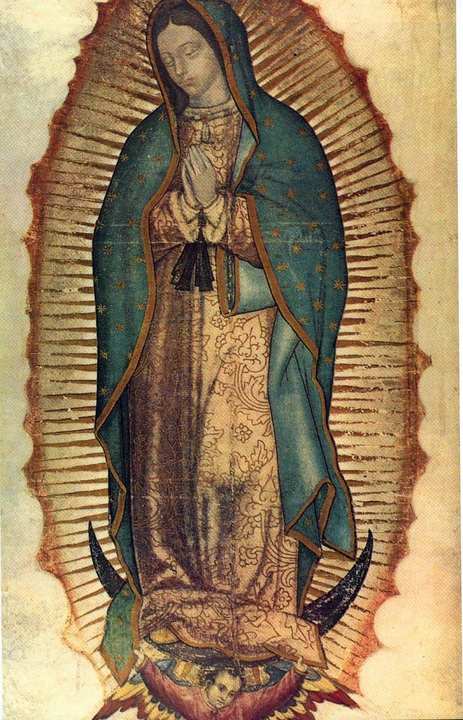
Coarse plant-fiber cloak, two widths joined. Expected lifespan of untreated maguey ayate measured in decades, not centuries. Continuous public exposition since the sixteenth century. Backing, glass, and some later decorations have been altered; the image-bearing cloth remains.
Sources
- Nican Mopohua
- Basilica of Our Lady of Guadalupe, notices on the tilma
- Published fiber identifications (maguey / mixed-weave debate)
For the classroom
The tilma cloth (1531; still hanging, Tepeyac, Mexico City). Grade in this encyclopedia: Open / under study. Juan Diego’s tilma is a cloak of ayate — a coarse cactus-fiber cloth that in the Mexican sun and damp should last a few decades. It has lasted nearly five hundred years, through smoke, kisses, a bomb, and the breath of millions.