

The reading
How it began
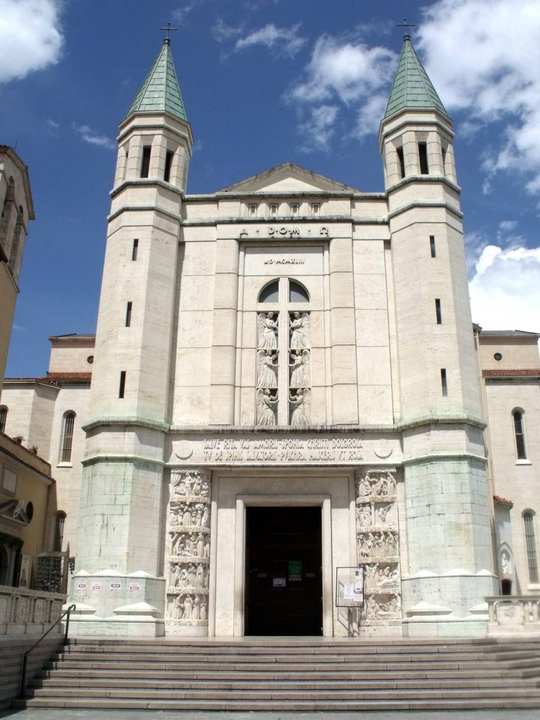
In 1658, Louis Guimont, suffering, helps build a shrine to the mother of the Virgin. He is healed, the story says, in the work. Sailors, farmers, the Huron and the French, then the whole of French Canada, take the road along the St. Lawrence. Two basilicas burn or are replaced; the present one is early twentieth-century, mosaic-heavy, a forest of discarded braces.
The day itself
Healings continue to be claimed. A few have been the object of diocesan attention; none is a Lourdes-style international file. The devotion is to St. Anne as grandmother of the Lord and patroness of the sick.
Reading
How to read Sainte-Anne-de-Beaupré
A Church that honors St. Anne is a Church that believes holiness runs in families, not only in apparitions. The Canadian shrine is maternal in that register: ordinary kinship, ordinary pain, an old woman who knows how to wait with you.
Pray this
Prayers that sit with the story
Church status
How this sign has been received
Long veneration
Minor basilica, national shrine of Canada, plenary indulgences attached to the pilgrimage. Venerated. Individual cures: reported, not globally certified.
The shrine today
Why pilgrims still go
The grandmother of the Lord, loved by French Canada for 350 years. A basilica of crutches and healings, on the river, where sailors and farmers asked the same woman for the same help.
Sainte-Anne-de-Beaupré — the reasonsSources
- Shrine of Sainte-Anne-de-Beaupré
- Archdiocese of Quebec, historical notices
For the classroom
Sainte-Anne-de-Beaupré (1658 – present, Beaupré, Québec). Grade in this encyclopedia: Long veneration. Canada’s oldest pilgrimage. A workman with a crippled back is said to have been healed as he laid the first stones of a chapel to St. Anne. The basilica’s pillars of crutches are the Canadian cousin of Lourdes.