The reading
How it began
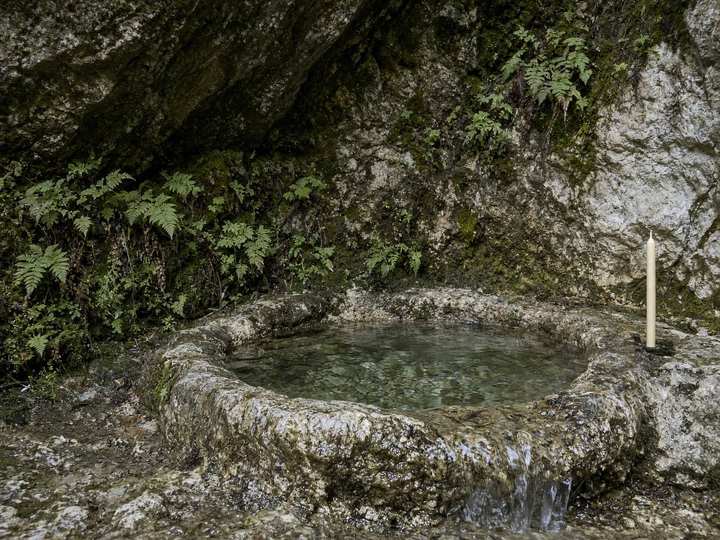
Tradition says Bernardo Abeyta, or a Penitente brother, found a crucifix of the Lord of Esquipulas in the dirt, took it to a church, and found it back in the hole the next day — three times. He built a chapel. The hole, el pocito, is still there. Pilgrims take a pinch of sand, sometimes rubbing it on a pain, sometimes carrying it home.
The day itself
On Good Friday, thousands walk, some from Albuquerque, some on their knees for the last stretch. Crutches left at the shrine are the folk archive. The dirt is replenished from the surrounding land; the parish is honest about this. The sacrament is not the geology.
Reading
How to read El Santuario de Chimayó
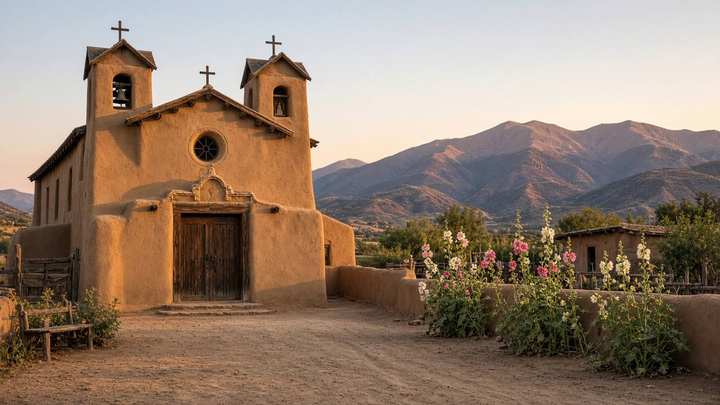
Chimayó is American Catholicism without marble: adobe, dust, a crucifix that will not stay in a more respectable church. Healing dirt is, to a fastidious mind, uncomfortably close to superstition. The Church’s pastoral answer has been to bless the pilgrimage, preach the Passion, and let the poor pray as the poor pray — with what they can hold.
Church status
How this sign has been received
Long veneration
A national historic landmark, a parish of the Archdiocese of Santa Fe, one of the most important Catholic pilgrimage sites in the United States. No Lourdes Medical Bureau. Status: venerated shrine, reported healings unverified as a class.
The shrine today
Why pilgrims still go
The most visited Catholic pilgrimage site in the United States. Holy dirt from a small room, crutches left at the altar, an adobe church that looks like it grew out of the valley. People come for healing, and for a Catholicism that still smells like woodsmoke.
Chimayó — the reasonsSources
- El Santuario de Chimayó, Archdiocese of Santa Fe
- Local tradition of the Lord of Esquipulas
For the classroom
El Santuario de Chimayó (c. 1810, Chimayó, New Mexico). Grade in this encyclopedia: Long veneration. A frontier chapel in a valley of the Sangre de Cristo, where a hole in the floor yields “tierra bendita” — holy dirt — that generations of Catholics (and others) have used in prayer for healing. Rome has not listed certified miracles; the road on Good Friday is a miracle of feet.