
The pilgrimage
Why this road exists
To look at the veil in the light — both sides, no pigment that anyone has found.
How the days are spent
The pairing with Lanciano is almost catechetical: the Face, and the Flesh, in the same hills.
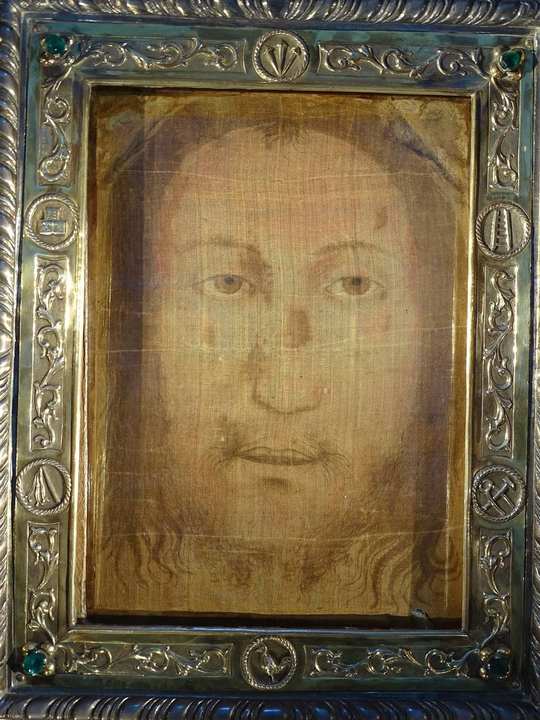
Basilica of the Holy Face
A thin veil, transparent as silk, with the face of a man who has been beaten — visible from both sides, said by its keepers to be the Veronica, or the cloth of the empty tomb. Benedict XVI went. You go because a Face is being shown in a small Abruzzo town, a short drive from Lanciano’s Host.
Manoppello, AbruzzoFeast The third Sunday of May (the Holy Face); 6 August is also kept
The pilgrimage
To look at the veil in the light — both sides, no pigment that anyone has found.
The pairing with Lanciano is almost catechetical: the Face, and the Flesh, in the same hills.
The apparition, the Gospel sign, the body, the image — whatever this place is known for, told as a file of its own.
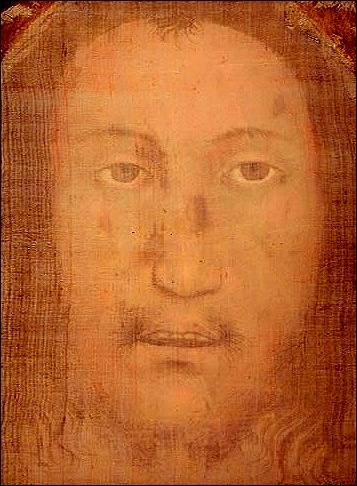
Manoppello, AbruzzoDocumented in Manoppello from 1506; claimed older
A translucent cloth in a Capuchin church, visible from both sides, bearing a living face that some identify with the Veil of Veronica or the burial face-cloth (sudarium). Benedict XVI visited it in 2006. No decree of authenticity.
Lanciano, Abruzzo8th century (c. 750)
The most famous Eucharistic miracle in the West: a doubting monk sees the Host become Flesh and the wine Blood. The relics are still reserved — and were studied in the twentieth century. They are not the reason the Church believes in the Eucharist.
2 studied signs on this image