The pilgrimage
The Apostle
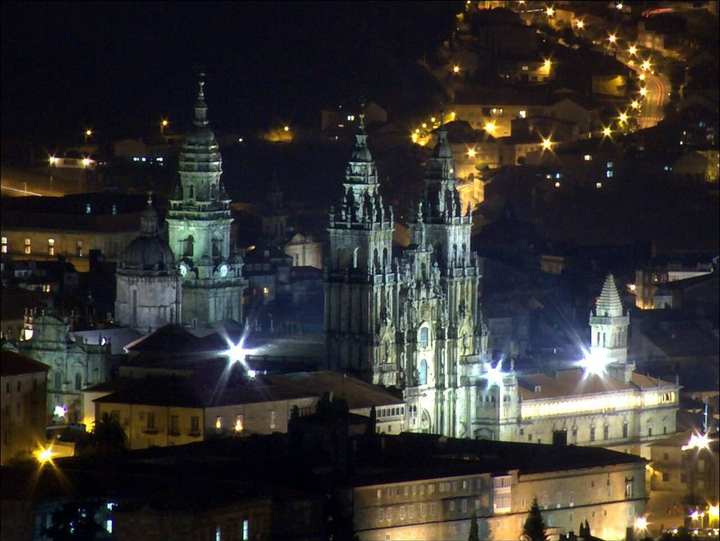
James the Greater is the son of Zebedee and the brother of John. He was one of the three on the mountain of the Transfiguration, and one of the three who slept at Gethsemane. Acts 12 says Herod killed him with the sword. He is the first of the Twelve to die for the Lord. Spain’s claim is that he preached in the peninsula, and that his body was brought to Galicia. The history of that voyage is older than the documents that would settle it. What is not in dispute is the tomb the medieval Church built a city around, and the pilgrims who still arrive.
The roads
The French way begins in practice at Saint-Jean-Pied-de-Port and crosses the Pyrenees, Pamplona, Burgos, León, and the meseta. The Portuguese way comes up from Lisbon or from Porto. The northern way follows the coast. The primitive way and the English way (from Ferrol or A Coruña) are shorter and harder in their own fashion. You do not have to walk all of any of them. The pilgrim office explains what currently counts toward the compostela, the document that says you came as a pilgrim. Read their page. Do not trust a forum for the rule of the year you travel.
How to walk it
Carry less than you think. A shell is a sign, not a costume. Go to Mass when you can; the cathedrals and the parish churches on the road still keep it. Pray the Rosary for an hour of the day and let the rest be quiet. Blisters and bad temper are part of the truth of the walk. So is the last approach, the Monte do Gozo, and the Portico of Glory if it is open, and the confessionals of the cathedral, which have heard this road for centuries.
What this App will not pretend
No bed is booked from here. No flight. The People of the Round Table can gather a group and talk about dates. The pages offered to that group are the pilgrim office, the cathedral, and this one. Confirm hours with those houses before you leave home.