Learn
Catholic contributions to civilization
Faith, reason, science, and human achievement
Catholics, clergy, religious orders, and Catholic institutions have discovered, invented, formulated, and founded a great deal. They have not done it alone. This list says what a person did, and it does not say the Catholic Church invented everything.
Did you know? Gregor Mendel, an Augustinian friar, worked out the first statistical laws of heredity from pea plants.
217 entries
Astronomy & Cosmology
Georges Lemaître
Priest · 1894–1966
Developed. The mathematics of an expanding universe and the primeval-atom hypothesis, a foundation of modern Big Bang cosmology.
Biology & Genetics
Gregor Mendel
Friar · 1822–1884
Formulated. Statistical principles of heredity from pea-plant experiments, foundational to genetics.
Astronomy & Cosmology
Nicolaus Copernicus
Canon · 1473–1543
Formulated. A mathematical model with the Sun at the centre of the planetary system.
Geology & Earth Science
Nicolas Steno
Bishop · 1638–1686
Pioneered. Principles of strata, fossils, and how sedimentary rock is laid down.
Science & Scientific Method
Roger Bacon
Friar · c. 1214–c. 1292
Pioneered. A programme of observation, experiment, and mathematics in the study of nature.
Science & Scientific Method
Albert the Great
Bishop and friar · c. 1200–1280
Developed. A wide natural philosophy: animals, plants, minerals, and the heavens.
Science & Scientific Method
Robert Grosseteste
Bishop · c. 1175–1253
Pioneered. The use of mathematics and controlled observation, especially in light and optics.
Science & Scientific Method
Jean Buridan
Cleric · c. 1300–c. 1358
Developed. The impetus theory of motion, a step beyond Aristotle toward later mechanics.
Science & Scientific Method
Nicole Oresme
Bishop · c. 1320–1382
Developed. Graphical ways of thinking about changing quantities, and arguments about the motion of the Earth.
Science & Scientific Method
Marin Mersenne
Friar · 1588–1648
Pioneered. A network of correspondence that tied the mathematicians of Europe together, and work on primes and on music.
Science & Scientific Method
Pierre Gassendi
Priest · 1592–1655
Developed. An atomic philosophy reconciled, as he saw it, with Christian creation, and astronomical observation.
Physics
Roger Boscovich
Priest · 1711–1787
Formulated. A theory of matter as points of force, used by later physicists.
Science & Scientific Method
Athanasius Kircher
Priest · 1602–1680
Developed. Encyclopaedic studies of magnetism, music, languages, and geology, some of them wrong and some of them fertile.
Astronomy & Cosmology
Galileo Galilei
Lay Catholic · 1564–1642
Pioneered. Telescopic astronomy and the mathematical study of motion.
Astronomy & Cosmology
Christopher Clavius
Priest · 1538–1612
Developed. The Gregorian calendar’s astronomical basis, and Jesuit mathematical education.
Astronomy & Cosmology
Christoph Scheiner
Priest · 1573–1650
Discovered. Sunspots, independently, and the rotation of the Sun.
Astronomy & Cosmology
Giovanni Battista Riccioli
Priest · 1598–1671
Developed. A lunar map whose names are still used, and careful experiments on falling bodies.
Astronomy & Cosmology
Giovanni Domenico Cassini
Lay Catholic · 1625–1712
Discovered. The division in Saturn’s rings and several Saturnian moons, and he organised the Paris Observatory.
Astronomy & Cosmology
Giuseppe Piazzi
Priest · 1746–1826
Discovered. Ceres, the first asteroid, in 1801.
Astronomy & Cosmology
Angelo Secchi
Priest · 1818–1878
Pioneered. The classification of stars by their spectra.
Physics
Victor Hess
Lay Catholic · 1883–1964
Discovered. Cosmic rays, by balloon flights. Nobel Prize in Physics, 1936.
Astronomy & Cosmology
Ferdinand Verbiest
Priest · 1623–1688
Developed. The imperial observatory in Beijing and a reformed Chinese calendar.
Astronomy & Cosmology
Johann Adam Schall von Bell
Priest · 1591–1666
Developed. Calendar reform at the Chinese court.
Geography & Cartography
Matteo Ricci
Priest · 1552–1610
Pioneered. A map of the world for Chinese scholars, and a lasting intellectual mission.
Geography & Cartography
Jose de Acosta
Priest · 1540–1600
Developed. A natural and moral history of the Indies, including altitude sickness and the geography of the Americas.
Biology & Genetics
Marcello Malpighi
Lay Catholic · 1628–1694
Discovered. Capillaries, and the microscopic structure of the lung, kidney, and skin.
Biology & Genetics
Lazzaro Spallanzani
Priest · 1729–1799
Developed. Experiments against spontaneous generation, and studies of digestion and fertilisation.
Biology & Genetics
Theodor Schwann
Lay Catholic · 1810–1882
Formulated. The cell theory for animals, with others working on plants.
Biology & Genetics
Erich Wasmann
Priest · 1859–1931
Developed. Studies of ants and their guests, and a Catholic engagement with evolution that was not simple rejection.
Biology & Genetics
Jerome Lejeune
Lay Catholic · 1926–1994
Discovered. The chromosomal cause of Down syndrome (trisomy 21).
Medicine
Charles Nicolle
Lay Catholic · 1866–1936
Discovered. That typhus is transmitted by the body louse. Nobel Prize, 1928.
Medicine
Corneille Heymans
Lay Catholic · 1892–1968
Discovered. How the carotid sinus helps regulate breathing and blood pressure. Nobel Prize, 1938.
Medicine
Carlos Finlay
Lay Catholic · 1833–1915
Pioneered. The hypothesis that yellow fever is carried by a mosquito.
Physics
Francesco Maria Grimaldi
Priest · 1618–1663
Discovered. The diffraction of light.
Physics
Andre-Marie Ampere
Lay Catholic · 1775–1836
Formulated. The mathematical theory of electromagnetism that gave the ampere its name.
Physics
Alessandro Volta
Lay Catholic · 1745–1827
Invented. The electric pile, the first battery.
Medicine
Luigi Galvani
Lay Catholic · 1737–1798
Discovered. Animal electricity, by experiment on frogs.
Physics
Jean-Baptiste Biot
Lay Catholic · 1774–1862
Developed. Studies of polarised light and of the magnetism of the Earth.
Physics
Augustin Fresnel
Lay Catholic · 1788–1827
Developed. The wave theory of light and the lens that still carries his name.
Physics
Leon Foucault
Lay Catholic · 1819–1868
Invented. A pendulum that shows the rotation of the Earth, and a method for measuring the speed of light.
Physics
Hippolyte Fizeau
Lay Catholic · 1819–1896
Developed. A terrestrial measurement of the speed of light.
Physics
Henri Becquerel
Lay Catholic · 1852–1908
Discovered. Radioactivity in uranium salts. Nobel Prize with the Curies, 1903.
Physics
Evangelista Torricelli
Lay Catholic · 1608–1647
Invented. The mercury barometer.
Physics
Josef Stefan
Lay Catholic · 1835–1893
Formulated. The Stefan–Boltzmann law of radiation, with Boltzmann.
Physics
Gaspard-Gustave de Coriolis
Lay Catholic · 1792–1843
Formulated. The Coriolis force in rotating systems.
Physics
Joseph von Fraunhofer
Lay Catholic · 1787–1826
Discovered. Dark lines in the solar spectrum, and he made the instruments that showed them.
Chemistry
Amedeo Avogadro
Lay Catholic · 1776–1856
Formulated. The hypothesis that equal volumes of gases, at the same temperature and pressure, hold equal numbers of molecules.
Chemistry
Victor Grignard
Lay Catholic · 1871–1935
Invented. The Grignard reagent, a way of building organic molecules. Nobel Prize, 1912.
Chemistry
Jean-Baptiste Dumas
Lay Catholic · 1800–1884
Developed. Methods for measuring vapour density and for organic analysis.
Chemistry
Michel Eugene Chevreul
Lay Catholic · 1786–1889
Developed. The chemistry of fats and soaps, and a theory of colour contrast.
Chemistry
Henri Louis Le Chatelier
Lay Catholic · 1850–1936
Formulated. Le Chatelier’s principle on how equilibria shift.
Chemistry
Paul Sabatier
Lay Catholic · 1854–1941
Developed. Catalytic hydrogenation. Nobel Prize, 1912, with Grignard.
Chemistry
Julius Nieuwland
Priest · 1878–1936
Developed. The chemistry that led to neoprene, the synthetic rubber.
Chemistry
Edith Flanigen
Lay Catholic · 1929–
Invented. Synthetic emerald and molecular sieves used across the chemical industry.
Chemistry
Jean-Baptiste Senderens
Priest · 1856–1937
Developed. Catalytic hydrogenation with Sabatier.
Mathematics
Maria Gaetana Agnesi
Lay Catholic · 1718–1799
Developed. A clear textbook of calculus, the Instituzioni analitiche, and the curve that still carries her name.
Mathematics
Pierre de Fermat
Lay Catholic · 1607–1665
Formulated. Foundations of number theory, and work that became probability with Pascal.
Mathematics
Blaise Pascal
Lay Catholic · 1623–1662
Invented. A calculating machine, and, with Fermat, the mathematics of probability.
Mathematics
Augustin-Louis Cauchy
Lay Catholic · 1789–1857
Developed. A rigorous calculus: limits, continuity, and complex functions.
Mathematics
Bernard Bolzano
Priest · 1781–1848
Pioneered. A rigorous account of continuity and infinity, ignored until later.
Mathematics
Charles Hermite
Lay Catholic · 1822–1901
Formulated. The proof that e is transcendental, and the polynomials that carry his name.
Mathematics
Camille Jordan
Lay Catholic · 1838–1922
Developed. The theory of finite groups and the Jordan curve theorem.
Mathematics
Emile Picard
Lay Catholic · 1856–1941
Developed. Theorems in complex analysis that still carry his name.
Mathematics
Gregorio Ricci-Curbastro
Lay Catholic · 1853–1925
Developed. Tensor calculus, the language Einstein later used.
Mathematics
Vincenzo Riccati
Priest · 1707–1775
Developed. Hyperbolic functions and work on differential equations.
Mathematics
Ennio De Giorgi
Lay Catholic · 1928–1996
Developed. The theory of minimal surfaces and solutions of elliptic equations.
Mathematics
Charles de la Vallee-Poussin
Lay Catholic · 1866–1962
Formulated. A proof of the prime-number theorem, independently of Hadamard.
Mathematics
Jacques Binet
Lay Catholic · 1786–1856
Formulated. Binet’s formula for Fibonacci numbers, and work on matrix theory.
Mathematics
Bonaventura Cavalieri
Priest · 1598–1647
Developed. The method of indivisibles, a step toward integral calculus.
Mathematics
Giovanni Girolamo Saccheri
Priest · 1667–1733
Pioneered. A study of the parallel postulate that opened the road to non-Euclidean geometry, though he meant to close it.
Geology & Earth Science
Giuseppe Mercalli
Priest · 1850–1914
Developed. A scale of earthquake intensity still named for him.
Geology & Earth Science
Antonio Stoppani
Priest · 1824–1891
Pioneered. Italian geology, and an early sense that human activity marks the Earth.
Geology & Earth Science
Jose Celestino Mutis
Priest · 1732–1808
Developed. The botanical expedition of New Granada and a vast record of American plants.
Geology & Earth Science
Xavier Le Pichon
Lay Catholic · 1937–
Developed. A quantitative model of plate tectonics.
Geology & Earth Science
James Macelwane
Priest · 1883–1956
Pioneered. Jesuit seismology in the United States and the study of earthquakes as a profession.
Medicine
Andreas Vesalius
Lay Catholic · 1514–1564
Developed. A new anatomy from dissection, in De humani corporis fabrica.
Medicine
Giovanni Battista Morgagni
Lay Catholic · 1682–1771
Founded. Pathological anatomy: disease read from what is found in the body after death.
Medicine
Rene Laennec
Lay Catholic · 1781–1826
Invented. The stethoscope.
Medicine
Ignaz Semmelweis
Lay Catholic · 1818–1865
Discovered. That handwashing cuts childbed fever.
Medicine
Joseph Murray
Lay Catholic · 1919–2012
Pioneered. The first successful human kidney transplant between twins, and later work on immunosuppression. Nobel Prize, 1990.
Hospitals & Nursing
John of God
Saint · 1495–1550
Founded. A hospital in Granada and the family of brothers who still nurse the sick.
Hospitals & Nursing
Camillus de Lellis
Saint · 1550–1614
Founded. An order of clerics who nurse the sick, including on battlefields.
Charity & Social Institutions
Vincent de Paul
Saint · 1581–1660
Founded. The Congregation of the Mission and, with Louise de Marillac, the Daughters of Charity.
Hospitals & Nursing
Louise de Marillac
Saint · 1591–1660
Founded. The Daughters of Charity, with Vincent de Paul.
Philosophy & Logic
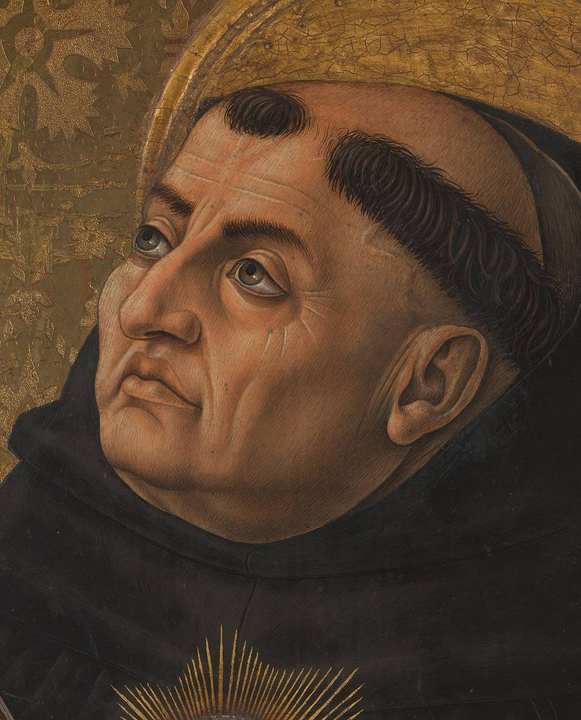
Thomas Aquinas
Friar · 1225–1274
Developed. A synthesis of Christian doctrine and Aristotelian philosophy in the Summa.
Philosophy & Logic
Augustine of Hippo
Bishop · 354–430
Developed. A theology of grace, time, and the inner life that the West has never put down.
Universities & Education
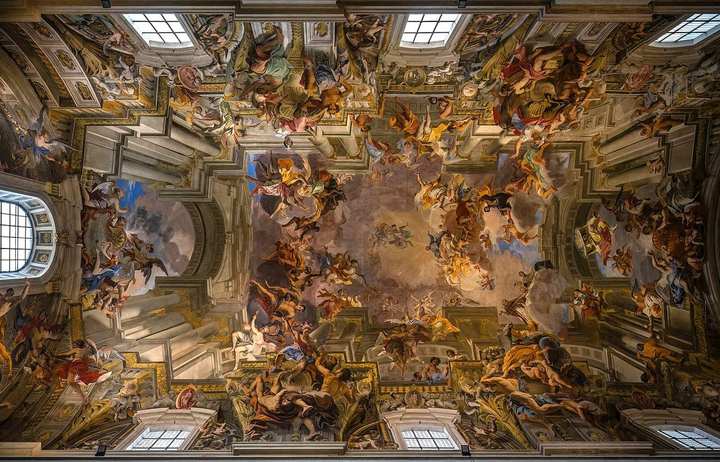
Ignatius of Loyola
Saint · 1491–1556
Founded. The Society of Jesus, and a method of schools that spread with the order.
Universities & Education
John Baptist de La Salle
Saint · 1651–1719
Founded. The Brothers of the Christian Schools, for the education of poor boys, with a teacher-training practice ahead of its time.
Universities & Education
Joseph Calasanz
Saint · 1557–1648
Founded. The Piarist schools, free schooling for poor children in Rome.
Universities & Education
Angela Merici
Saint · 1474–1540
Founded. The Company of Saint Ursula, for the education of girls in their own towns.
Universities & Education
Medieval universities
Institution · —–—
Helped establish. A form of higher study — arts, theology, law, medicine — in which the Church was a major founder and protector, alongside kings, cities, and masters.
Computing & Technology
John von Neumann
Baptised late in life · 1903–1957
Developed. The stored-program computer architecture, game theory, and large parts of modern mathematical physics.
Computing & Technology
Charles Kuen Kao
Lay Catholic · 1933–2018
Pioneered. Fibre-optic communication. Nobel Prize in Physics, 2009.
Computing & Technology
Clemens Roothaan
Priest · 1918–2019
Developed. Methods of molecular calculation used in quantum chemistry.
Computing & Technology
Mary Kenneth Keller
Religious sister · 1913–1985
Pioneered. Early computer-science education for undergraduates, and one of the first doctorates in the field in the United States.
Engineering & Inventions
Antonio Pacinotti
Lay Catholic · 1841–1912
Invented. A ring armature that became a step toward the dynamo and the electric motor.
Art & Architecture
Filippo Brunelleschi
Lay Catholic · 1377–1446
Developed. The dome of Florence Cathedral and a practical perspective for builders.
Art & Architecture
Leon Battista Alberti
Lay Catholic · 1404–1472
Developed. Treatises on painting and on building that taught the Renaissance its rules.
Art & Architecture
Fra Angelico
Friar · c. 1395–1455
Developed. Altarpieces and the frescoes at San Marco, a major body of Catholic painting.
Art & Architecture
Michelangelo Buonarroti
Lay Catholic · 1475–1564
Developed. The Sistine ceiling, the Last Judgement, the Pietà, and the dome of Saint Peter’s.
Art & Architecture
Gian Lorenzo Bernini
Lay Catholic · 1598–1680
Developed. The colonnade of Saint Peter’s, the baldacchino, and the Ecstasy of Saint Teresa.
Art & Architecture
Raphael
Lay Catholic · 1483–1520
Developed. The Stanze, the Sistine Madonna, and cartoons for tapestries in the Sistine Chapel.
Art & Architecture
Michelangelo Merisi da Caravaggio
Lay Catholic · 1571–1610
Developed. Altarpieces that set the Gospel in a hard, ordinary light.
Art & Architecture
Leonardo da Vinci
Lay Catholic · 1452–1519
Developed. The Last Supper, and notebooks of anatomy, water, and machines.
Law & Human Rights
Francisco de Vitoria
Friar · c. 1483–1546
Developed. Lectures on the rights of peoples and on the limits of war and conquest, the start of the School of Salamanca.
Law & Human Rights
Francisco Suarez
Priest · 1548–1617
Developed. A major treatise on law, and a metaphysics taught for two centuries.
Economics & Accounting
Luis de Molina
Priest · 1535–1600
Developed. An account of free will and grace, and an economic analysis of money and prices in the School of Salamanca.
Law & Human Rights
Bartolome de las Casas
Friar and bishop · 1484–1566
Pioneered. A public case against the destruction of the peoples of the Indies.
Economics & Accounting
Luca Pacioli
Friar · c. 1447–1517
Developed. The first widely printed account of double-entry bookkeeping.
Economics & Accounting
Martin de Azpilcueta
Priest · 1492–1586
Developed. A quantity theory of money: prices rise when money is plentiful.
Economics & Accounting
Juan de Mariana
Priest · 1536–1624
Developed. A critique of kings who debase the coinage.
Music
Guido of Arezzo
Monk · c. 991–after 1033
Developed. Staff notation and the solmisation syllables that became the scale.
Music
Hildegard of Bingen
Abbess · 1098–1179
Developed. A body of chant, and writings on medicine, visions, and the natural world.
Music
Giovanni Pierluigi da Palestrina
Lay Catholic · c. 1525–1594
Developed. The Roman style of polyphony that the Church kept as a model.
Music
Gregorian chant
Tradition · —–—
Developed. The Latin chant of the Roman rite, shaped over centuries in Roman and Frankish monasteries.
Philosophy & Logic
William of Ockham
Friar · c. 1287–1347
Developed. A logic and a metaphysics of economy, later called Ockham’s razor, and a political theory of papal and imperial power.
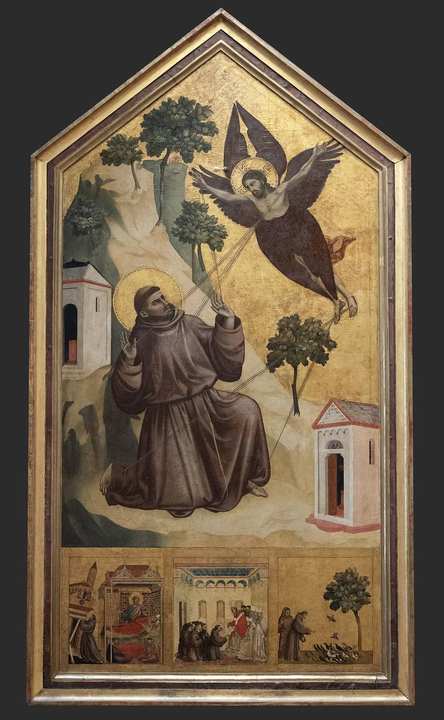
Charity & Social Institutions
Francis of Assisi
Saint · 1181–1226
Founded. The Friars Minor, a way of life built on poverty and the preaching of the Gospel.
Charity & Social Institutions
Benedict of Nursia
Saint · c. 480–c. 547
Founded. A Rule for monasteries that organised work, prayer, and stability.
Philosophy & Logic
Anselm of Canterbury
Bishop · 1033–1109
Formulated. The ontological argument, and a theology of the atonement in Cur Deus homo.
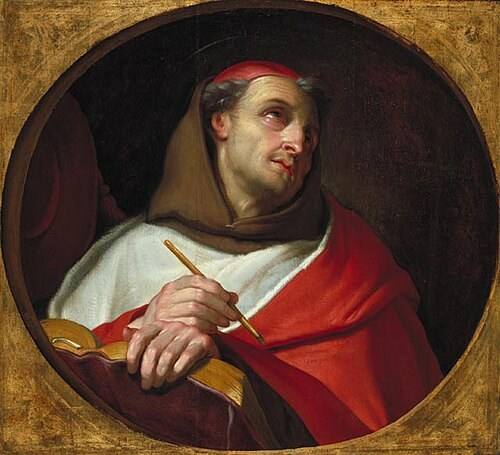
Philosophy & Logic
Bonaventure
Friar · 1221–1274
Developed. A Franciscan theology of the journey of the mind to God.
Philosophy & Logic
John Duns Scotus
Friar · c. 1266–1308
Developed. A metaphysics of individuality, and a defence of the Immaculate Conception before it was defined.
Universities & Education
Bede
Monk · 673–735
Developed. An ecclesiastical history of the English, and textbooks of time and of Scripture.
Universities & Education
Isidore of Seville
Bishop · c. 560–636
Developed. An encyclopedia, the Etymologies, that carried classical learning into medieval schools.
Philosophy & Logic
Boethius
Lay Christian · c. 477–524
Developed. Translations and textbooks of logic, and The Consolation of Philosophy.
Music
Tomas Luis de Victoria
Priest · c. 1548–1611
Developed. Polyphonic Masses and motets, including the Officium Defunctorum.
Music
Orlande de Lassus
Lay Catholic · 1532–1594
Developed. A vast body of Catholic polyphony for the Bavarian court.
Music
Gregorio Allegri
Priest · 1582–1652
Developed. The Miserere sung in the Sistine Chapel in Holy Week.
Music
Claudio Monteverdi
Priest · 1567–1643
Pioneered. Opera, and the Vespers of 1610, a summit of Catholic ceremonial music.
Music
Antonio Vivaldi
Priest · 1678–1741
Developed. Hundreds of concertos, and sacred music including the Gloria.
Music
Joseph Haydn
Lay Catholic · 1732–1809
Developed. The symphony and the string quartet as public forms, and Masses for the Catholic liturgy.
Music
Wolfgang Amadeus Mozart
Lay Catholic · 1756–1791
Developed. Operas, symphonies, and the Requiem and Masses of a Catholic composer.
Music
Ludwig van Beethoven
Baptised Catholic · 1770–1827
Developed. The symphony as a public moral drama, and the Missa solemnis.
Music
Franz Schubert
Lay Catholic · 1797–1828
Developed. Songs, symphonies, and Masses.
Music
Anton Bruckner
Lay Catholic · 1824–1896
Developed. Symphonies and sacred choral works, including a Te Deum.
Music
Franz Liszt
Cleric in minor orders · 1811–1886
Developed. The symphonic poem, and late sacred works including the Via crucis.
Music
Cesar Franck
Lay Catholic · 1822–1890
Developed. Organ works and sacred music at the Parisian church of Sainte-Clotilde.
Music
Edward Elgar
Lay Catholic · 1857–1934
Developed. The Dream of Gerontius, a setting of Newman’s poem of a Catholic death.
Music
Antonin Dvorak
Lay Catholic · 1841–1904
Developed. Symphonies, Slavonic dances, and a Stabat Mater and Requiem.
Music
Olivier Messiaen
Lay Catholic · 1908–1992
Developed. Organ music and the Quartet for the End of Time, written from a theology of Catholic time.
Music
Maurice Durufle
Lay Catholic · 1902–1986
Developed. A Requiem built on Gregorian chant.
Music
Charles Gounod
Lay Catholic · 1818–1893
Developed. Faust, and sacred songs including a setting built on Bach’s prelude.
Music
Lorenzo Perosi
Priest · 1872–1956
Developed. Oratorios that Pius X’s generation hoped would renew church music.
Charity & Social Institutions
Frederic Ozanam
Lay Catholic · 1813–1853
Founded. The Society of Saint Vincent de Paul.
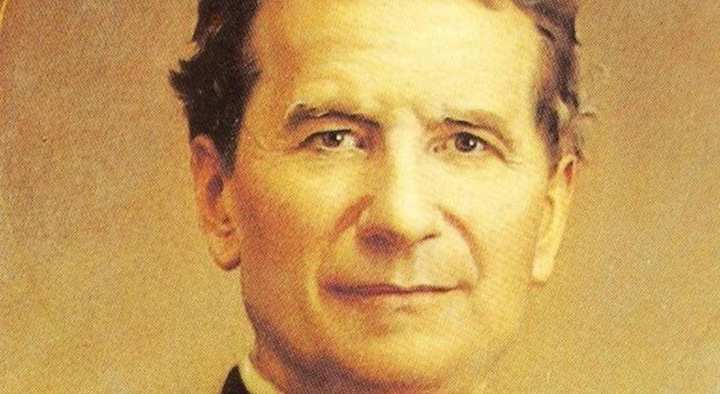
Charity & Social Institutions
John Bosco
Saint · 1815–1888
Founded. The Salesians, for the education of poor and working boys.
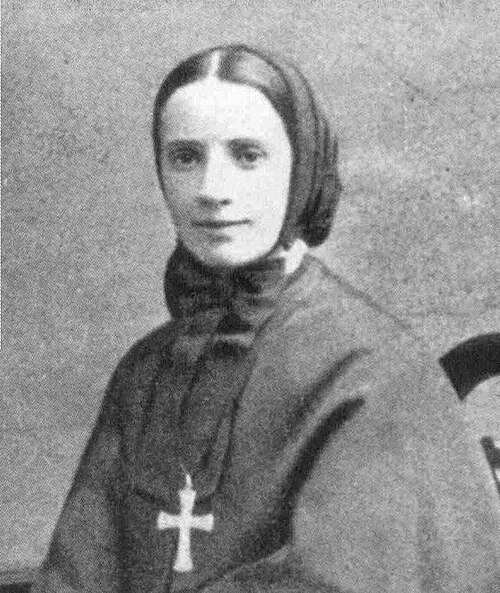
Charity & Social Institutions
Frances Cabrini
Saint · 1850–1917
Founded. The Missionary Sisters of the Sacred Heart, and a network of hospitals, schools, and orphanages.
Hospitals & Nursing
Damien de Veuster
Saint · 1840–1889
Pioneered. A priest’s life among the leprosy patients of Molokai, until he caught the disease.
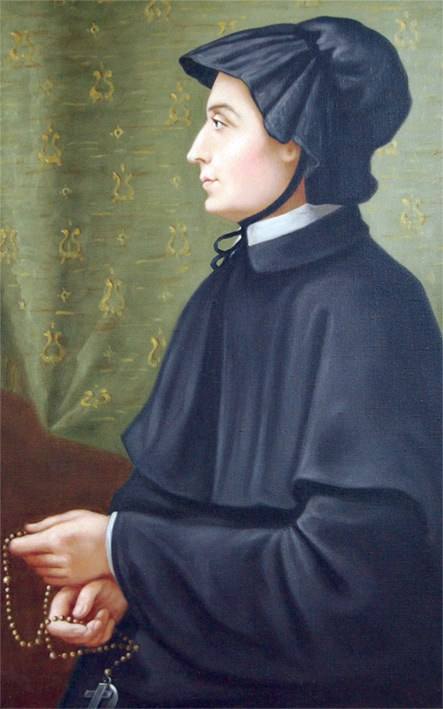
Universities & Education
Elizabeth Ann Seton
Saint · 1774–1821
Founded. The Sisters of Charity in the United States, and a Catholic school tradition for girls.
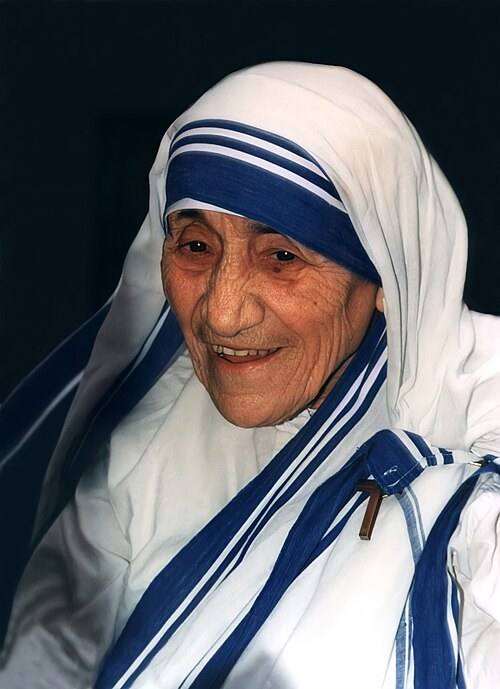
Charity & Social Institutions
Teresa of Calcutta
Saint · 1910–1997
Founded. The Missionaries of Charity, houses for the dying, the abandoned, and the unborn.
Exploration
Junipero Serra
Saint · 1713–1784
Founded. The Franciscan missions of Upper California.
Exploration
Eusebio Kino
Priest · 1645–1711
Pioneered. Maps and missions in the Pimería Alta, and the proof that California was not an island.
Exploration
Jacques Marquette
Priest · 1637–1675
Pioneered. The European exploration of the Mississippi with Louis Jolliet.
Exploration
Christopher Columbus
Lay Catholic · 1451–1506
Pioneered. The Atlantic crossing of 1492 that opened a sustained European route to the Americas.
Exploration
Ferdinand Magellan
Lay Catholic · 1480–1521
Pioneered. The expedition that first circled the Earth, completed after his death.
Art & Architecture
Dante Alighieri
Lay Catholic · 1265–1321
Developed. The Divine Comedy, a poem of Hell, Purgatory, and Heaven that shaped Catholic imagination.
Law & Human Rights
Thomas More
Saint · 1478–1535
Developed. Utopia, and a lawyer’s refusal to swear a supremacy he believed false.
Philosophy & Logic
John Henry Newman
Cardinal · 1801–1890
Developed. The idea of the development of doctrine, and The Idea of a University.
Philosophy & Logic
G. K. Chesterton
Lay Catholic · 1874–1936
Developed. A body of essays defending Christian reason for a newspaper public.
Art & Architecture
J. R. R. Tolkien
Lay Catholic · 1892–1973
Developed. The Lord of the Rings, a work of imagination shaped by a Catholic mind.
Art & Architecture
Gerard Manley Hopkins
Priest · 1844–1889
Developed. A new poetic metre and a Catholic poetry of creation.
Art & Architecture
Sigrid Undset
Lay Catholic · 1882–1949
Developed. Kristin Lavransdatter, a novel of medieval Catholic life. Nobel Prize in Literature, 1928.
Art & Architecture
Flannery O'Connor
Lay Catholic · 1925–1964
Developed. Stories of grace acting on violent and ordinary people in the American South.
Philosophy & Logic
Thomas Merton
Monk · 1915–1968
Developed. The Seven Storey Mountain and a modern monastic literature.
Physics
Laura Bassi
Lay Catholic · 1711–1778
Pioneered. A university career in experimental physics for a woman, at Bologna.
Biology & Genetics
Louis Pasteur
Lay Catholic · 1822–1895
Developed. Vaccines and the germ theory of fermentation and disease, with a team and with predecessors.
Medicine
Charles Louis Alphonse Laveran
Lay Catholic · 1845–1922
Discovered. The parasite of malaria. Nobel Prize, 1907.
Medicine
Alexis Carrel
Lay Catholic · 1873–1944
Developed. A technique for suturing blood vessels. Nobel Prize, 1912.
Medicine
John Eccles
Lay Catholic · 1903–1997
Developed. The understanding of the synapse. Nobel Prize, 1963.
Physics
Carlo Rubbia
Lay Catholic · 1934–
Pioneered. The discovery of the W and Z bosons at CERN. Nobel Prize, 1984.
Physics
Antonino Zichichi
Lay Catholic · 1929–
Developed. Experimental particle physics, and a public argument that science and the Catholic Faith are not enemies.
Science & Scientific Method
Stanley Jaki
Priest · 1924–2009
Developed. A historical argument about why the natural sciences grew in a Christian culture.
Physics
Pierre Duhem
Lay Catholic · 1861–1916
Developed. Thermodynamics, and a history of medieval science that later scholars still use.
Geology & Earth Science
Pierre Teilhard de Chardin
Priest · 1881–1955
Developed. Fieldwork on human fossils in China, including the study of Peking Man, and a controversial theology of evolution.
Biology & Genetics
Georges-Louis Leclerc, Comte de Buffon
Lay Catholic · 1707–1788
Developed. The Histoire naturelle, a vast description of animals and of the age of the Earth.
Biology & Genetics
Francesco Redi
Lay Catholic · 1626–1697
Pioneered. Controlled experiments against the spontaneous generation of maggots.
Medicine
Gabriele Falloppio
Priest · 1523–1562
Discovered. The tubes that carry his name, and other structures of the ear and the reproductive organs.
Medicine
Bartolomeo Eustachi
Lay Catholic · c. 1500–1574
Discovered. The Eustachian tube and other anatomical structures, published fully only later.
Biology & Genetics
Andrea Cesalpino
Lay Catholic · 1519–1603
Developed. A classification of plants by their fruit and flower, and an early account of the circulation.
Medicine
Santorio Santorio
Lay Catholic · 1561–1636
Invented. A clinical thermometer and a quantitative study of the body’s weight.
Medicine
Giovanni Alfonso Borelli
Lay Catholic · 1608–1679
Developed. A mechanics of muscle and animal motion.
Universities & Education
Elena Cornaro Piscopia
Lay Catholic · 1646–1684
Pioneered. A doctorate in philosophy at Padua in 1678, the first woman known to receive a PhD.
Mathematics
Gerbert of Aurillac
Pope · c. 946–1003
Developed. Teaching of the abacus and of Arabic numerals in Latin Europe, before he became Pope Sylvester II.
Universities & Education
Alcuin of York
Cleric · c. 735–804
Developed. The school programme of Charlemagne’s court, and textbooks of the liberal arts.
Universities & Education
Cassiodorus
Lay Catholic, later monk · c. 485–c. 585
Founded. The monastery of Vivarium, where books were copied and a Christian education was set out.
Biology & Genetics
Fabio Colonna
Lay Catholic · 1567–1640
Developed. Botanical description with careful plates, a member of the Accademia dei Lincei.
Physics
Niccolo Cabeo
Priest · 1586–1650
Developed. Experiments on magnetism and on the repulsion of electrified bodies.
Engineering & Inventions
Francesco Lana de Terzi
Priest · 1631–1687
Pioneered. A design for a lighter-than-air boat, never flown, and a proposal for a blind alphabet.
Astronomy & Cosmology
Giovanni Schiaparelli
Lay Catholic · 1835–1910
Discovered. The association of meteor showers with comets, and the maps of Mars that later readers misread as canals.
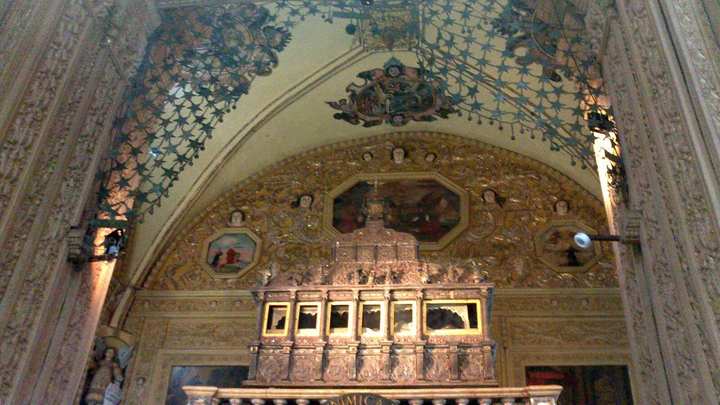
Exploration
Francis Xavier
Priest · 1506–1552
Pioneered. The Jesuit missions in India, the Malay archipelago, and Japan.
Exploration
Jose de Anchieta
Priest · 1534–1597
Founded. Schools and towns in Brazil, and a grammar of Tupi.
Charity & Social Institutions
Peter Claver
Priest · 1580–1654
Pioneered. A ministry to enslaved Africans landing at Cartagena, for forty years.
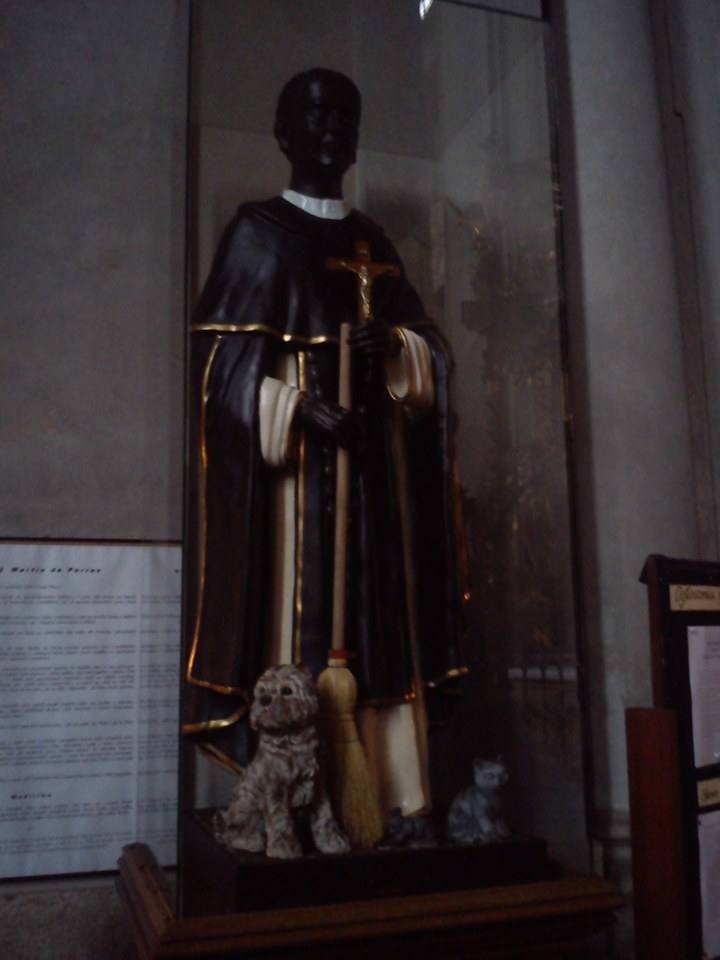
Hospitals & Nursing
Martin de Porres
Friar · 1579–1639
Developed. A clinic for the poor and sick in Lima, from a Dominican convent.
Chemistry
Antoine Lavoisier
Lay Catholic · 1743–1794
Developed. A new chemical nomenclature and the oxygen theory of combustion, with collaborators.
Philosophy & Logic
Rene Descartes
Lay Catholic · 1596–1650
Developed. Analytic geometry, and a philosophy that starts from the thinking self.
Exploration
Amerigo Vespucci
Lay Catholic · 1454–1512
Developed. Letters arguing that the lands across the Atlantic were a continent, not the edge of Asia.
Exploration
Vasco da Gama
Lay Catholic · c. 1460–1524
Pioneered. The sea route from Europe to India around the Cape.
Exploration
Henry the Navigator
Lay Catholic · 1394–1460
Pioneered. Patronage of Atlantic voyages along the African coast, from a court that was also a crusading order.
Music
Adolphe Sax
Lay Catholic · 1814–1894
Invented. The saxophone.
Music
Frederic Chopin
Lay Catholic · 1810–1849
Developed. A new piano literature, and a request for Mozart’s Requiem at his Catholic funeral.
Music
Arcangelo Corelli
Lay Catholic · 1653–1713
Developed. The concerto grosso and a school of violin playing.
Music
Giovanni Battista Pergolesi
Lay Catholic · 1710–1736
Developed. The Stabat Mater, and comic opera that changed the stage.
Music
Marc-Antoine Charpentier
Lay Catholic · 1643–1704
Developed. Sacred music for Jesuit churches and a Te Deum still used as a public hymn.
Music
Francis Poulenc
Lay Catholic · 1899–1963
Developed. The opera Dialogues des Carmélites and a body of sacred choral music after a return to the Faith.
Music
Manuel de Falla
Lay Catholic · 1876–1946
Developed. Atlántida, left unfinished, and a Spanish concert music shaped by Catholic culture.
Music
Gioachino Rossini
Lay Catholic · 1792–1868
Developed. Opera, and the Petite messe solennelle.
Music
Gaetano Donizetti
Lay Catholic · 1797–1848
Developed. Italian opera, including works on Catholic historical subjects.
Music
Vincenzo Bellini
Lay Catholic · 1801–1835
Developed. Bel canto opera.
Music
Giacomo Puccini
Lay Catholic · 1858–1924
Developed. La bohème, Tosca, Madama Butterfly, and Turandot.
Music
Domenico Scarlatti
Lay Catholic · 1685–1757
Developed. More than five hundred keyboard sonatas.
Music
James MacMillan
Lay Catholic · 1959–
Developed. Orchestral and sacred music explicitly shaped by the Catholic liturgy.
Music
Gabriel Faure
Lay Catholic · 1845–1924
Developed. The Requiem, and a French song literature.
Music
Francois Couperin
Lay Catholic · 1668–1733
Developed. Keyboard ordres and organ music for the French royal chapel.
Astronomy & Cosmology
Pope Gregory XIII
Pope · 1502–1585
Developed. The Gregorian calendar reform of 1582, calculated by a commission that included Christopher Clavius.
Law & Human Rights
Pope Leo XIII
Pope · 1810–1903
Developed. Rerum novarum, on the condition of labour, wages, and the right of workers to associate.
Universities & Education
Robert Bellarmine
Cardinal · 1542–1621
Developed. A widely used catechism and a body of controversial theology taught in Catholic schools.
Universities & Education
Peter Canisius
Priest · 1521–1597
Developed. A catechism that carried Catholic teaching through German-speaking lands after the Reformation.
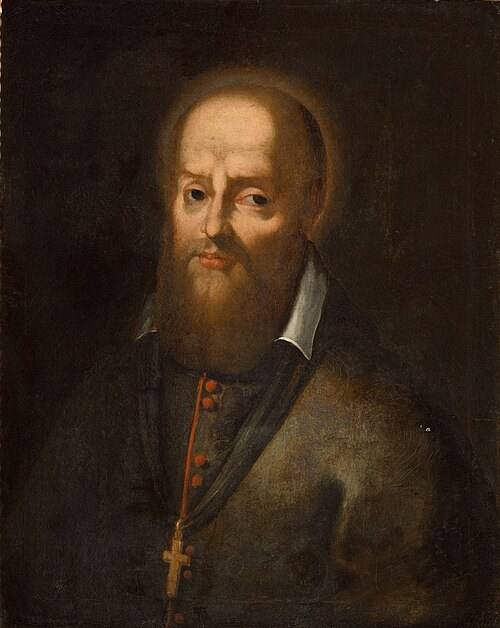
Universities & Education
Francis de Sales
Bishop · 1567–1622
Developed. Introduction to the Devout Life, a spirituality for lay people in ordinary work.
Charity & Social Institutions
Philip Neri
Priest · 1515–1595
Founded. The Oratory in Rome, a way of preaching, music, and confession for the city.
These entries document contributions made by Catholics, Catholic clergy, religious orders and Catholic institutions. They do not mean that every achievement was uniquely or exclusively Catholic. Scientific, cultural and intellectual developments usually involve many people across different cultures, religions and periods. This database aims to identify Catholic contributions accurately and without exaggeration.